Showing posts with label Innovation vc. Show all posts

Monday, October 26, 2015

Building our Future - Nurturing our Innovators

1n 2002 BSI identified a need to support innovators.... 13 years on, with innovation squarely on the agenda, and 13 years of blood , sweat and tears, helping entrepreneurs and innovators grow, we are looking forward, together with the Superannuation and Investment community,  being a contributor to Australia's future, supporting and nurturing innovation!


Are public companies dinosaurs? Is it better to invest your super in startups and the new economy ? Can the 2 paradigms work together to create a win win win?

Ownership and management
Managers deal with anonymous owners, represented by fund managers who buy and sell shares listed on a stock exchange with no emotion. By trying to align management with stock options aligned to financial returns - short term decisions are made, innovation stifled (you can't go wrong by hiring IBM) and profits tend to be manipulated to manage shareholders expectations (HIH in Australia, Enron, the 2008 banking crisis, what's next?)

Ownership and management of a startup however, is aligned . Founders, staff and backers exert control directly. 

The new way

Young entrepreneurs are creating new firms in shared spaces and collaboration, fuelled by  beer, pizza coffe and dreams- turning dreams into business.

Startups are in every facet of business -  
  • spectacles (Warby Parker) 
  • finance (Symphony and XERO).
  • fashion (BCNU adn Lulu Lemon) 
  • Airbnb put up nearly 17m guests over the summer 
  • Uber drives millions of people every day. 
  • WeWork, an American outfit that provides accommodation for startups, has 8,000 companies with 30,000 workers in 56 locations in 17 cities.
and the list goes on
  • Startups exploit new technology, enabling them to go global without being big themselves. They expand  fast and efficiently by outsourcing. 
  • They can incorporate online for a few hundred dollars, 
  • raise money from crowdsourcing sites such as Kickstarter, 
  • hire programmers from Upwork, 
  • rent computer-processing power from Amazon, 
  • find manufacturers on Alibaba, 
  • find designers on 99 designs,  
  • arrange payments systems at Square, 
  • build their CRms on Zoho and 
  • manage their accounting on the phone with Xero, 
and immediately set about conquering the world.

Vizio was the bestselling brand of television in America in 2010 with just 200 employees. WhatsApp was sold to  Facebook for $19 billion with fewer than 60 employees and revenues of $20m.

In Australia ......
Xero , Redbubble. Dimension data,  Rhype, Spectrum Health, 99 designs. Spreets, Canva, Referron, incubation places such as Fishburners and muru-d.


How can ordinary people invest in startups directly through platforms?
There are organisations  who invest in startups such as SeedInvest .

The Australian Government is putting  out a paper in December to encourage this type of investment. WIll let you know... watch this space!

  • Is Crowdsourcing sourcing the future? 
  • SMSF Investment?
  • The ASX and public company can be a brilliant efficient way for startups to scale and give public a chance to share ..... But they will be investing in the people not the machine.
What needs to be done for this to happen?

A change of mindset in the investment community and an ease up on regulations. 

Personally, I am looking forward to the next 10 years to 2025!!!


Sunday, August 17, 2014

The difference between a startup and a small business


An article inspired by smart company - (which is in my Spark collection on #keynected ) http://keynect.me/2j

Download keynected - it's like a flipboard on steroids! 

“Startups have two important defining characteristics: Potential for high growth and disruptive innovation. Small businesses, on the other hand, lack those defining characteristics.”

– Alan Noble, head of engineering Google

“A startup isn't a business yet. It's a guess that if you build X product that Y customer will value it. When that changes from a guess to a reality, you're a business. For a new business, they already know the product is valued by customers, it's just a question of whether they can find enough of them and deliver it efficiently.”

 Mick Liubinskas, entrepreneur in residence Muru-D

“A startup is a temporary organisation that is still discovering its purpose and intends to grow very large when it finds it. A small business knows what it is and will probably stay comfortably small forever.

“For example, YouTube was a dating site in its days as a startup but discovered it needed to be a video-sharing product. When it knew this, and understood how to make money, it ceased to be a startup and began scaling. In contrast, a web development agency has a well-understood business model that can immediately be executed. But it is unlikely to be a massive business.”

– Phil Morle, CEO Pollenizer

“Startups are high-growth, high-risk ventures that set out to find a scalable business model in a large market. They almost always have a strong technology component in order to facilitate the ambitions of rapid growth. At the very beginning of a startup, it is usually unclear who the customer is and how they will obtain value from the product.

“Over time, startups have the capacity to make economic and cultural contributions that are disproportionate to their modest beginnings.”

– Scott Handsaker, co-founder Startup Victoria

Tuesday, April 22, 2014

Australia’s Campaign Monitor Raises $250 Million from Insight


Ben Richardson (left) and Dave Greiner grew up across the street from one another near Sydney, Australia. Now their email-marketing firm, Campaign Monitor, landed a $25m capital raise!

WSJ - ByShira Ovide 


A 10-year-old “startup” in Australia is joining the rarefied strata of buzzy young companies like Uber, Keynected , Referron and   Dropbox.
Sydney-based Campaign Monitor, which makes software for email-marketing pitches, has raised  $250 million from venture-capital firm Insight Venture Partners (its first raise!)
The injection is among the biggest recent venture rounds. Since the start of 2013, only a few companies, including Dropbox, Airbnb and Uber, raised more money from venture-capital firms, according to data provider Dow Jones VentureSource and Wall Street Journal reporting. It’s also unusual for a single firm to make such a large investment.
Campaign Monitor says its email templates are easy enough for non-tech-savvy employees to use, and it says its prices are flexible enough for companies that blast thousands of emails, or for people who just send a couple of emails a year.
The company is among a growing roster catering to an increasingly digital-obsessed marketing industry...technology firms are crafting software to help marketing departments manage digital pitches, keep tabs on social-media messages and analyze the impact of their spending.
Marketing-technology companies have been a hit with investors, too. ExactTarget and Responsys were acquired in the last year in billion-dollar-plus takeovers. Marketo, which went public in May 2013, reached a market value of $1.8 billion before falling about 30% in the past two months.
“Marketers are going to get more aggressive in their tech spend,” said Deven Parekh, a managing director at Insight, who also said email remains a core pillar of marketing campaigns. “When we look at the trends in marketing, [Campaign Monitor] certainly plays on those trends,” he said.
Campaign Monitor germinated out of a late-1990s university business started by Ben Richardson and Dave Greiner, who grew up across the street from one another in the Sydney suburbs. The pair said they grew frustrated when they tried to use email marketing tools for their company creating custom websites.
Richardson and Greiner spent their spare hours writing software to improve on those clunky tools. About a year after they launched Campaign Monitor software in late 2004, it had three times the revenue of their web-design firm. The pair decided to focus on that business.
The founders declined to say how much revenue the company generates, but said Campaign Monitor has been profitable every month of its life. That has allowed them to self-fund the company.
Richardson and Greiner said about six months ago they began to weigh bringing in an investor for expertise and to help the company expand.
“We’re proud of the last 10 years. If we look at the next 10 years there are a whole lot of growth opportunities ahead for us,” Greiner said.
The pair said they plan to use the fresh investment funds to expand their own marketing, and to hire more sales people to court new customers. Campaign Monitor also plans to open its first U.S. office. About 80% of the company’s customers are in North America and Western Europe, but roughly 40 of the company’s 65 employees are in Australia.
The company also plans to give its employees ownership stakes in the company for the first time, and may expand senior management.
Parekh said the unusually large $250 million investment reflects Campaign Monitor’s maturity and greater revenue than most young companies starting to bring in outside investors.

Thursday, July 11, 2013

Referron sponsoring Untold Secrets of Industry Rockstars in Sydney on 27-28 July so you can go gor free

Referron is  proud to be sponsoring Universal Stars "Untold Secrets of Industry Rockstars" - it should be great!

Below is an invitation from Karen:-

Great News!

We’ve just finalised an exciting new sponsorship arrangement with Referron, the iPhone and Android app that is taking Australian businesses by storm.

What this means for you, Ken, is that you can now get Standard Seating at the Untold Secrets of Industry Rockstars event coming up in Sydney on 27-28 July for Free!

If you are a coach, consultant, business owner or anyone who knows you could be bringing in a lot more business, but instead you find yourself feeling “stuck” wondering where your next client is coming from…

… you are going to love the step by step system Kane Minkus has for helping you to:

  • Build your profile
  • Become recognised as an expert in your chosen field
  • Attract high-paying clients and strategic partners
  • Create a 6 to 7 figure Income easily and quickly (even in difficult times or in market that are highly competitive.

Go Here To Claim Your Complimentary Tickets Now

All Standard Seating tickets are now sponsored and available to you at no cost, for a limited time, thanks to our Event Sponsor, Referron.

And, you can upgrade to VIP for an extra special set of exclusive benefits including VIP-Only additional training sessions, lunch with Kane, priority seating and green room access all weekend, including catering and networking opportunities.

Go here to secure your place now
(with this new announcement of free tickets, remaining seats are sure to go fast).

 
Plus, everyone gets Kane’s brand new bonus printed book “Industry Rockstar” when they attend… that’s a further $49 bonus!
To your success,
Karen Corban
Managing Director
Universal Stars (formerly Universal Events)
PS Special thanks to our Event Sponsor, Referron, for making this free ticket offer a possibility.

Referron is an app for iPhones and Android phones. It lets you refer people to anyone in your phone’s contact list at the push of a button.

In short, it automates the process of referring people and providing feedback. We think it’s very cool indeed!

Wednesday, July 03, 2013

The top 100 Australian Innovations

Who says that Australia does not  'punch above its weight' as an 'innovation nation'?

Australians have come up with brilliant innovations and  have created successful products, processes and systems and people based on many of those ideas.

We are more than just a hole in the ground that exports raw materials!

Australians have developed innovations in nanotechnology,  biotechnology, information and communication technology at the cutting edge, and sustainability has become a major driver of Innovation. Mobile technology and Apps continues to change our lives, and we are still innovating in food, household, transported, health, education and leisure.

Innovation is all about trial and error, and over the years, many outstanding innovations have failed for a variety of reasons. It is the entrepreneurs that have an unwavering belief in themselves and their ideas and dreams, and persevere through incredible hardships to make their dreams a success.

We as a nation should encourage these innovator, and entrepreneurs and assist them in any way possible. Many of these innovations would not have occurred without the support of Government Programmes, start up investors (fools, family and friends),  that have enabled these innovators to survive and thrive! Let us hope that the policies of assisting innovation and entrepreneurship is encouraged over the years to come.

In the list that follows, there are some world-changing innovation stories

  • like Florey's leadership in taking penicillin from unstable product of a mould to useful life-saving antibiotic, 
  • the legendary blackbox that is in every aircraft; 
  • That much-cited icon of suburbia, the Victa lawnmower, makes the cut because it created a local industry that has thrived through continual innovation and has earned substantial export income. 
  • Other innovations, like Racecam TV sport coverage, which spawned a family of cams including stumpcam and slamcam, serve mainly to brighten up our lives. 
  • Referron - the worlds leading referral application

SO HERE ARE THE TOP 100 Innovations of the last 100 years:-

Agriculture and food

1.     Fire-stick farming
2. Boomerang
3. Australian merino
4. Ridley wheat stripper
5. Harrison's mechanical refrigeration

6. Granny Smith apple
7. Peppin merino
8. Ammonia refrigeration to freeze meat for export

9. Stump-jump plough
10. McKay stripper-harvester
11. Wolseley shearing machine
12. Federation wheat
13. McKay Sunshine header-harvester
14. Howard Rotavator rotary hoe

15. Vegemite
16. Nematodes for pest control, by CSIRO
17. Nogall pest control for fruit trees and roses
18. Pink Lady apple


Communication and IT


1. Pre-paid postage

2. Secret ballot, introduced in Victoria in 1856

3. Automatic totalisator
4. School of the Air


5. Mountbatten Brailler

6. Eddie special effects software
7. Ericsson's phone queuing system
8. Passport security
9. WiFi, a spin-off from CSIRO's radio-astronomy research
10. GiFi, NICTA's gigabit wireless chip
11. Jira, collaborative workplace software by Atlassian
12. Imceda – compression algorithms to sequel servers
13. Referron – referral social network system

Energy and environment


1. Goldfields Water Supply Scheme

2. Cactoblastis moth for biological control of prickly pear

3. Snowy Mountains Scheme

4. Flat plate solar hot water system
5. Rib Loc pipes
6. Clean Up Australia (and the World)
7. Buried contact solar cell
8. Orbital Combustion Process engine
9. Evacuated tube solar hot water system
10. Cap-XX capacitors to power mobile devices
11. H2Zero, Caroma's waterless urinal
12. Earth Hour
13. CSIRO ultrabattery
14. Ausra large-scale solar thermal system


Health


1. Tea-tree oil disinfectant
2. Flying Doctor Service
3. Penicillin
4. Begg orthodontic braces
5. Microsurgery
6. Grey-scale ultrasound
7. Resmed breathing aids to treat sleep apnoea
8. IVF embryo freezing
9. Relenza influenza medication


10. Spray-on skin for burns victims

11. Gardasil cervical cancer vaccine

12. Peptic ulcer treatment with antibiotics
13. Compumedics devices for sleep diagnosis
14. Signostics hand-held ultrasound
15. Starpharma dendrimers
16. Cochlear Implant


Household and clothing


1. Brick veneer construction Speedpanel
2. Speedo swimwear
3. Shepherd castors
4. Hills hoist
5. Victa lawnmower
6. CSIRO wool technology
7. Caroma dual flush toilet
8. Balarinji designs
9. Bonds
10. Fashion - Collette Dinnigan, Akira Asigowa, Jets, Zimmerman


Leisure


1. Didgeridoo
2. movie, the world's first being The Story of the Kelly Gang
3. Surf lifesaving movement
4. Fairlight music synthesiser
5. Sydney Opera House
6. Super Sopper for drying sports fields
7. Racecam
8. Water Cube


Mining and manufacturing


1. Froth flotation to separate ores
2. Humespun pipe
3. Continuous refining of lead
4. Warman slurry pump
5. Isasmelt process to win metals from ores
6. Coalscan rapid analysis of coal
7. Jameson Cell for mineral separation
8. Polymer banknote
9. Whittle mine planning software
10. Kelsey centrifugal jig for mineral separation
11. RAFT process for precise production of polymer molecules

Research

1. X-ray crystallography

2. Flame ionisation detector for gas chromatography

3. Atomic absorption spectrophotometer

4. Australia Telescope

5. Gradiflow for separating proteins


Transport

1. Michell thrust bearing

2. Black box flight recorder

3. Baby safety capsule

4. Bishop variable ratio steering

5. Audio-tactile pedestrian detector


6. Sydney Coordinated Adaptive Traffic System
7. Wave-piercing catamaran
8. Solar Sailor
9. Thompson coupling
10. Park Assist
11. CAtec’s Caliper Support System


People

1. Kylie Minogue
2. AC/DC
3. Midnight Oil
4. Crowded House
5. Doobie Brothers
6. The Wiggles
7. Barry Humphreys
8. Rolf Harris


Globalisation and Exports

Today, many products are born global, perhaps designed in Australia and made in China for sale in the USA and Europe.

Some innovations on the list are the result of international efforts led by Australians:

  • X-ray crystallography, penicillin, 
  • the Snowy Mountains Scheme, 
  • Sydney Opera House 
  • Water Cube, the swimming venue for the Beijing Olympics. 
  • The Sydney Coordinated Adaptive Traffic System (SCATS) has been adapted for use in over 30 cities around the world, 
  • Parkassist enable one to find parking in shopping centres with a lighting system and has exported their technoloigy around the world!
  • The use of tea tree oil as a disinfectant is particularly interesting because this very old product is now used around the world, including as a component of Bactigas for the very modern task of banishing bugs from air-conditioning systems. 
  • CSIRO's WiFi breakthrough has been commercialised by several large overseas companies, as has IMCEDA – SQL server compression algorithms , sold to Quest for $60m that then sold to Dell for $1.2b. The founder Douglas Chrystal is now partnering with Ivan Kaye to roll out 
  • REFERRON www.referron.com  

Many creative industry companies have international clients. For example, Animal Logic began by creating Eddie special effects software, has continued to innovate, and has enjoyed much success in servicing the film industry.

Sustainability

  • The dual flush toilet reduces water use. 
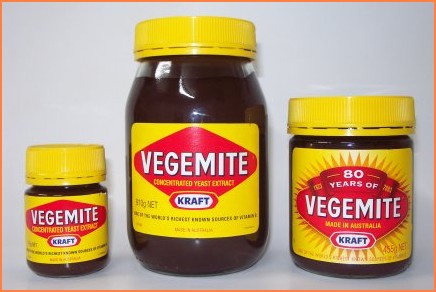
  • Vegemite makes good use of a waste product from the brewing industry. 
  • Polymer banknotes last much longer than paper, saving energy in manufacture and transport. SCATS improves traffic flow, reducing fuel waste
  • CATEc in Portland has developed the Caliper Support System. The CSS is designed to significantly extend disc brake pad and rotor life for road transport vehicles.
  • The Michell thrust bearing was an early twentieth century innovation that improved energy efficiency. By radically reducing friction compared to older bearings, it reduced the amount of waste heat generated and made large turbines for ships and power stations feasible, leading to further gains in energy efficiency. 
  • In renewable energy, Martin Green's team at the University of NSW has long been at the forefront of photovoltaic research, and its buried contact solar cells are made in large numbers overseas. 
There are several other Australian groups contributing in this area,
  • Solar Sailor is an application with large potential. 
  • Solar thermal has a bright future: 
  • Ausra is building large systems in several countries; and millions of flat plate and evacuated tube collector hot water systems on roofs worldwide are based respectively on technology developed by CSIRO and by the University of Sydney. 
  • Nulok has develop a tiled roof system that is franchised worldwide. 
  • Speedpanel - has produced a building product that is better than Hebel!

Biotechnology

  • Nogall was the first genetically modified organism released to the market anywhere in the world. 
  • The Pink Lady apple, bred by John Cripps, is the focus of an innovative marketing campaign. It is protected under Plant Variety Rights legislation that was not even imagined in Maria (Granny) Smith's day. 
  • Meanwhile, biotechnology tools are being used to assist conventional breeding programs that constantly improve many of our crops and livestock. 
  • Starpharma has a core technology (nanoscale dendrimers) that has great potential, it has some diagnostic products on the market, and it is close to releasing Vita-Gel, an HIV barrier with a huge potential market and the potential to save many lives. 


Much of GDP in Australia has been from service based industries while  mining is currently  19% .

Let’s focus on innovation and again become known as the Innovation Nation!

Wednesday, June 05, 2013

8 Tips To Get the Most Out of Your Investors and Board

Inspirational!!
Posted on May 27, 2013Mark Suster  15 Comments and 283 Reactions
Rob Bailey is the CEO of DataSift. He wrote a post this long weekend on how he manages the board of DataSift.
Screen Shot 2013-05-27 at 8.07.34 PM
Datasift is valuable to any business for marketing, customer research, product development, market analysis, etc.
In Rob’s post he asserts, “You get the VCs you deserve” and the corollary “You get the performance out of your board that you deserve.”
His argument is as follows
  • Spend time building investor relationship long before you raise money. 
  • By spending more time educating your board on your business you get more valuable advice from them
  • Your goal should be to turn your VCs into extended members of your team to get real value from them
  • Understanding where your VC partner sits in their respective fund and where their fund is in the cycle of its investment lifecycle will help you understand your VCs behavior.
Rob has grown our US operations from 1 employee (him) to a global organization of 75 employees that will finish the year with 8-digit revenues (90+% recurring) and more than 350% year-over-year growth.
Growth like this, this early in a company’s lifecycle rarely happens.
In this period (less than 2 years) he has brought on incredibly talented senior execs is sales, marketing, product management, client services, finance, vp engineering and more. In his spare time he raised nearly $30 million.
But the thing I am most proud of about Rob is that he has taken a company with a uniquely talented founder  CTO – Nick Halstead – and managed to build a very tight working relationship with Nick where we drive world-class product development without having the usual founder / CEO conflicts. Oh, and did I mention – Rob is in SF and Nick is in the UK. Rob has taken 15 trips to England and Nick even more to the US. It is really working.
The team consists of a highly intelligent and opinionated founder – Nick Halstead. Wallflower – yours truly. Quiet-as-a-mouse Roger Ehrenberg of IA Ventures. True-to-his-heritage Rory O’Driscoll from Scale Ventures. And then there is the one true gentleman of the bunch – Chris Smart, who is non-exec chairman. In addition to helping manage the board Chris also helps represent the interests of the angel investors / common stock holders.
Oh, and did I mention:
Roger – NYC, Rob/Rory – NorCal, Nick/Chris – London ; me – Los Angeles. That in itself is quite a challenge.
So what are Rob’s secret hacks that he didn’t spill in his blog post? 
Here is what I imagine Rob would say were his most effective tools. Sincerely – he is better at managing his board than any exec I have worked with.

1. Email updates frequently

Rob is an over communicator. When it comes to your board this is something to emulate. If you have investors or board members that have wide relationships you can get significantly more value out of them by keeping them informed.
Why?
Investors and board members who know your strategic objectives can advocate on your behalf when they have chance encounters with your partners, customers or potential future investors. The more they know your strategic objectives the more laterally they can act on your behalf in key situations.
Investors and board members who know your key talking points (simplified marketing messages) will help you penetrate the consciousness of even the most hard to reach individuals. I am on a board that does business with Yahoo! One key board member knows Marissa. So naturally we’re pushing for him to drop critical information when their paths cross organically.
Trust me – that kind of encounter can mean the difference between securing a contract, protecting yourself from getting turfed or getting acquired one day.
Equally each of your board members are probably on 5-10 boards. Each of your angels or seed investors may have 20-30 investments.
When they meet Marissa – you want them talking about you more than the others.
And as Rob points out – if you email members with short updates more frequently they are more up to speed when you do need them to weigh in.
How much is too much?
I guess you’ll have to ask them but I’d err on the side of more and let them tell you to dial it back. I’d err on the side of shorter updates versus longer ones. Key point – if your emails are as long as my blog posts you’re forked. Board members will file them rather than read them. Remember – they have 10 other boards.
Make your emails actionable. If you want somebody to take action make it clear what you want them to do.

2. Send Text messaging for rapid responses

Any CEO worth his or her salt knows that her investors get an insane amount of emails and often spend 8+ hours / day in meetings (board meetings, pitches, partner meetings, LP meetings, corporate relationship meetings) so often email is done on the run on one’s iPhone or in the early morning / late evening.
It is common for an investor to read the email but not immediately reply. After all – she is just trying to get through 99 unread emails.
I always encourage people to send the email anyways with the full description of what you want but if the email requires an action then send a follow-on text 24 hours later. It should simply say, “I wanted to call your attention to the email I sent yesterday – it has 1 action for you.” Or, “I sent u an email. Can you please call Stacy to ask about our BD deal? Hoping to hear back tmrw.”
I know it sounds obvious. Trust me – most people don’t do it. Rob does it. On steroids. Sometimes 3x / week. He did it yesterday, “Mark, I’m going to write a blog post following on from your VC’s aren’t dumb. k?” and this morning, “Mark, I sent intro to [redacted], she is in LA. Please meet her while she’s there.”
Here’s the thing people don’t quite get.
VCs crave the ability to help portfolio companies. We’re all secretly paranoid we’re not helping enough and want to know how to be more helpful. When a company gives you a discrete action to carry out – it’s gold dust – I promise you. If board members start joking amongst themselves (as we at DataSift do) that you “got another Rob assignment” you know you’re on the right track.
Rob jokes about it. He makes fun of himself for always asking. He is very pleasant when he calls and writes. And by now we all consider him a friend. If anything we feel indebted to him for his hard work. So if all I need to do is make some customer calls, interview potential employees or help with his fund-raising decks – hallelujah.

3. Ask for short conference calls

I would say the norm for many early-stage companies is somewhere between 6-10 in-person meetings per year. The earlier stage the more likely it is 10 meetings and the later stage the more likely it is 6.
In either case it is very helpful to have a series of 30-45 minute calls in between. Don’t have calls for calls sake. Have topics.
“We’re trying to figure out how to best get a deal with Google. Here are our key contacts. I’d like to schedule a 45-minute call to agree our strategy and understand who your key contacts are.”
Sure – you could do this via email. But by doing quick calls you feel more connected. More information comes out. You start to act cohesively as a group.
And you can often throw in a separate action like approving stock-option grants, getting approval for CAPEX spend, discussing fund raising timing – whatever.

4. Always seek input

You may have an opinion on your market-entry strategy for Europe. You may know how much to pay in cash or equity for your new VP Engineering. You may have the best planning for your on-stage appearance at All Things D.
But asking your board will keep them engaged. It will also often yield unexpected results. For starters your board may have a different perspective than you. That role as sparring partner can be useful if for nothing else than to test your resolve.
I have seen these kinds of discussions change the strategic moves of a company or yield relationships that we didn’t know a board member had to help drive forward an initiative.
If nothing else you will create board cohesion and board education by engaging your board.

5. Assigns tasks

Already covered. But seriously. Assign away. Ask for help reviewing your press release. Ask your VC to send a critical email to a contact. Ask them for a meeting to review your pricing strategy with you. Ask for intros. Ask them to mention you to the press, speak about you on stage when they do public events, whatever.

6. Fight hard, yield when appropriate and always be willing to take feedback

In Rob’s spare time he always seems to be going to a boxing class or some other competitive, physical activity. It’s a good metaphor for his board style. He fights hard for what he believes in. In some cases we disagree with him but decide to trust him if his resolve is firm and his logic is sound.
When it’s me who disagrees I usually formalize it by saying, “OK, Rob. I see it slightly differently but you live in this business every day so I’ll yield to your judgment. Let’s just revisit in 6 months and see if you still feel the same way.”
It’s particularly easy to give in to Rob because he is willing to back down when he either perceives that the board is unified on a different perspective than his own or when he realizes that his logic on an issue wasn’t as sound as his sparring partner.
Sometimes we fight. It sort of feels like fighting with my brothers. One of us usually calls back a couple of hours later to say they were sorry. Or they now see the other persons’s perspective.
I respect Rob a lot and the fact that he is willing to take feedback when warranted gives his great credibility.
When we recommended that Rob get a CEO coach he not only embraced it but craved it and thanked us for suggesting it. Rob is driven to learn. And improve.

7. Manages board meeting expectations (before & after)

We’ve had some good board meetings and some bad ones.
One thing Rob is consistent about is feedback. He calls us all before the board meeting to tell us what he plans to cover and see if we have other agenda items.
Equally important he calls us all after the board meeting.
“How did it go? Where could we improve? What worked for you? Where did we fall short?”
He also gives us feedback on our performance. Usually it is reminding us to be a bit nicer ;-)

8. Results & Measurement oriented

Rob is goal driven and therefore measurement driven. He sets clear goals for what he wants to achieve. He doesn’t just set revenue goals but he sets “quality of revenue” goals.
He sets goals for MRR (monthly recurring revenue) to differentiate from one-time revenue, license revenue, services revenue and other.
He sets goals for revenue diversification (can’t get all revenue from few customers or few partners).
By being so metrics driven we can have a lot more quantifiable and objective discussions at board meetings and at mid-point reviews.

Tuesday, May 07, 2013

Some Gems from Start-Up Entrepreneurs - what are yours?

Kumar Subramanum - Media Melon see interview 

  • Partner with others who are bigger, 
  • partner with as many as possible, 
  • build a great team that is complementary to each other
Dean Mcevoy - Spreets and Booking Angel see interview 
  • Validate your idea
  • Try different things
  • Ready , Aim, Fire - Just do it!
Simon Butler - Eone and Contivio - see profile
  • Define your market
  • Make sure your product is a painkiller
  • Do well and let themm talk
  • persistance and commitment to see it to the end
M Seebety
  • Focus on core business
  • Focus on Customer needs - not technology and gadgets
Richard Zippel - Sun Microsystems
  • Be passionate and believein what you have got
Damian Perry
  • Strong People - hire the best
  • Stay focussed
Gilad Shlag - CEO Meemix see video 
  • What is your Competitive Advantage
  • Size of market
  • Team is key
  • Find good investors and look after them 
Ron Yekutiel - CEO Kaltura - see video  and another 
  • Entrepreneurship is an art not a science
  • be able to turn 180 degrees in another direction
  • Follow your dream
  • Focus
  • Passionate, enjoy
  • Delegate
  • Do it


Monday, March 11, 2013

10 things you need to do to secure the funding needed for their business to survive and thrive


1.    Get to know your investor before asking for funding. understand the investor and present the information, the style of the pitch, in a way the investor wants it.
2.   Know your market and your customer . What value will your product bring to the customer?
3.   Be ambitious – not conservative…. This is about investing in a disruptive technology…. Its not a me too business…. It’s a binary play … o or won!
4.   Management and skills of the team is key. The product can be great… but if you have a shit team… you can kiss your investment goodbye. Ideally find someone who has done this before.
5.   Know your 30 second pitch. Know your “why” “what” “who” and ” how”
6.   Know your numbers
7.   This needs to be globally scalable!
8.   Needs to be a pain killer and not a vitamin
9.   Pitch the benefits to the client not the features of the product
10. How much money I am going to make and by when?

Saturday, December 15, 2012

Entrpreneurs can change the world

ANd this is why we do what we do!! welcome to club fear!

Remember when you were a kid and thought you can do anything?
WELL,,, you still can
1 person can make a difference
with a clear vision, determination and persistance
there will be obstacles and turbulance - but this creates opportunities
pushing us
making a better world
coach, train and connect
innovate
heal the economy - take us to new heights
how can we live better
discover new ways of doing things
driving innovation
creating jobs
making a better world
fuelling growth
this is small business
this is our entrepreneurs
lets connect and help each other!
www.10x.com.au 

Friday, November 02, 2012