Showing posts with label ark. Show all posts

Tuesday, June 11, 2013

Investor home loans hit five-year high

AUSTRALIAN PROPERTY NEWS

Posted on Tuesday, June 11 2013 at 4:05 PM
Investors are coming back to the market place, with loans for housing finance on the rise.
CommSec reports the value of home loans taken out by investors rose by 1.1 per cent in April thanks to rising rents and falling interest rates.
“Tight rental market, state government grants for home builders, a relative lack of new homes being built and low interest rates are attracting investors,” CommSec chief economist Craig James says.
“First homebuyers are still reluctant to buy homes, preferring to rent instead. Fortunately second and subsequent homebuyers are active in buying and building homes together with investors.”
The number of new owner-occupier housing loans rose by 0.8 per cent in April, after a 4.8 per cent lift in March – the strongest gain in four years. The proportion of first homebuyers in the market rose from a near nine-year low of 14.2 per cent in March to 14.3 per cent in April. Fixed rate loans rose from 18.4 per cent of all loans to 20.6 per cent in April – also the highest level in five years. The average home loan across Australia stood at $301,800 in April, up 2.6 per cent on a year ago.
“The housing market is in recovery mode,” James says.
“The good news is that low interest rates and government grants are serving to boost new construction. Interestingly, it’s not the first homebuyers that are embracing the opportunities; rather they’re relying on investors to get the new houses and apartments built.”

Monday, May 20, 2013

5 things to do to get ready for tax time 6 weeks to go!


1.Take care of the standard little things 
·         writing off bad debts
·         maximising stock valuation outcomes
·         declaration of bonuses and director fees
·         prepayments
·         income deferrals
·         trustee resolutions to appoint income
·         maximising depreciation charges
·         superannuation payments
2. Look for the bigger tax planning opportunities
Beyond thes little things , there may be larger tax planning opportunities that should be considered.
This could include being eligible to claim R&D tax rebates, taking advantage of the loss carry-back rules to get a refund of company tax paid in the last year, and export market development grant eligibility.
All of these opportunities are time sensitive and time limited. The things you do between now and June 30 could make a significant difference in the benefit obtained.
 3. Keep in mind any cashflow implications
This is an essential consideration. Some of the options will require you to spend money, bring forward expenditure or defer income.These will all have cashflow impacts and you need to ensure that creating the best tax outcome does not cause a short-term cashflow problem.
Calculate the funding impact of your choices, and if you need funding support from your bank then talk to them early. You need to map out how much you need, how long you’ll need it for and what is being covered.
4. Are there any risks?
Keep in mind there could be some risks with the decisions being taken. These could include tax, funding and business risks. Tax benefits always need to stack up on the risk-to-reward matrix. Quantify the benefit and assess any risks.


5. Get proper advice
You should take advice on your tax planning. Spend some time with your accountant and map out a plan that works for you.

Wednesday, May 15, 2013

2013/14 Australian Federal Budget - how it affects me!


Last night the Budget delivered no real surprises after the majority of the proposed changes had been drip fed to the market in previous months.

Wayne Swan blamed a stubbornly high Australian dollar and lower commodity prices for a dramatic fall of some $17 billion in forecasted tax receipts, leading to an estimated budget deficit for 2012/13 of $18 billion... and that was why there wasn’t the $1.5b surplus promised....

He knew there was a high dollar and lower commodity prices a year ago.... why did he not make appropriate changes then? Or tell us then that there would not be a surplus then ? what a joke!!! I hate surprises!!
If I gave this excuse to my board... I would be fired on the spot!

What was the price of iron-ore  when he took over the reins  from Costello and what are they now? Costello had a surplus when Swan took over!

Key takeouts relevant to me


From a financial planning perspective

Great Article from our team at Ark total Wealth please feel free to contact them by clicking on their link
From a Financial Planning perspective, there have been a few changes in relation to superannaution and taxation which may have an impact on your personal situation. We have provided a brief summary on some fo the key changes.


  • Superannuation


Cap on Tax Free Earnings - At the moment, any income in the pension phase is tax free. From the 1st of July 2014, the tax free portion will be capped at $100,000 per individual. Any earnings above this will incur a 15% tax. There is no change to the taxation of lump sum withdrawals, these will still be tax free.
There is however an exemption around the capital gains tax as this could cause many funds to exceed the $100,000 cap. For assets purchased prior to the 5th of April 2013, until the 1st of July 2024 the old tax system will apply (no tax in pension phase). This gives you ten years to structure your assets within the superannuation environment.

Refund of Excess Contributions - Current excess contributions are taxed at 46.5%. Excess contributions will now be taxed at your marginal tax rate as opposed to the 46.5%. In addition, excess contributions can be withdrawn from the fund.

Higher Concessional Caps - If you are aged over 60, from the 1st of July 2013 your concessional cap will increase from $25,000 to $35,000. From the 1st of July 2014, this will apply to anyone aged 50 and over. These amounts will be indexed.
Additional 15% tax for high income earners on concessional contributions - For those that earn more than $300,000, an additional 15% tax will be applied to concessional contributions. These contributions include superannuation guarantee and salary sacrifice Contributions. If you earn more than $300,000, you need to review your super contributions.


  • Taxation/Cash Flow/Social Security


Cap on Self Education Expenses - There will be a cap of $2,000 on self education expenses that can be claimed in a Financial Year.

Replacement of Baby Bonus - This change has attracted the most attention. Essentially the baby bonus will be replaced by the Family Tax Benefit A.

Increase of 0.5% in Medicare Levy - Another of the well documented changes. The increase in the Medicare levy will be used to help fund DisabilityCare Australia.(.05% on 100k taxable income is $500 - well worth it to support disabled kids and education!!) 

Ending of discount of early repayment of HECS/HELP debt - From the 1st of January, there will be no discount for up-front and voluntary payments of HECS and HELP debt

Given the uncertainty around which changes will be implemented, it is very much a wait and see approach for everyone. If you have any questions, please don't hesitate to contact on of our Advisors.


From an Innovation Perspective 

Research and development

More timely R&D credits for smaller business

Quarterly payments of the 45% refundable tax offset from 1 January 2014for companies having a turnover of less than $20 million. This measure is designed to provide a cash flow benefit to SME’s as they will not need to wait until lodgement of their income tax return for their refundable R&D tax offset. There are a number of tests in the draft legislation that potentially make it difficult for those companies, at which the assistance is targeted, to actually qualify for the payments. BSI have made submissions to treasury in this regard.

Denying Companies with turnover of $20b or more to access R&D Incentives encouraging R&D for conglomerates to go offshore!

This measure was announced in February and and is expected to affect 20 corporate groups including large banks, miners, refiners, retailers and telcos. Whilst the budgeted savings may be significant ($1.1 billion over the forward estimates), the potential cost to the economy from these corporates potentially shifting R&D activities and other operations offshore could be massive!

Speak to one of our R&D Gurus to see how they can help you maximise your incentives

Monday, May 13, 2013

Will your super be enough to retire on?

How much super do you need to retire?
Some say 20 times your current annual spend .

So if you live on 10k per month, you need $2 million to retire!

A scary statistic from the Association of Superannuation Funds of Australia:-

Based on current balances and current savings, "the average retirement superannuation payout at age 60 for a male currently aged 35 to 44 would be $183,000, while for a female it would only be $93,000."

this means that millions of Australians will not have enough money to live comfortably in their retirement.

So, if you want to retire with adequate resources, marry rich, inherit, make serious money from a successful venture

or

Start planning your financial future, and develop a strategy for regular saving and strategic investment .

Below are 4 simple rules to achieve financial freedom ( from the "richest man in Babylon" )(great book, by the way)

1. Spend less than you earn

2. Invest the difference wisely

3. Reinvest your investment income so you get compounding returns.
By the time you reach financial freedom, almost all your assets will have come from compounding capital growth, not from your income, your savings or your rent.

4. Keep doing steps 1 and 2 until your asset base reaches a critical mass so that you have the cash machine that gives you the income you desire.

Property -
Why has property been a great wealth creator in an investment portfolio - simply LEVERAGE !

You can now use your super as a deposit to acquire investment properties, using a self-managed superannuation fund (SMSF).

To find out how - download the attached ebook on property and self managed super .
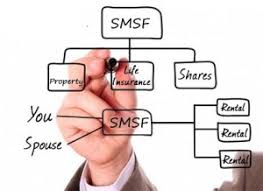
Should you set up an SMSF giving you control of managing your Super?


Advantages

Control – You have control over your SMSF rather than entrusting your future financial wellbeing to a complete stranger, who will take your hard-earned cash and invest it in shares and managed funds that may or may not perform.

Leverage – You can make the money in your SMSF work harder by using it as a deposit and borrowing to buy investment properties that grow in value.

Tax savings – when you retire, Capital gains is exempt from capital gains tax if you sell the investment, or income tax on any rental income should you decide to hang onto it. Before you retire, any capital gains or rental income generated by your SMSF is taxed at a rate of 15% and 10% Capital Gains Tax if you sold the property after holding on to it for over a year.

Disadvantages

The cost! This usually involves thousands of dollars in establishment costs and sometimes there will be higher fees involved in borrowing to buy property through your SMSF. (However, when you compare it to the charges of your normal SMSF, it will probably be comparable, but transparent!

The confusion – There's no denying that managing your own super fund can be a minefield of complicated rules and regulations.

Get something wrong and you could end up paying hefty penalties. Of course, you can pay a professional to manage it on your behalf and this is something I would strongly advise anyone with a SMSF to do – whether they're buying real estate or not!

Enough cash in your smsf . generally at least $150k This is not a strategy for someone with a small amount of cash .

So, if you want financial independence in retirement, put some plans in place, review your finances, do something now and don't leave it until it's too late.

Get educated by someone who you know , like and trust!

Be careful

before you go down the route of setting up your own SMSF, it is critical to seek independent advice from a properly qualified financial planner to ensure that it is appropriate for your circumstances, and that you set up things correctly and don't fall foul of the law!

Be sure to attend Ark's Property and Self Managed Superfund Seminar

Where: Level 7, 14 Martin Place, NSW
Duration: 1 hour
Light snacks will be provided