Tuesday, October 11, 2016

From a Stamford dorm room to world domination in 20 years

Inspired from Business Insider 
Pg-3-google-ap.jpg
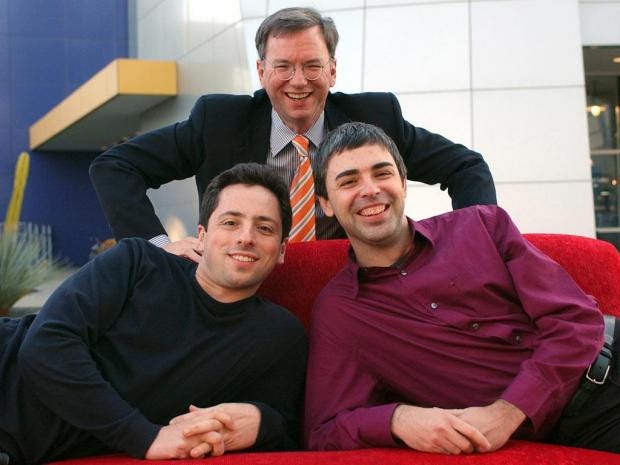
Google executive chairman Erich Schmidt, back, with founders Sergey Brin, left, and Larry Page AP
Google is now the most-visited website in the world, makes Google Android, the most popular operating system in the world, is the most profitable advertising business in the world, and  its parent company Alphabet is now worth $543.3 billion.
BOOM
 Larry Page and Sergey Brin, 2 Stanford PhD students, started Google in 1996.... incubating "BackRub," a revolutionary search engine that used a technology called "PageRank" that would rank web pages based on how many other web pages linked back to them.

sergey-brin-larry-page.jpg
(Bloomberg Game Changers)
Bakrub rebranded "googol," or the number one with a hundred zeroes before it, better reflected the amount of data they were trying to sift through. 
Goog01 morphed into  "Google" 
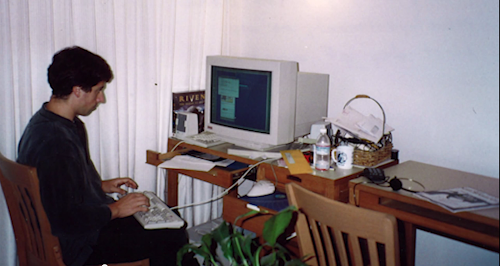
sergey-brin.jpg
(Google)
The first-ever Google server was built in a custom case made out of Legos and housed on the Stanford campus, at google.stanford.edu, and the Google.com domain name was registered a year later on September 15th, 1997.
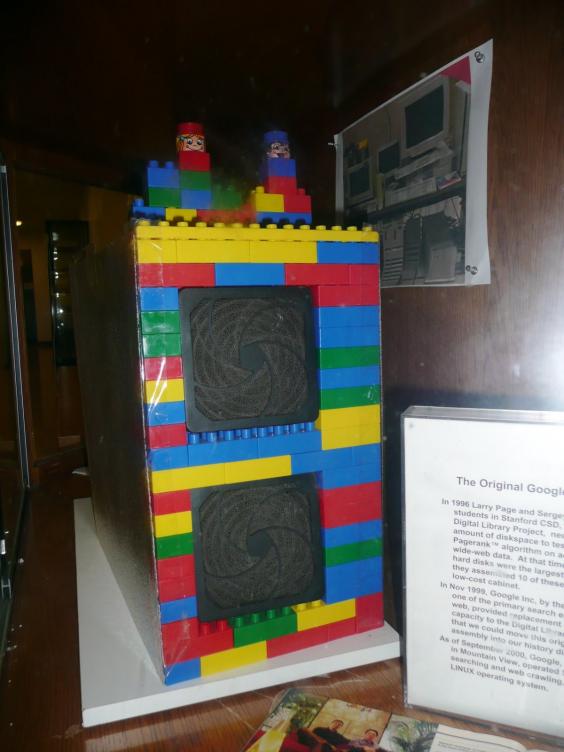
google-server.jpg
(Wikimedia Commons)
After using too much of Stanford's bandwidth, Page and Brin relocated to the garage of Susan Wojcicki - googles 1st employee, after getting $100k seed investment from Sun Microsystems founder Andy Bechtolsheim. 
Google officially incorporated on September 4th, 1998.
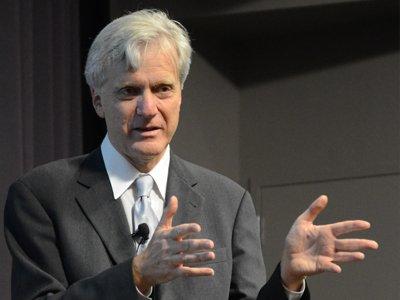
andy-bechtolsheim.jpg
(Wikimedia Commons)
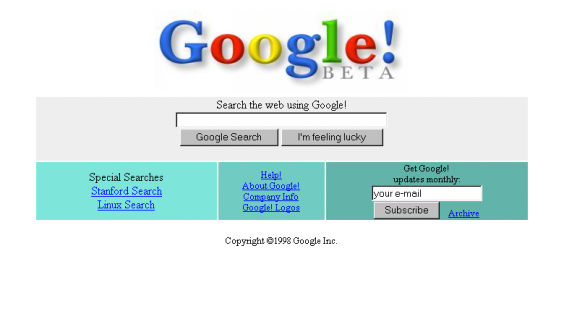
Google's first homepage was a bit clunky where their focussed efforts wereon the algorithms that made it run.
google-original.jpg
(Google)
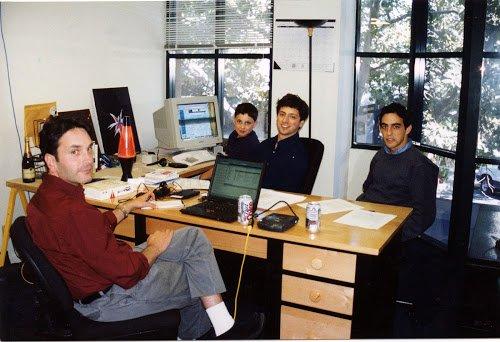
In 1999, Excite was in negotiations with Google to acquire it for $750k  but the the deal fell through and later that year , Google moved into its first-ever office at 165 University Avenue in Palo Alto — the same office building that housed companies like PayPal and Logitech.
google-office.jpg
(Google)
Google then raised its first round of venture capital funding in the form of a $25 million investment from Kleiner Perkins Caufield and Byers and Sequoia Capital. (3 years from inception) .

How key was it for google to be in an incubated space? Was this a critical factor in its $25m series A? 

Google debuted its AdWords product in late 2000, generating revenue, protecting the from the dot com bust! Brin and Page were becoming rock stars in the tech community for succeeding where everybody else failed.
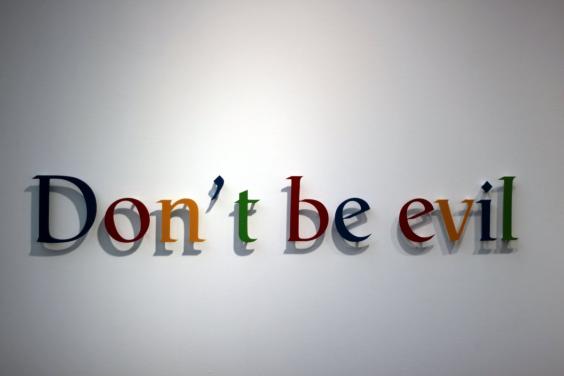
Google had an awesome  corporate philosophy: 
"Don’t be evil. We believe strongly that in the long term, we will be better served — as shareholders and in all other ways — by a company that does good things for the world even if we forgo some short term gains."
google7.jpg
(Tangi Bertin/Flickr) DOnt Be Evil - Be Nice!
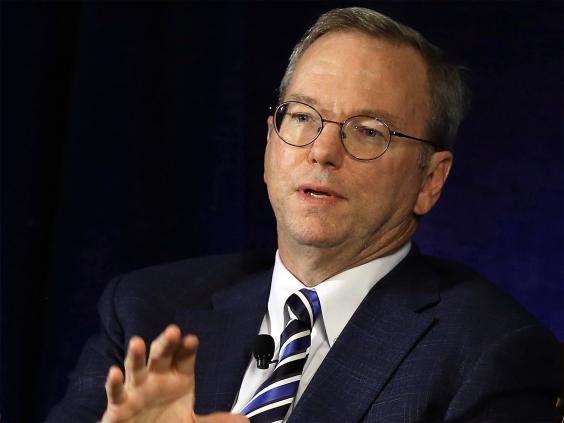
Eric Schmidt became the first CEO in 2001, leaving the founders free to focus on Google's technology.
pg-46-eric-schmidt-getty.jpg
Eric Schmidt (Getty Images)

In 2003, Google leased its Googleplex campus from Silicon Graphics and in 2006 (10 years on) bought the building.
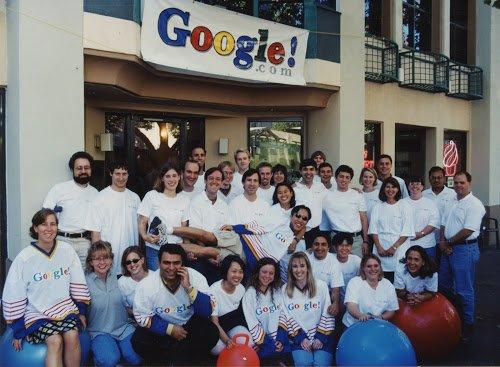
google.jpg
(Google)
The Googleplex became a symbol of Silicon Valley success. Google worked at making an awesome environment, offering free meals to its employees. 
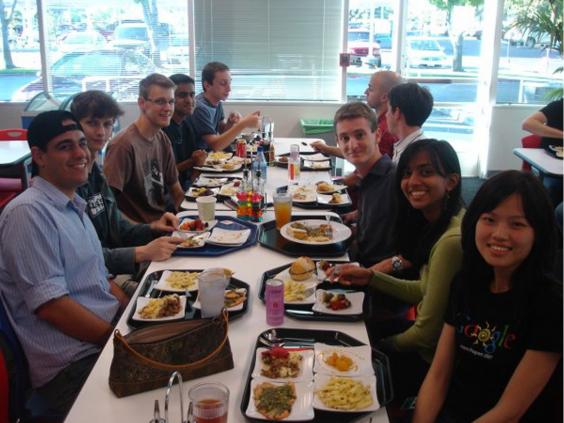
google-cafeteria.jpg
(Flickr/Dmitry Alekseenko)
August 19th, 2004, Google had its initial public offering on the stock market, priced at $85 per share. Today, a share in Google parent company Alphabet costs over $800. 


10X

On April 1st, 2004, Google launched Gmail, 
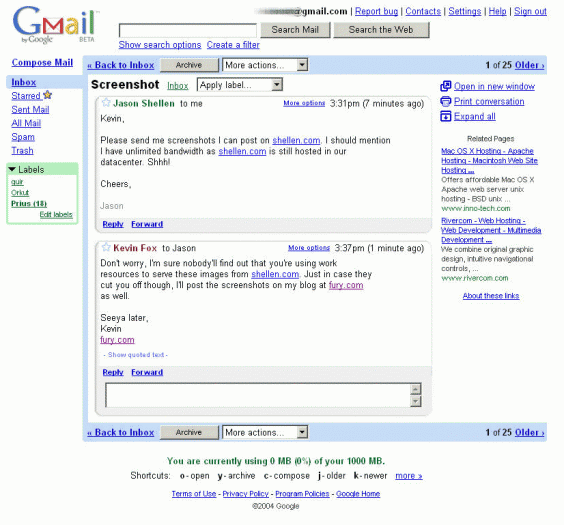
gmail-0.jpg
(Biz Stone) Gmail Launched 
In fact, after the IPO, Google set its sights on expanding past the search engine. Google started gobbling up startups to launch new products like Google Docs and Google Maps, Android, YouTube 
Acquisition Trail 
2006 also saw Google buy up YouTube, a brand-new video-sharing site that was founded by a bunch of ex-PayPal employees. Google paid $1.65 billion in stock for YouTube.
Google was getting bigger and bigger.

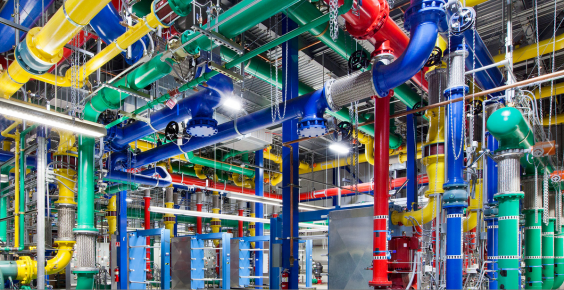
 In 2006, Google opened up its first wholly-owned and designed data center in The Dalles, Oregon, on the banks of the Columbia river, squeezing out incredibly high levels of efficiency from its data centers with inventive new designs.
google10.jpg
data center in The Dalles, Oregon (Google)
Google had become the generic word for "searching the Internet." And in June of 2006, the verb "google" was added to the Merriam-Webster Dictionary.
In 2008, the first-ever Android smartphone that consumers could buy. Today, Google Android is bigger than Apple IOS 

htc-dream.jpg
(Wikimedia) 1st Google Android
In 2008 Google Chrome was created, a web browser that integrated tightly with Google's growing roster of web services. Google wanted to make sure that on every device, you keep using Google — and looking at Google ads.
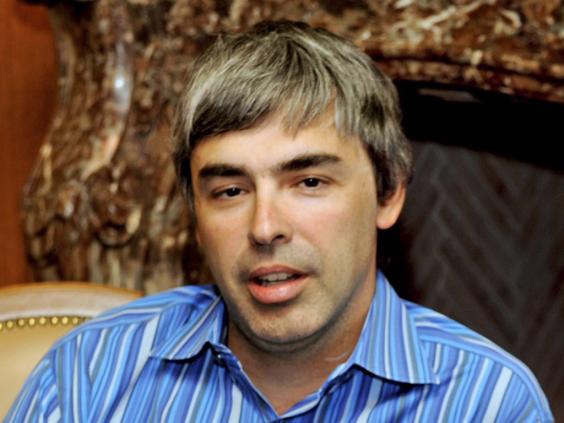
In 2011, Schmidt stepped down as Google CEO, and Larry Page became the new CEO of Google.
SU-06-world1-EPA.jpg
Larry Page (EPA)

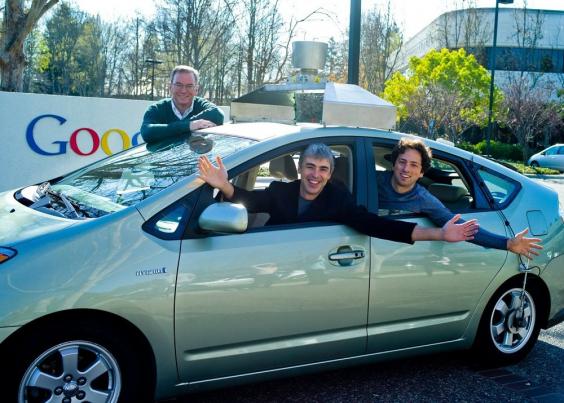
In 2010, Google announced that it was working on driverless cars.
google-car.jpg
Driverless Car (Google)

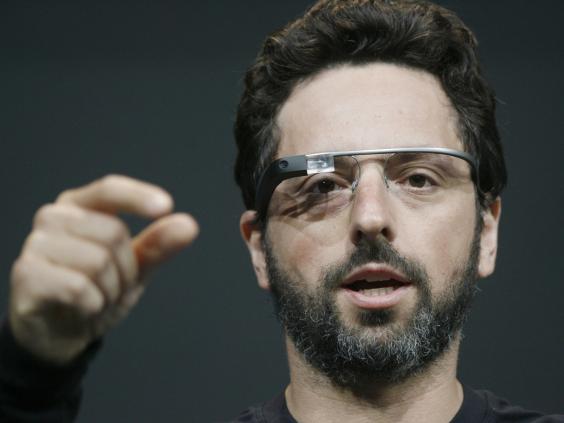
In 2012, Google announced Google Glass
google-glas-getty.jpg
Google Glasses (Getty Images)
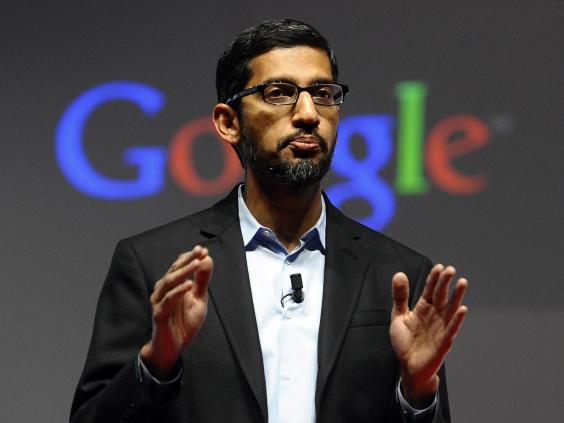
And recently, google restructured so Google became a wholly owned subsidiary of Alphabet, leaving Sundar Pichai in charge of the whole company, guiding Google into artificial intelligence.
pg-53-google-ap.jpg
Sundar Pichai has become Google’s new chief executive (AP)

Monday, October 10, 2016

Sydney office space management startup SpaceConnect raises $400,000

Sydney office space management startup SpaceConnect has today announced a raise of $400,000 following its graduation from BlueChilli’s startup accelerator program Disrupt@Scale. The seed funding, from BlueChilli, will allow the startup to drive growth across its Australian corporate customer base.

SpaceConnect enables a workplace to manage their desk and meeting room bookings through the use of IoT (Internet of Things) technology to automatically book a free space when needed. The startup uses iBeacon and Ambient Intelligence technology to provide property managers and corporates with real-time live insights into how their space is being utilised.

As space within a workplace moves towards an open plan working environment, property managers are tasked with the challenge of ensuring office space is utilised to its full potential. For larger companies employees wanting to utilise the boardroom for example, it can be tricky to plan around timetables and free up space.

“Property managers worldwide are adopting an ‘activity based working’ environment, hoping to improve the utilisation of expensive office space and increase the effectiveness of collaboration among employees,” said SpaceConnect founder, Matt Pope.

“However they soon learn it’s not enough to just knock down walls and ask everyone to ‘hot desk’. Organisations need help to make sure they’re situating employees and teams in the right locations for the goals they’re tasked with achieving.”

Based on the current usage of space, SpaceConnect’s algorithm can predict the future requirements of a particular space to ensure seamless space management experiences for corporates and their employees. With numerous meetings being pushed forward or outright cancelled, SpaceConnect automatically checks-in the next on the list to increase workplace space efficiency.

In engaging space with real-time data, SpaceConnect also aims to help reduce commercial property costs. “With the increasing rate of change it’s not enough to review workplace planning annually or quarterly,” said Pope. “Our customers are seeking a technology solution to help them dynamically plan the utilisation of their workplaces day by day, reflecting the fluid nature of modern knowledge industries.”

BlueChilli founder, Sebastien Eckersley-Maslinn believes that the interest in SpaceConnect comes down to the growing adoption of IoT technology.

“SpaceConnect’s combination of ‘internet of things’ sensors and algorithmic workplace efficiency is behind our decision to reinvest in this exciting startup,” he said.

Making better use of space is also the focus for fellow Sydney startup TwoSpace, connecting people with unused restaurant space to help restaurant owners make use of space that is typically unused during off hours. TwoSpace works by having users sign up for a monthly subscription that will, once the network of locations is built up, give them access to every TwoSpace location. For restaurants, TwoSpace will set up wifi and power outlets to make sure they are equipped to accommodate all the laptops.

The application of IoT to the problem is an interesting one: recently, founder of Everything IoT, Eitan Bienstock told Startup Daily that IoT is the “third wave of innovation”and believes this era will be bigger than that of the pre-internet and the internet. IoT technology is a horizontal technology that has penetrated many industries including healthtech, agritech and smart cities.

“The way IoT is going to change our lives is unbelievable, from how we live in our houses, how we move around, but even more than that it’s going to completely change the manufacturing and industrial industry. The industrial IoT is much larger than the consumer IoT. It’s the most exciting innovation,” he said.

In September this year the government launched a new global initiative called Hypercat Australia in a bid to increase the support of IoT and smart cities development. The initiative came as part of an alliance with industry leaders, corporates and government to transform Australian cities into smarter and tech driven hubs.

National IoT leader of KPMG Australia, Piers Hogarth-Scott believes that the fusing together of sectors will drive the growth of smart cities, not only locally, but globally as well.

“The launch of Hypercat in Australia aims to unlock the benefits of Smart Cities by creating an interoperable IoT ecosystem that gives confidence to cities and local government,” he said. “More importantly, if we can play a role in fostering a global standard we can unlock the power of the Internet of Things for everybody.”

Image: Matt Pope. Source: Supplied.

Thursday, October 06, 2016

A VC's Personal List of Consumer Startup Ideas

One thing I've done over the years as a venture investor is keep a running log of interesting startup ideas. After hearing countless pitches and researching a wide variety of industries, I naturally formed my own startup concepts, particularly in consumer internet. Over time, I've jotted them down in my notebook. However, I will not be an entrepreneur any time soon and so those ideas are helping no one buried away in my Evernote. So similar to YCombinator's "Requests for Startups", below is a short list of some of my personal favorites.

A quick foreword.  These ideas or problem areas are largely based on my personal interests or are specific problems that are relevant to me. Some are large opportunities, and others are nichier lifestyle businesses that are not necessarily venture-backable. Generally, I tend to focus on hugely profitable industries with old incumbents, new categories or niche markets with real problems that need to be solved, or products and services that are begging to be improved. 

Game Discovery

There are way too many video games today. The rapid proliferation of mobile games, indie PC games, and games across various form factors such as next-gen consoles, previous-gen consoles, PC, mobile (and multiple app stores), handheld, browser-based, etc, have left consumers confused. The media sites and blogs serving the industry are fairly antiquated and online editorial reviews are often biased and unhelpful. There should be a next-gen video game content site focused on sifting through the noise and acting as a hub for your gaming interest graph. It feels like a data problem and there is probably a way to tag every game in existence and better organize everything. Wouldn't it be nice to be able to say "I want a bluetooth co-op sports game for a plane ride?", and then surface all the relevant content?

Stocks Website

I use Yahoo Finance, and so does everyone I know, including venture and growth investors! How is it that professional investors still largely gets their finance news and do their stock tracking on a site like Yahoo Finance? Sure, I have an online brokerage account for making trades and checking my active portfolio, but I still visit Google Finance or Yahoo Finance every day. These products are rough. I have to load about 10 pages in order to add a ticker to my watch list, and it's incredibly painful to customize anything so I don't even bother. There should be a drag-and-drop, WYSIWYG interface to add or remove tickers, pull in new IPOs, do dead simple charting, pull in accurate news and earnings dates, etc. Basically, Yahoo Finance should be rebuilt from the ground up, and the data feeds to access live market data are already out there. 

Synchronous Mobile Community

I love Reddit and use it every day, as do many others that I know. However, the site experience is lackluster and very dated. Reddit's new mobile app is pretty good, but aside from that, there is really no community on mobile with the scale and reach that Reddit has. Another observation is that there have been several Q&A-based apps that have gotten reasonable traction in the past few years. What I haven't seen is a truly synchronous mobile/social community. Rather than post on forums or on Reddit asynchronously and wait for engagement or upvotes, there should be a mobile app where I can ask a question and be thrown into a live thread with other users. These chat groups could be 5 people, 10 people, 50 people or more, and users would be engaged in several live threads at any given time. Users could build up credibility and reputation in the community for being helpful, and the system could intelligently match people based on factors like age, geo, interests, reputation, and so forth. Basically, imagine every obscure sub-Reddit being converted into these mobile, synchronous micro-communities - something like that would be a killer app.  

Next-gen Subscription Commerce

I love subscription commerce as a concept. They don't always make great venture-backed businesses, but I love that you can find an interesting niche and make revenue on day one. Of course companies such as Stitch Fix and Blue Apron are certainly not niche businesses as they are both massive and appear to be IPO-bound. The really interesting thing about both of these businesses is that they merge the physical world (mail-based commerce) with the digital world. Stitch Fix in particular places a heavy emphasis on user preferences, data and personalization. There are opportunities to take this concept even further. To use a bad example, imagine an online book club of sorts, where I get a push notification each month and I get to vote on potential books or select one out of a short list based on my interests. Then, I receive the book in the mail, and instead of forgetting about the app, it would continue to engage me via a social features, group chats with other readers, etc. This is probably a bad example, but it illustrates the concept I'm going for. Basically, there should be interesting new commerce experiences that offer deeper digital engagement beyond just the selection of a product.    

Next-gen Evernote

I've been using Evernote for six years now. It's a great platform and I run a lot of my life on it, but it's getting stale. Most productivity apps do a good job of basic note-taking, to-do's, clippings, and cross-platform sync, but that's about it. I can imagine a far superior app that essentially serves as a second space for my brain. Imagine a larger, more malleable canvas where you can zoom out (like Prezi), and have more templatized "boards" on which you can drag and drop all forms of media, take notes, draw diagrams, connect disparate ideas together, etc. You can imagine features such as automated tagging, intelligent sorting, voice dictation, and so forth. I'm not sure what a next-gen Evernote will look like, but I'll definitely be the first to switch over. 

News Aggregator

I hate reading or watching any kind of news these days. I feel like I get dumber every time I open up an article in my news aggregator app or read headlines in my RSS feed. There has to be a better way to filter out the noise. Perhaps this is a way to ingest news from all around the web on a daily basis, analyze and tag articles on a bunch of different variables, and serve the most comprehensive article to a user based on his/her ever-changing preferences. RSS feeds get filled with a bunch of junk articles and duplicates. There should be a way to reduce duplicates, gauge reputation of publishers, score and rank specific authors, and create a self-learning service that offers surfaces better content to the reader.

Parting Thoughts

The ideas above represent a short list of some (not all!) of the concepts that have intrigued me over the years. They don't all represent multi-billion dollar opportunities, but they were salient enough problems for me to care about and want to solve. I probably won't get around to solving most of them, so I hope someone else does!


[originally posted at mahesh-vc.com]


Factom Snags $4.2M Series A for Record-Encrypting Blockchain Tech

Factom Snags $4.2M Series A for Record-Encrypting Blockchain Tech

10/5/16 http://www.xconomy.com/texas/2016/10/05/factom-snags-4-2m-series-a-for-record-encrypting-blockchain-tech/

Austin—Factom, an Austin, TX-based company that uses blockchain technology to secure and verify data such as public records and business documents, has raised a $4.2 million Series A funding round led by Tim Draper, the noted venture capitalist who runs investment firm Draper Associates.

The funding will be used to further develop Factom’s product line and software, which is based in recording and publishing data using blockchains. Factom co-founder and CEO Peter Kirby discussed the company’s business with Xconomy in detail last year. Like financial transactions made using Bitcoin, Factom encrypts its clients’ data and publishes the encrypted information in public ledgers, with only the publisher and client owning the key to the code.

Since then, Factom has developed a few product lines, known as Apollo, Iris, and Hera—focused on auditing, identifying a person’s identity with Internet-connected devices, and working with businesses and governments. (The company was named one of the Austin Chamber of Commerce’s A-List startups for 2016.)

“Securing data is mission critical for governments, banks, car companies, credit card companies, retailers and any company concerned with hacking,” Draper said in a press statement. “By decentralizing data through the blockchain, Factom avoids critical failures due to user error or hacker.”

In addition to funds associated with Draper Associates, other investors in the Series A round were Propertyinfo Corporation, Star Vista Capital, CashBUS, BnkToTheFuture, Fenbushi Corporation, Fenbushi Investment Fund, China Canada Angels, Plug and Play, Tospring Technology Limited, and angel investors Kevin Spiers, Darla Spiers, Hillary Ryan, Leon Fu, Roland Hicks, and the Marc Shubert Living Trust.

Wednesday, October 05, 2016

Krux acquired by salesforce for $700m


Salesforce has acquired marketing data software company Krux for $700 million ( the Wall Street Journal, paying $340 million in cash for the company.

Founded in 2010  Krux is a marketing software company specialising  in data analysis and intelligence. Marketers use Krux’s software to better target customers. 

Krux  co-founded by Tom Chavez  and Vivek S. Vaidya,  raised only $50 million in its time as a startup: investors included Accel, Sapphire Ventures and IDG. It currently works with some 200 customers, and has been working closely with Salesforce.

Salesforce has spent nearly $4 billion on acquiring companies like Demandware, Quip, and BeyondCore over the past 12 months, as well as making a failed bid to buy LinkedIn for over $26 billion. 

Is twitter next ?

Salesforce CEO Marc Benioff hinted that he is on a roll and the acquisitions will keep on coming! 

Twitter ripe for acquisition

Will Twitter privatise or be acquired and if so who are the frontline suitors? 
 

What is Twitter? 
 
Twitter s sort of a news wire on steroids with an ability to easily comment on something you're thinking about now! 

 Twitter is also the go-to place for instant reactions to breaking news, political speeches, sports games ,  award shows and the like. In Australia, q and a is a case in point. 

How much? 
$20b or thereabouts - not bad for co-founder Williams 

Who are the suitors?
 
 Google, Salesforce, Disney, News Corp, Comcast and Apple.  Saudi Prince Alwaleed bin Talal and former Microsoft CEO Steve Ballmer, who are two of Twitter's largest shareholders, could team up to take the company private.
 
Why would some acquire twitter? 
 
Google (Alphabet)
 Google needs for what Twitter is selling and they have the money! 
Alphabet generated $21B in revenue last quarter alone, which is right on par with what Twitter ..  Twitter's executive chairman Omid Kordestani also used to work for Google.

 Google a much-needed complement to pair with YouTube, that will compete with Facebook and snapchat.

Will regulators would kill this deal in its tracks due to antitrust concerns. 

Because Google owns basically all of search, and a good chunk of social, would make them a totally dominant force.... if they are not already!!!
 
Salesforce
Salesforce already tried to buy LinkedIn, so clearly they have an interest in social.

Why? 

One word 
/
/
/
Data
 
Earlier this year, SalesForce acquired MetaMind, a company that specializes in deep learning AI with the goal of bringing artificial intelligence to all of its products. AI will  help sales teams identify leads that are most likely to buy and help marketing teams determine which products will sell.

And what AI needs in order to actually work is user data. Lots of it. Something Twitter has lots of 
 
Disney
Disney owns ESPN.  ESPN streams 6200 live and/or original hours of programming per year.  Many people watching those games take to Twitter to celebrate a win, critique a play call, and engage with both friend and foe.
 
Joining those 2 things -- live video content and real-time viewer engagement -- is a good fit!  And thanks to Twitter’s deal with the NFL, we’ve already seen its potential firsthand.
 
Twitter CEO, Jack Dorsey, is also on Disney’s board. Certainly cannot hurt.
 
 (Source:- Bob Pritchard) 

Monday, October 03, 2016

ROSIE THE ROBOT HELPS FINTECH START-UP FLAMINGO TO A $24M IPO

Written on the 29 September 2016 by Lin Evlinhttp://www.businessnewsaus.com.au/articles/rosie-the-robot-helps-fintech-start-up-flamingo-to-a--24m-ipo.html
ROSIE THE ROBOT HELPS FINTECH START-UP FLAMINGO TO A $24M IPO

ROSIE the artificial intelligence robot, created by Dr Catriona Wallace of Flamingo, has been helping companies since its inception in 2014 to turn around shockingly low online sales conversion of financial services products. Now, Flamingo is subject to an initial public offering (IPO) ahead of a $23.8 million ASX listing next month.

Dr Wallace (pictured), a serial Australian entrepreneur, has used her extensive background in human technology interaction to establish Flamingo, an intelligent online guided selling platform to help financial services companies tackle the issue of low online sales conversion rates, which she says is around one to three per cent.

"I saw that there was a huge gap in what customers wanted particularly from financial services companies and what these sorts of companies were able to deliver in relation to online sales."

"There was an opportunity to sell a software product that allowed businesses, particularly financial services companies, to intelligently guide customers through the purchase of complex products that would significantly overcome a common problem many businesses have which is very low online conversion rates and also give customers a much better sales experience."

This guided platform, fuses together webchat conversations, webforms and artificial intelligence to provide an intelligent assistant - Rosie - who guides and assists customers through their decision making process.

Flamingo will officially list on the ASX on or around 14 October 2016. Dr Wallace says the IPO, led by Ostana Capital, will raise $3 million, and it is already oversubscribed in terms of commitments.

The listing process includes merging Flamingo with existing ASX listed company Cre8Tek Limited and then relisting the merged entity which will remain as Cre8Tek.  The company is offering 75 million shares at an offer price of $0.04 per share.  

The funds from the capital raising will be put towards research, development and marketing.

"Two-thirds of that funding will be used to continue to build our artificial intelligence capability and a third of that will be used to begin to take the product to market through sales and marketing."

"What we are looking at doing with the company and the product is building the world's really first significant conversational commerce platform company and we have very strong revenue targets for the next three years for this to be a global business providing intelligence assistance to financial services companies globally."

Despite the business operating out of the US since its inception, Dr Wallace believes listing on the ASX is advantageous given Australia's close proximity to Asia and our nation's growing interest in technology companies.

"I was assessing where would be the best place for the business to be scaled out of globally and we've got huge interest from the Australian and Asian market."

"I was really thinking that it would be good to be domiciled in Australia and run the business globally from Australia, still keeping a focus on the US market."

"There is perhaps greater liquidity in Australia where we have seen money moving from the mining sector to the tech sector whereas we were seeing a slowdown of investments in tech stocks in the US and seeing an increase of that in Australia so we think this is an ideal opportunity."

Following the ASX listing, Cathie Reed, co-founder of Epic Group, will chair Cre8Tek and Dr Wallace will be the CEO. Interestingly, Cre8Tek will be only the second ASX listed top 500 company which has a female chairperson and chief executive.

Dr Wallace believes that hard work and "getting results" will pave the way for women in technology in the future.

"The combination of Cathie Reed and I - our focus is to make this business incredibly successful from our client's perspective, financial perspective and our investors' perspective and we just won't take our eye off that. That's how we can demonstrate that backing female leaders, CEOs and entrepreneurs in the future is a clever thing to do."

As for the future of Flamingo, Dr Wallace says it is looking bright.

"2017 will be the year of bot strategy and 2018 (will be) the year of big money being spent on artificial intelligence."

"We have more pipeline than we know how to handle now, but we will be well ready (in 2018) coming into being a mature company. "

3 cool startups identified by Justin Kan

Great article by Taylor Edmiston

Every founder or potential founder should follow justinkan on Snapchat. https://snapchat.com/add/justinkan

Intro

You might have noticed that Justin Kan knows a thing or two about startups. 

Justin was an early batchmate in Y Combinator (YC), the most accomplished startup accelerator, with Justin.tv which pivoted into Twitch before being massively acquired by Amazon. Now he's a partner at YC handling PR and advising the next wave of startups on growth and marketing.  And you can talk to him on Snapchat.

Every week he drops gems of startup knowledge in a DJ Khaled-inspired lifecast of 10-second stories that are raw and insightful, even if they're recorded mid-workout.

What are your three favorite recent startups?

Earlier this week, one follower asked, "What are your three favorite recent startups?" Justin listed:

  1. Simple Contacts 
  2. ScriptDash 
  3. Wave

Even though I like to live at the edge of technology and startups, I hadn't heard of these three, so here they are in a little more depth.

1. Simple Contacts

Simple Contacts is an app to renew your contact prescription and order new lenses. Real doctors review your eye exam results (asynchronously) to ensure your prescription hasn't changed. The exam is $10 with no insurance requirements, and is currently available in 18 states.

Source: Screenshot taken by author on simplecontacts.com

This field is categorized as store-and-forward teleophthalmology, meaning digital eye care delivered asynchronously, under the rapidly growing umbrella of telemedicine. Work in it can involve automated image recognition or pattern recognition, and considering that possibility hints at a network effect —

What could Simple Contacts do with access to more eye exam data than any eye doctor in the world?

A lot of learning.

When Marc Andreessen said software is eating the world, this is case in point — permanently changing the landscape of optometry through software automation. Ten years from now, you might only have to visit your eye doctor for abnormalities.

It sounds like if your prescription changes, there's not much they can do. There are some conditions (see FAQ) like astigmatism which disqualify someone from being able to use the app.  [Correction: I misunderstood the FAQ here. Simple Contacts clarified that the app does indeed support astigmatism.] As someone whose prescription changes frequently, I need an annual eye exam anyway, so the app isn't quite accessible to me (yet). Luckily for their market, one of the seed investors, Notation Capital, stated that 79% of adult prescriptions don't change over five years.

Regarding lenses, the price for one year of Dailies Total1 was $760, or roughly on par with the best pricing online [1-800 Contacts lists the same for a few bucks less before a rebate, and Simple Contacts emailed me a rebate shortly after joining]. They accept some insurance as an out-of-network provider. If you mostly buy contacts through your eye doctor, this is probably cheaper for additional boxes beyond your insurance benefit. If you do not have eye insurance, the app also becomes pretty appealing, and maybe they're hoping to capture that market.

The convenience, saved time commuting and in the waiting room, and reduced hassle of visiting the eye doctor less frequently are a promising long-term vision.

2. ScriptDash

ScriptDash is a pharmacy that delivers your prescriptions for free in the Bay Area. As a company ScriptDash is fresh off a $6M Series A in June with a team of about 20 people who believe the pharmacy industry is broken and want to fix it.

Source: Screenshot taken by author on scriptdash.com

The general theme of their customer experience is focused on simplicity and ease of use. They advertise that copay and insurance work the same as any other pharmacy, and that you can set your prescription refills to renew automatically in the iOS app. Additionally, you can reach your pharmacist by text, call, or email. Delivery is done via in-house couriers and for most orders, you don't need to be home to accept it.

I couldn't find much about their business model online. Presumably part of it is about removing the overhead of a brick & mortar drugstore. Additionally, I don't know a ton about how the B2B side of the pharmacy industry, but the SF Chronicle explains that CVS and Walgreens dominate 90% of it and the models are complicated.

ScriptDash maintains a strong presence on Yelp with an overall 5-star rating and many reviews from delighted customers. Through a partnership with Heal, which provides doctor house calls as a service, you can even get diagnosed and have the meds delivered without leaving your home. That feels like the future.

The idea of saving a trip to the pharmacy for many prescriptions is interesting and I'm excited to see how and where they expand next.

3. Wave

Wave is Venmo for sending money to Africa from your debit card. Basically their model is to provide a more cost effective alternative to Western Union or MoneyGram by cutting out the additional fees beyond currency exchange.

Source: Screenshot taken by author on wave.com

This isn't a space I know much about, so I did some research. It turns out that money transfer into Africa involves giving up 12% or more to fees, mostly through Western Union, and the inconvenience of traveling far to and from the bank, then waiting in a long line as well.

Additionally, unlike the U.S., Africa's economies are predominantly cash-based and most people don't have bank accounts or credit cards, but they do have phones, and mobile wallets or "mobile money accounts". Banking infrastructure doesn't exist there, and instead of Apple Pay, Venmo, or PayPal, the wallets are run by mobile providers, such as Vodafone's M-Pesa. (Sources: TechCrunch, FiveThirtyEight)

You can learn more or try the three startups at: 

If you enjoyed this post, feel free to enter your email below to subscribe for my next one. Should you feel inclined, you can also send me a coffee ☕️ via ko-fi.   

Read more posts by Taylor Edmiston from Cincinnati, Ohio https://www.tedmiston.com