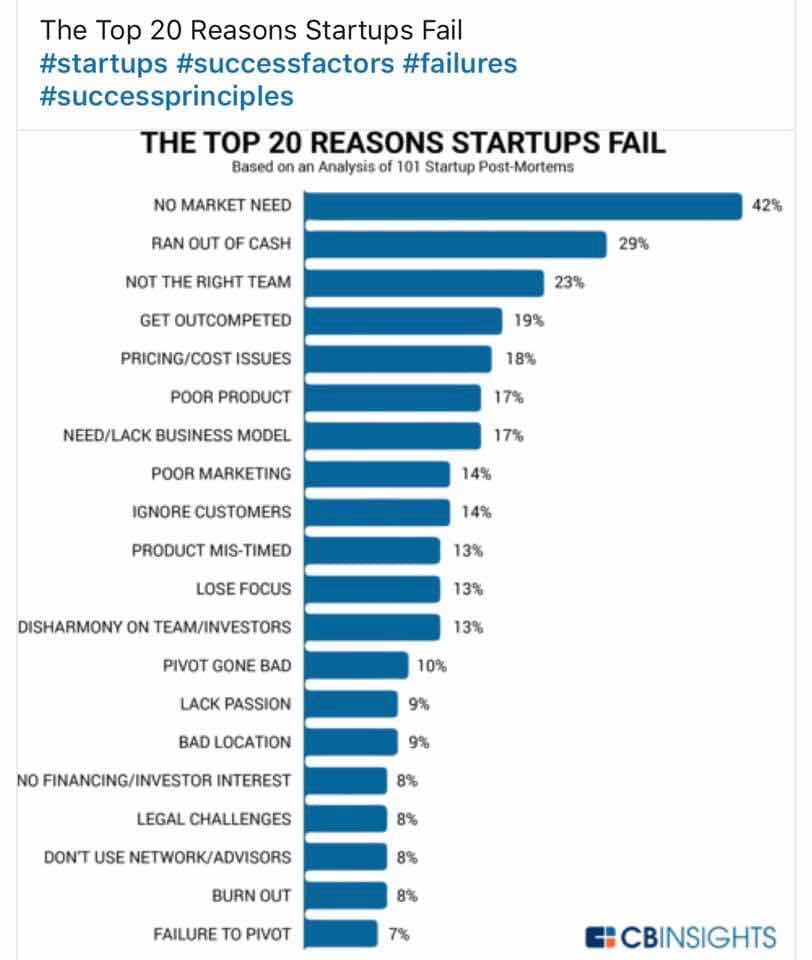
Friday, May 31, 2019

Atlassian founders Mike Cannon-Brookes and Scott Farquhar lead tech storming of Rich List

COLIN KRUGER, SMH

https://www.businessinsider.com.au/atlassian-founders-mike-cannon-brookes-and-scott-farquhar-lead-tech-storming-of-rich-list-2019-2019-5/amp


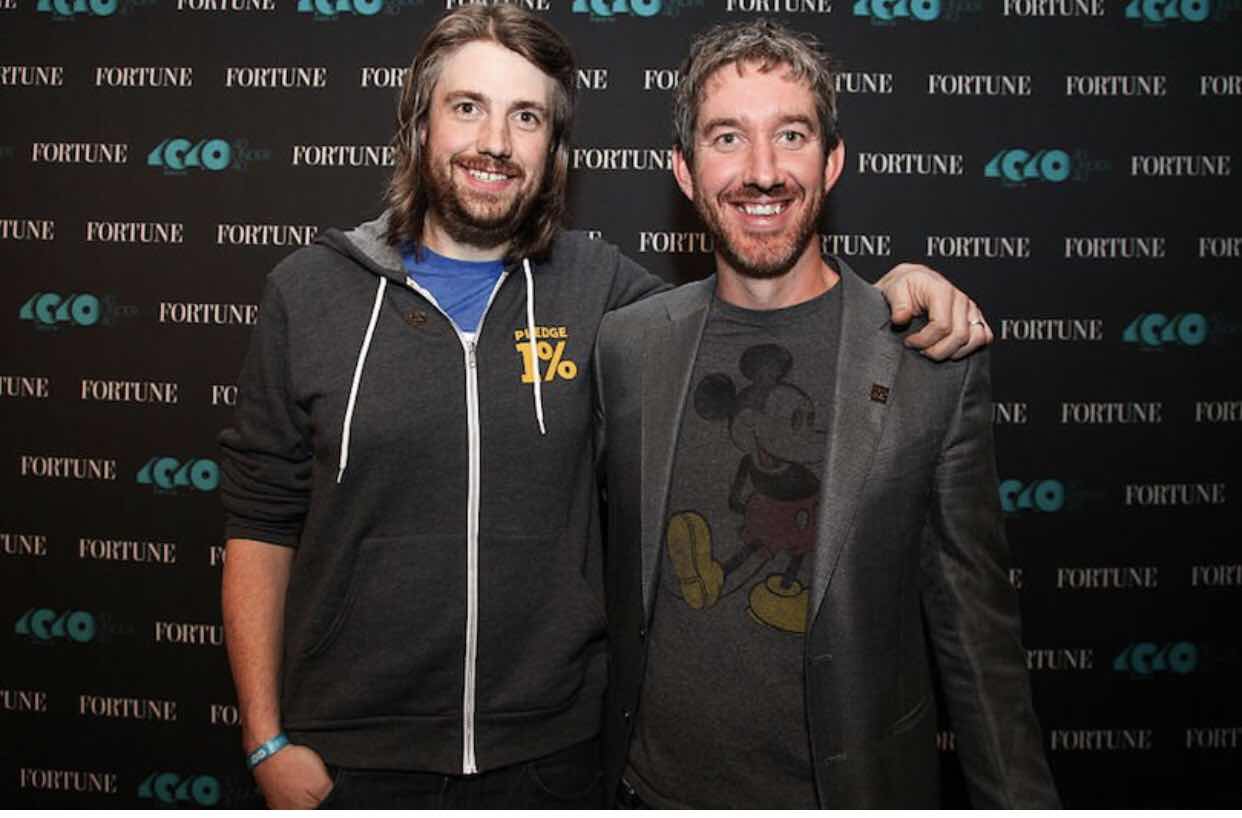
Atlassian co-founders and co-CEOs Mike Cannon-Brookes (L) and Scott Farquhar (R). Photo: Kelly Sullivan/ Getty Images for Fortune.
“Whenever the rich lists come out it’s the worst time of the year,” Atlassian co-founder Mike Cannon-Brookes told Good Weekend magazine last year.

“There’s no upside, only downside. Unless you want to kind of show off in a weird way. But then buy a freakin’ billboard, right?”

So the Atlassian co-founder probably won’t mind that the latest edition of the Australian Financial Review Rich List for 2019 significantly underestimates both his wealth and ranking.

While property is still the path to riches for most of those who made the cut again this year, our tech entrepreneurs have made their presence felt in record numbers. A record 14 tech entrepreneurs made the Rich List this year – and are scaling the heights of the rich list with unseemly haste.

The spiralling stock prices of companies like Atlassian, Afterpay and Wisetech have made it hard for the official tabulators of affluence to keep up.

The biggest leap on the Rich List came from Cannon-Brookes and his Atlassian Scott Farquhar. They nearly doubled their wealth from last year with Farquhar, fifth, pipping Cannon-Brookes, sixth, with a personal wealth of $9.75 billion and $9.63 billion respectively.

Most of their wealth derives from a combined 56 per cent stake in Atlassian, but the Rich List was measured from a 3 month average of the Atlassian share price taken from the first week of April. The stock has soared more than 48 per cent this year and the founder’s stakes in the company alone would currently be worth around $12 billion each.

It means that their actual rank may be as high as two and three on the list, respectively, which was still topped by Anthony Pratt, the head of the Pratt family’s packaging empire Visy, with a $15.6 billion fortune.

If Atlassian’s share price continues to rise at this rate even our cardboard king won’t be safe from the princes of Australia’s tech sector when the next list is unveiled.


And they are not the only ones making such spectacular gains.

Wistetech founder Richard White literally doubled his wealth to $3.31 billion and rose into the top 20 on the list. Afterpay’s astounding success also saw its co-founders make the Rich List this year and at a lower ranking than what the current share price would suggest.

Privately owned Canva flew entirely under the radar for this year’s Rich List as the company’s net valuation soared from $1.3 billion in January last year to $3.6 billion this month after a fresh round of funding from investors.

Based on the way the private rounds of funding usually work, the three founders Melanie Perkins, Cliff Obrecht and Cameron Adams should have a collective net worth comfortably approaching rich list territory, observers believe.

But wealth itself does not seem to be the a big talking point for these new tech stars.

Mr Cannon-Brookes, who declined to comment on Friday, has described his fortune as a merely scoreboard and not something he and Farquhar focus on.

“People never talk about jobs created, or products created, or the impact those products have had on the rest of the world, or any of that sort of thing,” he said last year.

Ms Perkins, the visionary behind Canva and her co-founder Mr Obrecht try and keep things simple. There is no harbour front mansion or glamorous holidays for the couple.

“Cliff and I still travel backpacking. The last couple of years we went horse trekking in Mongolia, staying in yurts in a tree house in Laos,” she said in a recent interview with this newspaper. “It has been really important to get out and see the world. We still love staying in pretty basic accommodation”.

This article was first published by The Sydney Morning Herald. Read the original here.

Thursday, May 23, 2019

Morals of the Zoom Video Communications entrepreneurial fable:

From the famous Susan Guo of Silicon Vslley’s Greylock Partners sharing  8 insights from Zoom 


1/ no market is “done” — even when the alternatives are many, free, have hardware sunk cost, and/or deeply embedded into an enterprise suite ELA


2/ “much, much better” is a sufficient displacement product strategy (VS novel features)


3/ software products can make people more productive — this is inspiring. I can do work more efficiently and happily, because of Zoom


4/ Customer centric culture has to come from somewhere. Here it clearly comes from Eric S. Yuan. Literally every time I see him/hear a story of him, the conversation inevitably ends with “customer happiness” as the guiding principle


5/ Free to users doesn’t preclude a company selling software at enterprise deal sizes


6/ Zoom’s “unit of user value” is 2 —> Infinity (internal & external, huge addressable user base), making it uniquely well suited to bottoms up, viral, WOM adoption


7/ People want good people to win. There are a lot of cynics in Silicon Valley today, but you will be hard pressed to find people who have met Eric and don’t support team Zoom


8/ Congrats to entire Zoom team on this milestone and what I expect will be just the first leg of an extraordinary, enduring company journey — and to my better half Pat Grady for being part of it

Friday, April 19, 2019

Sunday, April 14, 2019

3 things needed to scale a business

Great Insite by Michael Derin 
1. A leadership team
2. An ability to pivot
3. Ability to outsource


It is estimated that 70% of startups struggle with scaling. Getting a product to market and then gaining some initial interest and excitement is hard work, but it really is just the beginning. Once you have a working business and the wheels are churning then you need to be able to scale that business in order to maintain the future of the business.

Here are our top three areas we feel that many CEO’s miss and need to be doing in order to scale successfully.

1. Redefine your CEO role - your company can't rely only on you

While your company may need a CEO, and you may need something to do, you want to design the company to ensure that you aren’t integral. You want to build a leadership team that can function and make decisions without you. This can also help the business be more agile as it removes multiple layers of approval and red tape. If you are controlling everything and need to sign off and approve everything it can significantly delay your progress and speed.

You will find that by empowering your team to make decisions and be agile they will take more responsibility and you will build a strong culture of performance and accountability.

2. Pivot quickly

You might have launched with a great product that is selling well and have a clear direction that you feel you are heading in. However, changes in technology, environment and the market can mean that you need to change direction quickly.

You may see a new opportunity that wasn’t originally in your plan, but could be even more successful that your current direction. In this case you need to be able to pivot and change direction quickly. Agility in business can prevent you from stubbornly continuing down a path just because that is what you planned. You need to be open to change, and being able to do it quickly.

3. Outsource

There are some functions in your business that aren’t critical to the product and customer experience but are important for long term success of your business. We often find that as businesses grow they have a growing need for HR, legal and financial support. These are often lumped into a pile of stuff that you will ‘get to’, but often they aren’t dealt with as quickly as they could and should be.

Outsourcing these areas can ensure that you are getting expert support for the business whilst you personally focus on more critical areas.

Wednesday, March 27, 2019

Naspers scores a luck with tencent


Naspers is looking to list in Europe for $140b. It’s stake in Chinas tencent is $134b, which it acquired in 2001 for $32million
 It generated $16b in sales - with most of the income coming from tencent. 

Sunday, March 10, 2019

The early bird gets the worm - but the second mouse gets the cheese


It’s about timing.....


In 1999, Pets.com sought to capitalize on widespread internet access and a $23B pet supplies market by selling products directly to consumers.


They raised $50M funding - to be spent on marketing  - By the time Pets.com went public with an $82.5M IPO in February 2000, it had lost $61.8M on $5.8M in sales. 


Pets.com had 570,000 customers, with its costly marketing operation spending about $158 for every new customer .


And then the tech boom bible burst and boom - that saw them as well as Value America, Garden.com, and Mortgage.com die and liquidate! 


History would prove that its value proposition — selling pet supplies to consumers online — was ahead of its time.


The next decade saw the cost of ecommerce and digital marketing reduce dramatically, and people with access to broadband jump from 48m to 232m. 


With lower costs and a bigger market to sell to, new online pet supplies retailers emerged - and Chewy.com, for example, was acquired by PetSmart for $3.35B in 2017. It was the biggest e-commerce acquisition in history.


The lesson ....

“The early bird gets the worm - but the second mouse gets the cheese! “ 

Wednesday, March 06, 2019

14 stats you need to know about the Forbes 2018 Billionaire List

  1.  2,153 billionaires, 
  2. 55 fewer than a year ago. 
  3. 994, or 46%, are poorer (relatively speaking) than they were last year. 
  4. Total wealth  $8.7 trillion, down $400 billion from 2018. 
  5. 11% of last year’s list members, or 247 people, dropped out of the ranks, the most since 2009 at the height of the global financial crisis.
  6. 195 new billionaires joine the ranks 
  7. Asia-Pacific was hardest hit, with 60 fewer 10-figure fortunes. That dip was led by China, which has 49 fewer billionaires than a year ago. 
  8. Europe, the Middle East and Africa also lost ground. The Americas, driven by a resurgent Brazil, and the U.S. are the only two regions that have more billionaires than they did a year ago. 
  9. There are  607 billionaires in the U.S. That includes 14 of the world’s 20 richest.
  10. Jeff Bezos is again number 1 in the world, followed by Bill Gates at number 2.
  11. The richest newcomer is Colin Huang, the founder of Chinese discount web retailer Pinduoduo, which went public in the U.S. in July. 
  12. Other notable new entrants include Spotify’s Daniel Ek and Martin Lorentzon; Juul Labs' James Monsees and Adam Bowen, Kind Bar’s Daniel Lubetzky and cosmetics wunderkind Kylie Jenner, who is the world’s youngest billionaire at age 21.
  13. 7 of the top 20 billionaires have come from technology  - Microsoft, Google, Oracle, Snapchat, Stripe, Tencent 
  14. in 2004 there were 497  billionaires and in 2019 there were 2153 billionaires  


Thursday, February 28, 2019

Early-Stage VC Firm Sorenson Ventures Closes Inaugural Fund at $110M


Early-Stage VC Firm Sorenson Ventures Closes Inaugural Fund at $110M

Sorenson Ventures, an offshoot of Utah private equity firm Sorenson Capital, announced today it has closed its first fund with more than $110 million to invest in early-stage security and enterprise software companies.

The young venture capital firm was formed in 2017 by Sorenson Capital, which recruited former Intel Capital executive Ken Elefant as managing director. Elefant shares leadership of the VC spinout with Sorenson Capital’s managing director Rob Rueckert. The pairing was a reunion for Elefant and Rueckert, both former Kauffman Fellows who were also colleagues at Intel Capital.

Menlo Park, CA-based Sorenson Ventures draws on the expertise of Sorenson Capital while strengthening the larger firm’s ties to early-stage entrepreneurs in Silicon Valley. The Salt Lake City-based private equity firm, founded in 2002, focuses on the other end of the investment spectrum—growth equity and buyouts. It has more than $1 billion under management.

Sorenson Ventures raised its inaugural fund from investors that included an insurance company, foundations, endowments, corporate investors, family offices, and individuals, including managing directors at Sorenson Capital. Since 2017, when the VC firm raised its first funding, it has backed eight early-stage companies, ranging from cybersecurity startup CyCognito to machine-learning business Paperspace.

The firm now plans to expand its stable of startups to include as many as 20 companies. It has led most of the investments in its portfolio companies, and has also joined in syndicated fundraising rounds with established VC firms including Lightspeed Venture Partners, Battery Ventures, and Accel.

“We are product-first investors and are attracted to entrepreneurs who use their engineering vision to change markets, which you will see evidence of in our first eight investments,” Elefant (pictured) said in the announcement of the fund’s closing.

Palo Alto, CA-based CyCognito is the best illustration of those traits, Rueckert wrote in an e-mail to Xconomy.

“CyCognito uses a combination of deep domain expertise and engineering talent to enable cyber teams to understand and prioritize their blind spots,” Rueckert says. “This is a very complex problem that is being solved by technologies that haven’t been available in prior generations of solutions.”

Photo of Ken Elefant courtesy of Sorenson Ventures

Tuesday, February 26, 2019

Rapyd raises $40m from Stripe, a fellow portfolio company of Entree Capital


Rapyd, a fintech founded by CEO Arik Shtilman 4 years ago has raised $40 million in series B funding from Stripe and General Catalyst and others , to further expand its operations worldwide.

What Rapyd does

Rapyd helps companies and merchants of all sizes integrate a range of payment services into their platforms, and operates on a fintech-as-a-service model. It offers a technology stack that provides support for financial, payment, mobile wallet, and money movement services through a single API.


The Rapyd solution provides  a single point of reconciliation and settlement of all funds across 65 currencies and the ability to pay out in over 170 countries. 


Using Rapyd’s technology, a company can enable support for payments in over 100 countries, via more than 500 locally supported payment methods — such as direct deposits to banks, local cards, and mobile wallets —


What the money will be used for 

The Capital is going to be used to expand to more markets across the Americas and Europe, Middle East, Africa (EMEA) and Asia-Pacific (APAC) regions and to further develop its infrastructure.

The money  

Stripe CEO Patrick Collison sees a big demand for Rapyd’s services. “The challenge of enabling local payments on a global scale is critical for the continued growth in worldwide commerce. We are excited by Rapyd’s vision and believe they are solving a significant challenge that will help to increase the GDP of the internet,” 


Both Stripe and Rapyd are portfolio companies of Entrée Capital 


Founded in 2009, Entrée manages more than $300 million across a number of funds and its portfolio includes  the likes of SnapChat, Stripe, Deliveroo, Prospa, monday.com, Riskified, HouseParty, Stash, PillPack, SeatGeek, Coupang and over 50 other investments. 


Managing partner of the fund Avi Eyal picked fintech as a growth industry in 2015! Was definitely the right call! 


Thursday, February 21, 2019

The 5 Factors that Will Determine the Success of Australian Businesses in the USA

Trena shares with us 5 gems you need when taking their product to the USA

Many Australian businesses have global ambitions from day one. That’s because foreign markets like the US provide almost unlimited opportunities to get your product or service in front of a massive base of potential customers and partners.

While it’s true there are incredible opportunities up for grabs in the US, Australian businesses must understand the factors that can make or break your success in this unique market. 

When people think about the differences between Australia and the US, they often about it from the perspective of a tourist. They know there are differences in culture, language, politics, sport – even tipping practices. But few truly understand how that translates into day-to-day business. 

Despite the large pool of customers, it can actually be much harder to sell your products in the States. The market is competitive and crowded and can easily swallow up unprepared founders. 

Here are 5 important factors that will determine whether you sink or swim in the US:  

1. You have access to local market knowledge: You think you know the US market, but unless you have insight and support from experts with an intimate understanding of how things work, you’re going to run into trouble. If you want to succeed in the US, make sure you seek advice from people who know the market well. Even well-intentioned advisors and mentors can accidentally steer founders into rough waters if they don’t have the necessary on-the-ground experience. 

2. You set a realistic budget: Founders looking to enter a foreign market know the importance of planning ahead but it’s also important to set and work within a realistic expansion budget. Assume your plans will always be more expensive than expected to execute. Be conservative and think about the details. You’d be surprised to find out how many founders forget to consider the impact of foreign currency exchanges. 

3.    You understand your potential customers and investors: In a crowded market, you need to make sure your message is well-targeted, whether you’re selling to customers and partners or pitching an investor. Profile your targets and make sure you know them inside and out. For customers, that means understanding their motivations, needs and the right messages and channels to use. For VCs, you need to understand the industries they invest in, what kind of investment they offer and what they need to hear from you. 

4.    You’re willing to hustle: There’s a revolving door in large US organisations – they’re constantly approached and sought after by potential new providers and partners. You and your business need to stand out from the crowd. Be memorable by following up and hustling for their business. In fact, follow-up shamelessly. It’s not always comfortable for Australian founders but it’s expected in the US. It could mean the difference between getting their signature or walking away empty-handed.

5.    You have a long-term plan: US organisations want to work with foreign businesses who are committed to the market. Make sure you’re prepared to discuss how you plan to continue growing there and expect to be questioned about it. If you don’t have a plan beyond ‘fly in, fly out’, you will likely lose their interest and potentially miss out on valuable opportunities. 

US businesses are often eager to work with Australian companies and professionals. We’re seen as innovative and they admire our work ethic, sense of humour, and yes, our accent. But it’s more important than ever that local businesses and founders understand what global organisations need from them – and then do what they can to meet those needs. Only then can you fast-track and de-risk your international expansion.

For more information about how to improve your success in the US, check out her latest programs.

Trena Blair is Founder/CEO of FD Global Connections who works with Australian companies to prepare for, and launch in the USA market. Enquiries can be made at enquiry@fdglobal.com.au

(Ivan’s note :- be sure to have a plan to maximise any grants and incentives that you may be eligible for - such as the export market development grant as administered by AUSTRADE - up to 150k per year - speak to the team at BSI Innovation - happy to refer you) 

Saturday, February 16, 2019

From Bankruptcy to $400m in sales


Mike Dillard interviews 38 year old entrepreneur Suzie Batiz who  went from bankruptcy twice To $400 Million in sales from another  little company she founded called PooPourri.


PooPourri is exactly what it sounds like… A new way to handle unwanted odors in your bathroom.


She shares her story of how her cars were repossessed, how she lost her business, and how she was broken in every way you could imagine.


At that point, she went on a journey to examine her life in an attempt to find out why she was constantly struggling with business, with money, and with her relationships…


So what did Suzy learn that allowed her to turn a life of struggle, into a life of abundance and success?


Listen to the podcast .


Some of my key takeouts:-

  1. Do something that you love and believe in
  2. Make something great - not just good
  3. Ask people for help - people want to help -  don’t need to know everything “ I need your help” - I don’t know but I know someone who will. If you want help from someone - get a meeting - face to face and ask
  4. Suzi’s big success came from a viral video 
  5. Go with the flow - trust your gut. 

It’s all about energy and seeking more energy 

Resonance- 2 similar energy  waves working together - creating more energy - flow 

Disanonce - 2 polar enaervy waves - less energy - struggle 


4 signs of resonance

  1. Increased energy - can stay up all night 
  2. Chills up arm
  3. Keeps coming around 
  4. Synchronicity - suzys world - it’s a vibration - when you meet someone that you zing with 


Are you in struggle? 

Are you in easy flow?

Are you in resonance?


Friday, February 08, 2019

Sendle raises $20m series B from Federation

Sendle, the 100% carbon neutral courier service has raised AU$20 million in a Series B funding round to grow locally and overseas

The Money

The funding round was led by Federation, who are investing alongside Full Circle Venture Capital, Rampersand and Giant Leap as returning investors.

Federation invests in clean-energy and sustainability projects, social, health and education, real estate, and growing businesses that meet today’s social, environmental and economic needs. As part of its investment, Federation’s Head of Private Equity, Neil Brown, will join the Sendle Board.

The service 

Sendle provides a convenient carbon neutral door-to-door delivery at affordable national flat affordable rates. 

Since launching in November 2014,  Sendle parcels have travelled more than 4.3 billion kilometres —  or 14 times to the Sun and back. 

It facilitates more than a quarter of billion dollars in small business eCommerce annually and its customer base has grown by over 600 per cent in the last two years.

Sendle uses 100% compostable green satchels, while its inaugural brand campaign ‘Why Post when you can Sendle”, launched in May.

The Mission 

“giving small business owners access to big business delivery infrastructure,” said Sendle CEO and Co-founder, James Chin Moody.

“We exist to offer a cheaper and convenient alternative to Australia Post 

The 2019 expectation 

2019 is expected to be a year of hyper-growth with CMO, Eva Ross, joining Sendle’s ranks last year from Airbnb, to spearhead brand and marketing as the business scales.


Tuesday, February 05, 2019

Monday, January 28, 2019

Are we heading for a tech bubble in 2019?

Great article in the financial tomes today .... https://www.google.com.au/amp/s/amp.ft.com/content/43d5e972-2098-11e9-b2f7-97e4dbd3580d


Are we heading for another tech bubble with too much money chasing too few deals in the late stages of a credit cycle? 


The financial times has an interesting article written by Raba Foroohar warning that 2019 may hit financial reality, and that the sustainability of the current funding model, will be subject to some much-needed testing.


Some of the new crop of hyped-up companies may eventually turn into Cheshire cats, disappearing and leaving behind only the grins of those who got out before the bubble burst.


Back in the dot com crash - the then investors were counting on a spate of hot IPOs to pour a little more kerosene on markets that were clearly over-inflated. It didn’t end well!!


Today there are many unicorns with massive valuations like Uber, Lyft, Dropbox and Airbnb looking to list at massive valuations to enable venture cap funds to “cash out”. They tend to  lose money hand over fist, and yet still continue to grow in valuation. Indeed, it is all part of the new business dynamic. (Look at Amazon as a success story and role model) 


Are these private companies and Billion-dollar venture funds bloated ? Last year, Sequoia raised an $8bn seed fund, and SoftBank a whopping $100bn fund.


Big, of course, begets big. As more and more heavyweight VCs bid up the value of start-ups, others have to follow. It’s up or out. The result has been not only a new bubble in IPO markets, but the undercutting of a host of public companies that actually have to worry about profits. The classic examples would be Uber’s disruption of the taxi industry, or Airbnb’s of hotels.


Massive debt financing of unprofitable firms to create monopolies might benefit some entrepreneurs and investors, but does it distort capital and labour markets and is it anti-competitive?


As long as investors are willing to accept growth as a metric for value, the music can keep playing. 


University of California academics Martin Kenney and John Zysman put it in a forthcoming paper on the shifts in start-up funding, entitled “Unicorns, Cheshire Cats, and the New Dilemmas of Entrepreneurial Finance” - To become a unicorn - “start-ups are each trying to ignite the winner-take-all dynamics through rapid expansion characterised by breakneck and almost invariably money-losing growth, often with no discernible path to profitability”.


They are of the view that , “unicorns are mythical beasts”. 


rana.foroohar@ft.com


Friday, January 25, 2019

The power of leverage - why you matter

Below is a video of an experiment that demonstrates the power of small and the power of leverage.

No matter how small your idea, product or service  is - if it well positioned, and has the ability to “touch” the person around it, it has the potential to make a significant contribution to the planet! 


Some comments

A great example of causality. We are creators and should be mindful of our actions (or inactions) with self and others.


 Small acts of kindness and positivity in the office can snowball and spread in to similar things in the community and world! Love this visualization and working with each of you!


That's why you should not be afraid to speak up when you know you have something important to say. Wise words from the Dalai Lama states "if you think you're too small to make a difference try sleeping with a mosquito". Another fantastic truth from Gandhi states "be the change you want to see in the world". If you think small of yourself and act on it then that will form the basis of your reality unless you break out of that mentality and stand tall, speak up without fear, trust yourself and be that change you want to see out there no matter what. You are part of the 7 billion, you're not just a statistic. These are some of my principles. What are yours?


And that is a good representation of life.  If one doesn't follow one's self, making choices that are different than others, one must deal with the seemingly ever increasing set of challenges.  If one decides to be themselves and be something different, than the change ripples through society.  A most wonderful post!


Typically, the seemingly small, humble people in life typically have the biggest impact.  “Why”?  Usually because they are focused on selflessly doing good things for others and not aggrandizing themselves. 


Tuesday, January 01, 2019

Dave Parker’s checklist before taking the plunge into a startup


If you’re thinking about leaving your day job and launching a new company in 2019, do David Parker’s Rubric Test 


The rubric scores you on these ten criteria, using a 1-to-4 score: 1 = bad, 2 = not good, 3 = good, 4 = great!

  • Team (Domain experts; diversity; serially-successful founders; from great companies; functionally competent)
  • Idea (Big “category” idea; early/late continuum; technically achievable; “pain pill or vitamin”; in investors’ “investment thesis”)
  • Product (Customer-first focus; clear value proposition; design/ease of use; clear launch and scale offering)
  • Market/Customer (How big is the market – TAM/SOM; unmet customer need; how many incumbents; nascent go-to-market system)
  • Competition (Barriers to entry; differentiation; well-funded competitors in Crunchbase)
  • Business model/Finance (High transactional value; clear profit model; capital efficient; scalable; no “bad” things on cap table)
  • Traction (Customer adoption; customer engagement; early revenue; know the unit economics)
  • Timing (Emerging innovation; “meta” factors are favorable — industry/market tailwinds vs. headwinds; established demand)
  • Intellectual Property (IP required or does the market require IP?; IP in process; how will you build a moat over time?)
  • Clear Ask (Do you want advice, capital, introductions, staff?)


How did you score? If you have some “4’s” — congrats! If you scored low in some categories, you know what questions you should answer before you make the leap.

Here are some tips to improve your scores:


  • Team: Don’t have a co-founder yet? A lot of investors see that as your first “sales” if you can’t get someone to join you on the journey. You won’t be able to get one for free — it will cost equity or cash comp. If you don’t want to give up anything, you’ll likely be in the same spot on Dec. 31, 2019.
  • Market: If you don’t have a big market, you won’t attract investment. It could still be a great business, but not the “venture scale” that investors will look for as an outcome. A low number here might just be due to how you describe the market. Don’t take for granted that the investor knows the market as well as you do!
  • Traction: Remember if you don’t have revenue or customers yet, you should have at least interviewed 50-to-100 prospects for feedback. If you have data from those interviews that validates your opinion, it will help. It’s not revenue, but is validation.


Finally, remember that all business models have three components you’ll need to unpack for an investor:

  • Creating Value: This is the product or service that you provide to your customer. There is a cost to build the product or deliver the service. This is development, hosting and support costs, if it’s a tech product.
  • Deliver Value: This is how you market and sell your product. There is a cost of selling the product. These are the unit economics involved with the sale of the product.
  • Capture Value: This is your ability to create margin and profit. Investors will want to know how they get their investment out of the company as well. If the profit is reasonable, you won’t attract a lot of interest. If your profit is exceptional, investors will be interested


All of these costs go into the spreadsheet and investors will want to know that you have a hypothesis on all of the costs, not just the cost to build the product. Having a product that no one knows about means it will be difficult to sell.


Take some time to answer key questions in advance and you won’t be surprised when you get to the investor meeting. 


Compressing the time from launch to revenue is the goal. You won’t need as long of a personal runway or to raise as much capital if you’re prepared.


Monday, December 17, 2018

Lime becomes a Unicorn

Last Friday’s transport from Edgecliff to Rose Bay! 

Founded in 2017 by Adam Zhang, Brad Bao, Charlie Gao, and Toby Sun Lime solves the first and last-mile transportation problem, in a sustainable way, using electric bikes powered by lithium batteries.

They can be seen all around the Eastern Suburbs and the City, and takes the pain away from riding uphill.

How it works

I used the bike a few times - which cost me approx $7 a ride.
It’s easy to use... download the app, find the nearest available ride, scan the QR code to unlock the ride and when done, lock the ride in a safe spot. 

 I was wondering how they get charged - apparently there are “lime juicers” who pick up the bikes at night (which are gps tracked) , charge them from home using an electrical outlet and redeploy them. 

Lime charges  a rental fee. It typically costs $8 for 30 minutes - a bit expensive after reading that it cost 50 cents for 30 minutes for students with a .edu email address. 

It also offers a monthly subscription of $29.95 for general users and $14.95 for students that allows them to get up to 100 rides.

It’s getting traction 

 Lime has been well appreciated by users. It recorded 6 million riders within a year of operations and within the next 6 months, this September, had nearly doubled to 11.5 million riders. The service is already available in more than 100 cities in the country. It is also looking at international markets and this year launched in Paris, Berlin, and Zurich snd Sydney.

Lime’s estimate its revenues at $34 million for the year, after having  raised $455 million in funding from investors including Fidelity Management and Research Company, Triton Funds LLC, Atomico, Green Bay Ventures, Frankline Templeton Investments, GV, and Uber. 

Its last round of funding was held in July this year when it raised $335 million in a round led by Google Ventures and Uber that valued it at $1.1 billion.

 Earlier this year, Uber announced plans to acquire bike-sharing company JUMP. In July this year, Lyft also acquired bike sharing company Motivate.

 Other competitors in the market include Bird and Spin.

Issues

Other bikes such as OFO and Mobike closed shop in Sydney and other Cities as residents were complaining about parking problems on sidewalks and bikes were being vandalised,  

There charging is a bit out of kilta. They charged me twice after I replaced a bike which was faulty (not happy!) 

What do you think? 

I used these bikes a number of times, and because there was no gears, they were difficult to ride up inclines. 

Lime’s solution of the “electric assistance” using batteries takes the edge off the uphill! 

They charged between 6-10 for up to 30 mins usage - which was a lot in my view!