BSI Innovation blogs about Innovation, Money, Venture Capital, Grants, Exports and Research and Development (R&D)
Alliance Partners
Saturday, January 31, 2015
Assessing the Future of the Asia-Pacific - US/Australia Dialogue
Transforming Australia into an Innovation Hub of Technology
A great piece by Malcolm Turnbull
I am often asked, ‘what is the government doing to drive innovation across the economy’?
This sounds like a contradiction - an oxymoron - because governments, despite their best intentions, are rarely hotbeds of innovation.
Nothing drives performance quite like the bottom line, so for business there is an incentive to continually innovate – to incrementally improve performance to maximise returns. The incentives are not as clear cut for governments.
But nonetheless government has an important role to play in supporting innovation.
We need to get the fundamentals right, to create an environment where there is an incentive for people and business to innovate. This includes balancing the budget and investing in the enablers of productivity and innovation like science, research, education and infrastructure.
Australia’s competitiveness as a high wage and high cost economy is contingent on this. As Australia’s Chief Scientist, Professor Ian Chubb, has pointed out, 65 per cent of Australia’s economic growth per capita between 1964 and 2005 can be attributed to improvements in our use of capital, labour and technological innovation.
This growth was, in large part, the result of a labour force skilled in science, technology, engineering and maths (STEM). Over the next 50 years STEM will be central to Australia’s economic competitiveness. But with only half of Year 12 students today studying science, down from 94 per cent 25 years ago, governments across Australia must continue to invest in STEM to ensure that our graduates can find employment in the fastest growing occupations – three quarters of which will require STEM skills.
In last year's Industry and Innovation statement the government announced the repeal of Labor's misguided changes to Employee Share Ownership Plans (ESOP) which made it prohibitively expensive for start up companies to give their employees a share in the business they were building. We are also promoting STEM in schools and are rolling out the NBN more quickly and at less cost to consumers, creating the plumbing for the digital economy.
These initiatives are all about providing Australians with even more opportunities to succeed - to create, to innovate and to be more productive.
Government also has an obligation to shrug off its conservative shackles and innovate its own operations and lead by example.
We can talk about the benefits of new technologies or we can realise the opportunities afforded by new technologies and use these as case studies of what can be achieved.
I regularly hear people talk about the uniqueness of government, that there is no point applying business principles to government problems because the two are somehow unrelated. While there are certainly differences, there are many more similarities between service delivery agencies and businesses in the services sector, including a number of common challenges.
One such challenge is investing in ICT in ways that enables business and government to deliver services that meet the expectations of customers.
This is an area where government can learn a great deal from business, particularly the banking sector which has invested heavily in technology to digitise services.
In compute terms, government is not very big. Just consider the sheer volume of social media transactions that occur every minute of the day: 280,000 tweets are sent, 72 hours of video is uploaded to YouTube, there are 2.4 million Google searches and 1.6 million likes on Facebook – and these figures will already be out of date.
And yet at $6 billion a year, 1.6 per cent of the federal budget is spent on ICT. When combined with the states and territories, government expenditure on ICT accounts for a third of all ICT spending in Australia. Given that two thirds of this expenditure is operational, there is considerable scope to not only realise savings, but to significantly improve the quality and availability of public services by improving the way government invests in and uses technology.
The Internet is the most accessible, productive and cost efficient way for government to deliver services to the public and for the public to engage with government. Driven in large part by the ubiquity of smartphones and tablets, the public expects to be able to engage with government seamlessly over the Internet.
If we are serious about promoting the benefits of innovation, government must improve the quality and availability of its own services.
This is why the Prime Minister and I last week announced that the government will establish a Digital Transformation Office (DTO) within the communications portfolio, to deliver all major services digitally by default, and ensure that all services can be completed digitally from start to finish.
This means that for all major services, in time, users will no longer need to visit a shop front or sit on the phone to a call centre part way through a transaction due to poor functionality.
Modelled on the UK's hugely successful Government Digital Services (GDS), Australia's DTO will transform the service delivery experience, operating more like a start up than a traditional government agency.
The DTO will be made up of small teams of developers, designers, researchers and content specialists who will use technology to make services simpler, clearer and faster to use for the public and business.
Consistent with its mission to innovate, the DTO will promote a flexible and nimble culture - one that values principles and frameworks over rigid rules that are more likely to stifle innovation than foster it.
And as digital services improve and customers choose to interact more and more digitally, the potential for government to realise large savings is also significant, particularly when you consider that agencies still send about 250 million letters and manage 150 million over the counter interactions a year.
Manual interactions of this kind are not only costly, they are less convenient, efficient and accurate than digital transactions, with research from the UK estimating that online transactions are 30 times cheaper than postal transactions and a staggering 50 times cheaper than face-to-face transactions.
But to realise these savings the DTO cannot be driven by savings for savings sake.
Savings will inevitably follow if services are so compelling, accessible and easy to use that the public actually seeks them out.
The DTO will also work with state and territory governments to identify opportunities for collaboration, to streamline service delivery across all tiers of government.
Tuesday, January 27, 2015
Succession Planning Day for 2015.
CLICK HERE TO BOOK

presented by

Tuesday, January 20, 2015
You know you are an entrepreneur if....
Ryan Holmes CEO at Hootsuite
Beisdes being passionate, resilient and a member of "club fear" you might be an entrepreneur if...
1)
You’re restless, and no achievement ever seems good enough.
When most people reach a goal they think, “I did it! Time to sit back and enjoy it for a while.” An entrepreneur thinks, “Great, what’s next?” Take the late fashion maven Coco Chanel. She started with a simple hat line, expanded into women’s clothing, and eventually moved into jewelry, accessories and perfume. By the time of her death in 1971, Chanel had not only left behind an iconic brand, but a business empire that was bringing in $160 million annually. Entrepreneurs like Chanel don’t stop with one big achievement. They’re always itching to find and take on the next challenge.
2)
It’s great to have a CEO who cares about all the details of a company, but when that person needs to be involved at every level, it can become detrimental to getting things done. It can also stress out employees, who have been brought on precisely so you don’t have to make each and every decision.
Luckily, we can take some comfort in knowing that super entrepreneurs like Elon Musk, Steve Jobs, and Bill Gates have all been described as control freaks.
3)
You’re a masochist. As an entrepreneur, you’ve got to love a little pain and a lot of risk. Consider the fact that 75 percent of new startups fail. Only a masochist sets himself up to face those kind of odds, straight out of the gate. And it doesn’t get much better after that, at least not at first. You’ll struggle for money. You’ll work unimaginably long hours. You’ll be lonely, because while everyone else is out partying or watching movies, you’re toiling away … often alone. Serial entrepreneurs—who start and run businesses one after another—could be considered even more masochistic, because they go into each new venture knowing what’s coming.
4)
But, eventually, many entrepreneurs are driven less by money and more by the innate thrill of launching a new venture and the freedom and control that come with it. By the time I reached college, my own attitudes had already started to shift. I was on the path to a law degree and a secure, well-paying job. Instead, I dropped out to start a pizza restaurant because it was more of a challenge and I could do it my way.
5)
You’re a black sheep, and maybe even a dropout. Many entrepreneurs describe themselves as not fitting in with the crowd. I definitely felt that way in high school. Lots of notable entrepreneurs have even ended up ditching the traditional education system altogether. Tech titan Bill Gates, billionaires Ted Turner and Li Ka-shing, Richard Branson and McDonald’s founder Ray Kroc are just some examples of widely successful entrepreneurs who all dropped out of high school or college. While it’s not always easy to be the outsider, it’s exactly this quality— seeing things through a different lens from the rest of the world—that can help move society forward and drive innovation.
6)
People think you’re crazy.
Because entrepreneurs tend to think along different wavelengths, their ambitions can often come across as crazy to friends and family—especially before the vision has been made a reality.
Take, for example, Ruth Handler, who created the world’s most iconic plastic doll: Barbie. In the 1950s, Handler was met with doubt and criticism (including from her own husband) for proposing a doll that looked more like an adult than a baby or child. She came up with the notion after seeing her own daughter playing with paper dolls that looked like adults. Handler, of course, went forward with the idea anyway, and the rest is history.
Sunday, December 21, 2014
2 emerging trends for 2015
2 trends predicted by MIchael Evans
The Outsourcing of Everything
Google, Amazon, and other companies have already become consumer outsourcing service providers.
Meals, groceries, shopping, dry cleaning, and almost every other service one would leave the house for can be outsourced for a fee.
To many, this is a trend that is reemerging from the past. Remember Webvan, the grocery delivery company that did a deep dive into bankruptcy almost 15 years ago at the nadir of the dot-com bust?
As companies like Google figure how to make personal outsourcing services economical and profitable, outsourcing for consumers will become a huge growth industry in 2015 as people become willing to pay more to preserve their personal time.
Convergence and Consolidation of Social Media and Business
- Facebook is largely a young consumer media company.
-LinkedIn is largely a business network, and
- Twitter a social commentary site.
- keynected - enables brands and their customers communicate with each other
Social media in 2015 will consolidate (how many social media sites can survive?) and become true B2B and B2C business tools through strategic alliances or mergers.
-Salesforce.com is the preeminent sales and Customer Relationship Management (CRM)platform for business.
- Microsoft is the leading small and mid-sized business software company.
-IBM ( who are they? )
There will be significant consolidation and convergence in the Internet, business services, and social media industries in 2015.
About Michael Evans
Michael Evans is Managing Director for the Newport Board Group, with deep knowledge of business strategy. He can be reached at (415) 990-1844 or via email at mievans@msn.com.
Tuesday, December 16, 2014
Sunday, October 12, 2014
Wednesday, October 08, 2014
Ride Surfing
RIDE-SHARING services such as Uber, SideCar and Zimride are incredibly popular in the US for those needing a ride or willing to offer one. But following a long campaign by the taxi industry, there are moves afoot to close them down. The firms already have been fined $US20,000 each in San Francisco. In Australia the picture is rosier for now with Uber rolling out Uber Business, which allows companies to be billed to a single card. The Australian start-up RideSurfing, meanwhile, is expanding its recently launched Sydney ride-sharing service, with Perth coming aboard. Riders give the driver a donation they feel appropriate for the trip, rather than a formal fare. CHRIS GRIFFITH
Friday, October 03, 2014
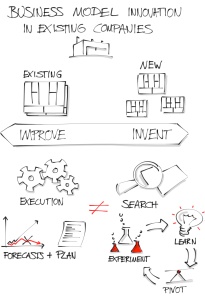
Big Corporates - Innovate or Die!!
Indications that the Bureacratic Disease is setting in
- Are you starting to defend your margins through pricing?
- Is bureaucracy rife and issues re people trying to maintain their positions an, titles and jobs a problem?
- Is it a mission to do something different?
- can you relate to the drain phenomena?
- Is the early vision of your Company exhausted?
Disruption knocks. For some, disruption has all but destroyed the current status quo.
As my mentor Allen Pathmarajah says - when the rate of change on the outside is greater than the rate of change on the inside, the end is near.
there are 2 fundamental reasons why large corporates don't thrive in innovation
1. risk appetite is low and
2. fear of failing
Below are 8 examples of how organisations have started to infuse innovation into their culture
- Silicon Valley outposts, Nestle detting up a facility there
- Telstra supporting Muru-D
- Google supporting Fishburners
- On-Premise accelerators: Polleniser incubating Spreets
- Co-location with entrepreneurs, such as the RocketSpace model in San Francisco (soon NYC and London)
- Continual learning - The Innovation Masterclass and the 10X Coaching Club and its accredited Business Diploma
- Attending investor forums
- Create a space where its ok for risky behaviour and the ability to push the edge with the comfort that its ok to fail
Innovation is not a nice to have - its a necessity - and its good business.
Steve Blank talks about innovative businesses needing to both improve and invent!
So - in summary
- Continuous disruption will be the norm for corporations in the 21st century
- Continuous innovation – in the form of new businesses- will be the path for long term corporate survival
- Current corporate organisational models are inadequate for the task
- Look to set up an Innovation Mastermind Group
When I speak to a founder of a start-up - it really gets my juices flowing
They don't talk about building a lifestyle business (which represents 90% of all SME's). My Dad was a pharmacist, and his why was to earn enough money to live well, feed and educate his family and enjoy a day at the races to get is adrenalin pumping…..
Founders of Startups talk about
- How they are going to change the world by doing something important
- They are disrupting
- They are making a massive difference
- They are going to take over the universe
- They are excited and they are on a mission
- -->
Wednesday, September 24, 2014
Love this quote!
Life is not a journey to the grave with the intention to arrive safely and in a well preserved body - but rather to skid in broadside, thoroughly worn out and totally used up - proclaiming WOW , WHAT A RIDE!!!!
Tuesday, September 23, 2014
3 High Paying Dividend Stocks on the ASX recommended by the Motley Fool
- · There is a direct correlation between high dividend yields and attractive total returns."
- · High dividend yield stocks were also less volatile in terms of the standard deviation of returns."
- · high dividend yield stocks outperformed other value strategies as well as the overall stock market return in declining markets."
Telstra
(ASX: TLS)
Amcom
(ASX: AMM)
Monday, September 22, 2014
Monday, September 01, 2014
22 ways to get online customers for free
From Michael Ugar at Appster
High customer acquisition costs are the top reason why startups fail. So we have collated a list of some free customer acquisition tactics to bring your CAC down and help you get off the ground. Enjoy.
1. Direct Sales: Manually reach out and connect with your first 1000 customers. Use email, social media, phone, meet them and manually sign them up. These people are likely more important than the next 99,000 customers your get. The personal connections and direct feedback will make a huge difference.
2. Partnering: Find similar / complementing companies and create a value for their users to access their mailing list free.
3. Piggybacking: Piggyback on big platforms, for example Trulia made a partnership with CNN Money to power their real estate search. Instagram built a cross-posting feature leveraging Facebook and Twitter.
4. Meetup.com: Reach out to meetup.com groups with mailing lists bigger than 200 people and offer a freebie or create some other value.
5. Facebook and Linkedin Groups: Reach out to relevant group owners and provide some value for subscribers or make some trade with the owners.
6. Reddit: Go to /subreddit that’s related to your business and leave comments. Don’t be spammy, be helpful when interacting and don’t forget to mention your app.
7. Comments: Search 5-10 keywords related to you on Google and leave comments on those related pages (don’t be spammy, offer valuable response, advice etc.
8. Giveaway: Create a giveaway campaign – offer free content or ask partners for freebies (I once got 20 copies of a newly published business book worth $600 for free just by emailing the author who connected me with his publisher – if you don’t ask you won’t get it)
9. Guest Posts: Write a guest post for any site that is related. Use Technorati to find them. Just write a great post and pitch it to them.
10. Referrals: Email existing users and ask them to refer their friends. Obvious advice but you would be surprised how few actually do it
11. Competitor Users: Manually reach out to Twitter / Facebook followers of your competitors.
12. Think Outside the Box: Look new channels such as Instagram, Pinterest or international social networks to get new users.
13. Betalist and Directories: Get listed in as many beta promoting sites and startup directories as possible. Try this list.
14. Bloggers: Offer top tech commentators like robert Scoble and bloggers early access or free demo.
15. Major Blogs: Pitch leading startup outlets like TechCrunch, Read/Write Web, Mashable, etc. Remeber to find relevant journalist covering your market. Be short and direct with your emails (they get them in hundreds) and always have some news to offer.
16. Local Outlets: Pitch local news and outlets in your region. You’ll likely get a “Local entrepreneur trying to solve a huge problem” kind of articles.
17. Stay in Loop: Setup Google alerts, twitter saved searches, and other monitoring tools for people asking questions about the type of service you provide.
18. Get Attention: Create controversy related to an industry topic and get attention.
19. Networking: Go to meetups and networking events. Get double-sided business cards with a link to your site and few bulletpoint pitching the signup.
20. Sponsor: You can sponsor most meetups on meetup.com just by buing few beers. In return you will get an opportunity to pitch the crowd.
21. Pitch Events: Pitch your demo on the tech show or other startup event
22. Competition: Monitor competitors for controversy and become a leading source of news about it. Offer incentives for people to switch
Sunday, August 24, 2014
Who could forget this technology
Saturday, August 23, 2014
Wednesday, August 20, 2014
2m raised at big pitch funding
Sunday, August 17, 2014
Coca-Cola and Monster deal turns founders into billionaires
Fortunes shifted for the better in April 2002, when the pair launched Monster, an energy drink priced the same as Red Bull in cans twice the size. The Monster brand was so successful that the company changed its name to Monster Beverage in January 2012.
The difference between a startup and a small business
Airbnb - How it started
Friday, August 15, 2014
Keynected launched today - need your help!!
We are delighted to announce the birth of keynected www.keynected.com ... (Launched on App Store today).
Help:-
I have been challenged to get a sample of 1000 users to download the app within the next 5 days -
So...please download keynected, play with it, and if you love it share it with your friends.
At the moment you need to have an I-phone or IPAD and have Facebook (Android is coming soon)
It would be fantastic if you could give us feedback and suggestions.
What is it
Keynected is an aggregation of all your Facebook and Social Media LIKES and their POSTS.
Now you can find your favourite magazines, brands, celebs, teams and causes ALL IN ONE PLACE, and share the content that you like with your friends via email, message or social media.
IT IS SUPER EASY TO USE (and I find it a bit addictive!!)
If you have an iPhone and are on Facebook, please download Keynected from the Appstore or from http://keynected.com (and soon to come for Android devices and phones.)
Download from App Store:
Check out the Website
View the Demo Video
have a great weekend