Sunday, October 21, 2018

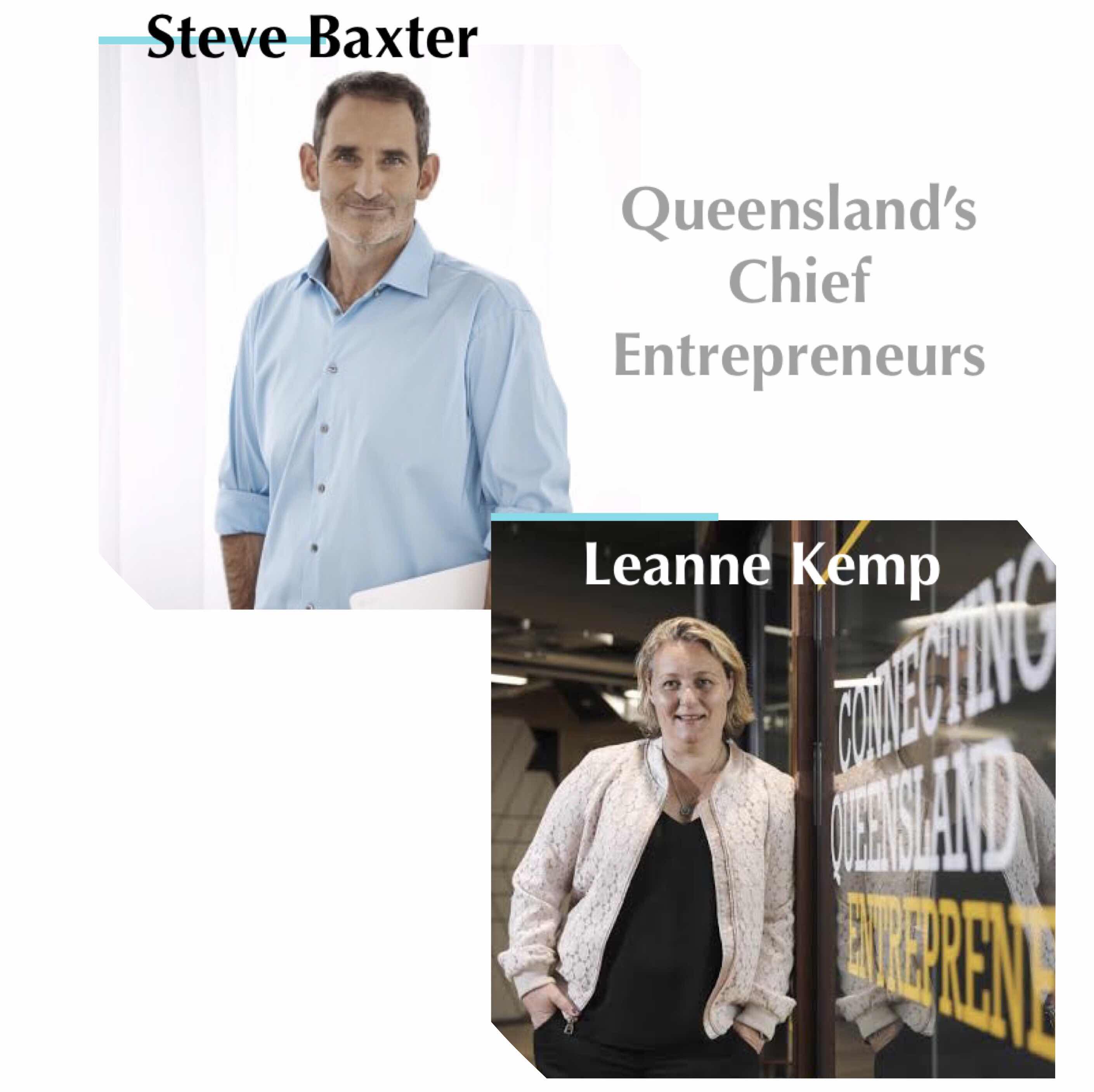
Meet Queensland’s new Chief Entrepreneur

http://outline.com/CLYA39


QUEENSLAND’S new Chief Entrepreneur is a tech pioneer whose global company can track diamonds and other valuable commodities back to their original source to counter attempts at fraud.

Leanne Kemp, who will replace inaugural Chief Entrepreneur Steve Baxter, is founder of Everledger, a groundbreaking blockchain start-up listed as one of the World Economic Forum’s most promising technology pioneers of 2018, and praised only last month by Premier Annastacia Palaszczuk in her Committee for Economic Development of Australia (CEDA) State of the State speech.

Ms Kemp’s company, which can track high-value assets to mitigate risk and fraud, began by tracking diamonds using blockchain technology, establishing the unique thumbprint of each diamond and encrypting the information to establish indisputable provenance of the diamond.

That technology has proven extraordinarily valuable for the owners of high-value assets in an increasingly globalised world.

Ms Palaszczuk said it had taken Ms Kemp just three years to build her company into a global power player with offices in five countries, including her largest tech workforce in Brisbane.

“The company raised more than $10 million in venture capital earlier this year and now employs 72 people, with women in key technical roles and managerial positions,’’ Ms Palaszczuk said.

The position of Chief Entrepreneur, with no salary and a 12-month tenure, was unique to Queensland until South Australia began copying the idea recently.

The Chief Entrepreneur ignites Queensland innovation, linking up with entrepreneurial talent and encouraging the incubators where creative risk takers learn the ropes.

Innovation Minister Kate Jones said appointing Queensland’s first female Chief Entrepreneur would send a clear message about the importance of women in tech.

“To create the jobs of the future in Queensland we need to think globally,’’ Ms Jones said.

“She’s an internationally recognised entrepreneur who has built her company from the ground up.

“In her new role, Leanne will work with the government to ensure we’re doing everything possible to support Queensland companies to scale-up and expand overseas.”

Mr Baxter, the Cloncurry-born tech pioneer whose appearances on Channel Ten’s Shark Tank gave him a national profile, poured hundreds of hours of his own time into the job, travelling the regions in his own plane to meet and encourage people with new ideas.

Mr Baxter has welcomed his replacement as a fantastic opportunity for Queensland business to link into a global business framework.

“A key theme during my 12 months in the role has been to remind entrepreneurs to have a global focus from day one,” he said.

“We’re in a global marketplace and, as I’ve travelled around the state, it’s been encouraging to see the wide variety of businesses that are performing on the international stage.’’

Wednesday, October 17, 2018

 Screen Shot 2018-10-11 at 11.42.42 am.png

HELP US PROTECT YOUNG GIRLS FROM MUTILATION


I have known Toni Fitzgerald for many years and have deep admiration for the work she is doing in Africa.
This post is about something very serious. Did you know that every 11 seconds in Africa a young girl’s genitals are cut out? This may sound appalling to you and you might be thinking “why should I care because what can I do about it?”.   
There are 92 million girls in Africa who have already undergone this procedure - it is a serious problem and your help will make a huge difference. Toni and the Rights of Girls work to stop this inhumanity and allow young girls to experience a normal life. A life free from diseases, pain and suffering.  
To find out the simple and effective way of how Toni is helping save these children, here is a very short White Paper.


Regards,

Ivan Kaye

P
.S. If you want to see what Toni is doing, please take a look at her website
Screen Shot 2018-08-27 at 3.44.42 pm.pngbbglogolarge.jpg

ps If you feel that you want to be a "goatee" and save a human - feel free to contact Toni and share! 

Tuesday, October 16, 2018

Paul Allen the co-founder of Microsoft, died today


Paul Allen the co-founder of Microsoft, died today.

He'd fought Lymphoma for many years, and only in the last few weeks did it return to take him.

As ours blog is for entrepreneurs and business people, I wanted to briefly write down some of the things Paul exemplified to me.

He may be dead, but how he lived his life is a lesson to all of us in business.

  1. He aimed big. As a 22 year old, he didn't just aim to build a tech company, he and Bill wanted to put "A computer on every desk and in every home".
  2. He lived a life of adventure.Paul wasn't all work. He not only was passionately involved in two sports teams, the Seattle Seahawks and the Portland Trail Blazers, he also was hugely involved in music and the arts. ( Both as a participant and a financial supporter).
  3. He cared deeply about helping society. 

His donations to charities and scientists dedicated to improving the human condition were massive. 

In my view he did what every great entrepreneur should do- use the wealth and influence gained from business to help make the world a better one for all of us.

These 3 things most stand out for me when I think of Paul Allen. 

And they are three things that we can all focus on and increase in our own lives.

  • Aiming big.
  • Living a life of adventure.
  • Caring deeply about society.

Vale Paul. 

Best Wishes,

image

Siimon Reynolds

image

Formal education will make you a living; self-education will make you a fortune. Jim Rohn

Saturday, October 13, 2018

School Carpooling “the trusted manager for all your family’s mobility,”

By Brian Blum OCTOBER 7, 2018, 8:20 AM

School carpooling in the US gets a high-tech makeover

If there’s a change in plans, Figure8’s app updates everyone at once and even sends a picture of the replacement driver so there are no surprises.

The Pain 


“A parent arrives ready to pick up six children to transport to dance practice,” he explains. “I reach for the dismissal card on the dashboard of the van, bring a walkie-talkie to my mouth and say, ‘Grade 3, please send Isaac S.’”
Invariably, there’s no response.
“Grade 3, please send Isaac S.,” Matzkin repeats.
The walkie-talkie crackles back. “Grade 3, Isaac is on his way.”
As this slow process drags on one child at a time, the residential roads leading to the school become a congested parking lot full of idling engines.

Yaniv Vakrat was one of those Silicon Valley carpool parents and he was as frustrated as Matzkin.

But Vakrat is also an entrepreneur. He grew up in Israel, graduated from the Technion and received his PhD in information economics in the United States. He put down roots in Palo Alto and spent 17 years running business development for companies such as Adobe and Apple before returning to Israel.
Vakrat thought there must be a better way to manage carpools and classroom dismissals. 

So he invented it.

The Painkiller


Vakrat’s startup, Figure8, replaces Matzkin’s clipboard and walkie-talkie with a single app for mobile phones and tablets. It can cut a 45-minute dismissal process to 25 minutes in many cases.

Now when an empty van approaches, I type one number into my iPad, click six ‘excuse’ buttons and in seven seconds the van is on its way to waiting children,” explains Matzkin.
Figure8’s straightforward interface has an administrator panel for the school and individual apps for parents and students.

“All the notifications come in real time,” Vakrat says – for example, this kid just left the classroom, now the carpool has left the school grounds, the carpool for Sarit and Yoni is 10 minutes away. GPS on the students’ phones tracks where they are so no one gets lost.
If there’s a change in plans, the Figure8 app updates everyone at once and even sends a picture of the replacement driver so there are no surprises.

“Before Figure8, I had to write my driving days down on a calendar, which often got crossed out when I or the other parents needed to switch things around,” Rachel Licht, who used Figure8 at the South Peninsula Hebrew Day School in Sunnyvale, Calif., tells ISRAEL21c. “Once Figure8 came into play, it was so much smoother. Everything was in one place. Figure8 really did change the way I carpooled.”

Saving Time and The Environment 

Aside from the time savings — American parents spend anywhere from 16 to 40 hours a month ferrying their kids to and from school — Vakrat believes that wide adoption of Figure8 could positively impact the carbon impact of all those carpooling cars.

Moneys raised and revenue model


The company has raised just under $3 million and has nine US schools signed up so far. Schools pay a monthly fee per student. Parents can download the app independently in order to manage extracurricular carpools at no charge.


Figure8 is available only in the United States for now. Vakrat, who now manages his family’s carpools in and around Tel Aviv, hears from many parents who want the app here and he hopes that will happen eventually.

A major opportunity - Smart carpooling and figuring out who to trust


Figure8 has greater ambitions than just school dismissals, stemming from Vakrat’s own carpool-from-hell experience during the years he lived in the US.

He was driving his daughter from school to ballet class, which could take half an hour.

“Then you wait an hour for the class to finish, at which point there’s no reason to go back to the office,” he says. “Basically three hours are gone. I would look around and see lots of other parents, smart professionals, whose time is worth a lot of money, and I thought, there’s no way that this thing should be so inefficient!”

Indeed, it’s gotten so bad in California that companies like HopSkipDrive and Kango are now “pre-qualifying” drivers – Uber and Lyft style – to pick up and drop off kids. GoKid, KidCarPool and Chaperone are specific to carpools for school-age children.

The difference, Vakrat points out, is that “we’ve merged transportation management for kids with check-in and check-out.”

I don’t trust anyone when it comes to my kid,” he tells ISRAEL21c, “except for people within my community. It could be a parent or even a nanny.”

Using machine learning, Figure8 is working on a “carpool matching” feature for such families.
“It’s not a trivial technology,” Vakrat says. “It’s more than just the proximity between you and your neighbor going to the same soccer practice. 

You might have a six-year-old daughter while your neighbor has a son who’s 18, and they won’t connect so well in the back seat. The system learns and will know eventually if a particular carpool suggestion worked or not. Over time, it will become more effective in matching families together.”

Another piece of unique technology in Figure8 is Driver Assistant, which understands the context of what a driver is doing. “You just keep your phone in your pocket and the software automatically updates everyone,” Vakrat explains.

That kind of software is very difficult to get right, Vakrat adds. “For example, you might be going to a supermarket next to the soccer field. How does it know the difference?”
Because Figure8’s tracking software works the same for a minivan or a 30-person yellow bus, school bus management could be its next area of interest.

Ultimately, Valent want Figure8 to be

“the trusted manager for all your family’s mobility,”

I think this is a winner - what do you think 


Best
Ivan
Ps feel free to download my business card https://members.referron.com/bsivc


Thursday, October 11, 2018

Startup Studio Behind Hims - Just Raised $150M at a half a billion dollar valuation

When direct-to-consumer men’s health startup Hims launched in November 2017, it seemed to come out of nowhere. 

Him’s Offering is easy-access prescriptions for men’s issues like hair loss and erectile dysfunction through a quick online doctor consultation, 

Hims had sleek branding and eye-popping numbers for a debutant: $1 million in first-week sales and $7 million in funding right out of the gate from blue-chip investors including Kirsten Green and Josh Kushner.

Less than a year later, Hims has raised another $90 million at a reported half-billion-dollar valuation, with tens of millions in sales. 

Its torrid pace has made CEO Andrew Dudum look brilliant—or at least very, very lucky.

Hims was the result of months of planning and testing at a startup studio called Atomic, founded by entrepreneurs Jack Abraham and Chester Ng. 

Atomic’s team of founders, marketers and operations experts poured months of work into Hims before it burst onto the public scene. 

And for all its rapid growth, Hims still operates out of Atomic’s office and shares back-office services with its other companies.

In less than five years, Atomic has launched 10 companies including Hims out of a $20 million first fund, enjoying one exit (TalkIQ) and returning its cash to investors like Marc Andreessen and Peter Thiel in less than five years—good for an internal rate of return of more than 70% so far.

Atomic is a great model for others to emulate.

What do you think?


Best
Ivan
Ps feel free to download my business card https://members.referron.com/bsivc

PS for more info about Hims, be sure to go to this link


Saturday, October 06, 2018

Government support for innovation and startups in the UK

The UK government offers a range of tax incentives and programmes to promote competition and innovation including:

  • the Enterprise Investment Scheme
  • the Seed Enterprise Investment Scheme
  • Entrepreneurs’ Relief
  • research and development tax credits
  • the Patent Box scheme, where companies pay a lower rate of Corporation Tax on profits earned from their patented innovations

The government also has up to 50 billion GBP available to support finance and insurance for supplies from within the UK to buyers outside the UK. This support takes the form of guarantees, insurance and loans issued by its export credit agency, UK Export Finance.

For more info on UK Innovation - https://invest.great.gov.uk/industries/financial-services/financial-technology/?utm_source=LinkedIn&utm_medium=Social&utm_content=LinkedIn_AU_FinTech_FT_v1&utm_campaign=IIGBQ11819


Wednesday, October 03, 2018

Superfunds are starting to come to the VC Party


Industry super fund Hostplus is looking to invest $1 billion of its $36b fund in venture capital that will help fund the future of the country's economy.

"If the whole thing dies and the whole billion evaporates, we have only lost one divided by 36, which seems like a lot, but it isn't with the potential outsize returns from successful investments ... So my question is why isn't everybody else doing it?" Says the fund's chief investment officer Sam Sicila who believes it is likely to prove a smart investment.

"As a nation we need a mindset that a culture of innovation is critically important. The nature of venture capital is that most of it won't succeed, but those that do succeed insanely wildly."

In recent times Hostplus has backed Square Peg Capital, Blackbird Ventures, MH Carnegie & Co, Carthona Capital, Brandon Capital Partners' Medical Research Commercialisation Fund, UK-based IP Group's $200 million fund for commercialising Group of Eight universities' research and CSIRO's Main Sequence Ventures fund.

While a number of other institutions have begun flirting with the VC sector, such as First State Super, Sunsuper, Hesta, StatewideSuper and AustralianSuper, most have done so in a  limited way or not at all. 

Blackbird Ventures co-founder Niki Scevak has direct experience of coaxing super funds to invest, and was also able to convince the Future Fund to back his latest $225 million fund. He said it was too early to claim that the floodgates had opened for institutional money, but was optimistic that the initial resistance had broken down.

He said he believed that the scale of Australian funds meant that only a few more getting involved could dramatically change the size of the local industry, however he said the appetite for risk was not easy for some funds to develop.

Niki told the AFR "I certainly believe that venture capital offers the potential for the best returns in the world ... Sequoia Capital has significantly outperformed Warren Buffet over 40 years, for example. But the reality is that like the average start-up, the average venture capital fund is a failure," 

"It is essential for the local ecosystem to have strong interest from the big super funds, and the raison d'etre of super funds is to provide for their members' retirement. So it makes sense to have a sensible exposure into tech companies that will shape the future of our country."

He said the current government was along the right lines with research and development incentives and that it was time for the government to stop avoiding the topic of innovation-led change, simply because it scared voters about their jobs.

Attached is a link to an interesting presentation of how BSI plays in the Venture Capital space


Saturday, September 29, 2018

Haim Savan - an entrepreneur that I admire


I listened to a great podcast today with Haim Savan 


The Narrative

As a refugee growing up in Tel Aviv, Haim Saban remembers not having enough money to eat. As an adult, he hustled his way into the entertainment business, writing theme songs for classic cartoons like Inspector Gadget and Heathcliff. But producing the mega-hit Mighty Morphin Power Rangers put him on track to becoming a billionaire media titan. 

First Major Break 

Haim  recognised opportunity in providing music for cartoons. 

A Sitcom -   needs  3 minutes of music . 
A Cartoon - needs wall to wall music . 
Why not focus on music for cartoons (Seichel- sense

Ended up with 12 studios making music for cartoons !!

The power rangers 

In 1984 stretching on bed in Japan - he was watching a cartoon with the  power rangers in Japan and secured the rights for The USA (chutzpah) . 

How can you use the action sequences and americanise for a little money - he knew it could work 

He “shlepped” this for 8 years - no luck 
It was successful for 20 years in Japan - why not in USA? 

People said it was cheesy. Chaim saw this as a fun show  - he was convinced people would love this  - why can’t people see this?

He kept at it! (Zietsvleis - Passion and Persistence

A fox representative, Margaret Nash, gave him a break and did a deal for a series - the programme went off the charts (a metzia or a maichal - a miracle or a lucky break

Chaim Parlayed this programme and his business into doing a 50/50 JV with Murdoch . (Chutzpah) . They bought the family channel for a little - turned it into a 24/7 kids channel - grew it and sold to Disney for 5.5b .

A few takeouts 

You need Seichel - common sense - that is what is sense to you 

“What is luck - (mazal) recognising when you are lucky and taking action to max that potential “

“Go with your kishkas (gut in Yiddish - more expressive) . If you believe something is right - give it a go - if people say it won’t work - or are cynical - you are probably on the right track” 

“You gotta have zietsvleis  - Passion and persistence- Chaim saw power rangers - knew it was good - stayed with it 

“You gotta have chutzpah” - Chaim parlayed  the rights of a cartoon programme to a $5b sale netting him $2.5b 

When u look in the mirror who do u see - Mogul or displaced refugee 

“I see me - A guy hurrying up to his next meeting “

So who is Chaim Savan ? 

  • He is a great deal maker 
  • He goes with his gut - kishkas 
  • He finds a win win
  • He is authentic - real and down to Earth 
  • He Negotiated a 50/50 JV with Rupert Mordoch - and built a business that sold to Disney for $5b - boom 
  • He is a philanthropist - he gives back to countries and people that looked after him - Israel and USA

“You gotta have Tsedeka - giving back to community - life is more than making money and you.”

Some interesting  answers 

Question :- If you sell something for 500m or 2b why do you care? 

“It’s not about the money - it’s about what’s fair ! Money is used as a marker”

Question :- why do you still work? 

“I don’t collect stamps and I don’t play golf . This is my hobby “

He Recently Sold rights to power rangers 500m 


Friday, September 28, 2018

SenSen raises capital and backdoors at a $36m valuation


It was great catching up with my mate Zenon yesterday at a BBG Mastermind Lunch yesterday. Zen is a founding investor and mentor of SenSen Networks.

Subhash Challa, a professor of computer systems engineering at Sydney's University Of Technology (UTS) started SenSen in 2007 and raised his initial capital  and found his founding investor at our BSI Investor forum. 

Last year it  backdoored  into a $36m ASX backdoor listing .

The technology was a spin-off of the UTS, who transferred the IP into SenSen in exchange for equity. ( A great example of how A university can commercialise its technology)

A video analytics start-up which claims its camera systems can catch as many parking cheats in a day as a council's inspectors can in a year raised $4.5 million for an ASX listing.

Its video analysis software  powers one-third of NSW's speed cameras, and counts customers for Crown Casino as well as the sizes of their bets.

It’s  ability to interpret video and manage the “big data” will hopefully scale globally.

"Video images contain so much rich, business-related information, if an algorithm can extract it and present it to you in the right way."

Applications for Councils “Robocop”

Thirteen city councils or state governments (local and overseas )  now buy SenSen's video analytics as a software-as-a-service .The automation of parking inspection has proven the most popular application with councils. Users include Manly in NSW, Brisbane, Ipswich and Logan in Queensland, Maribyrnong in Victoria, Subiaco in WA, as well as Calgary, Copenhagen and Singapore.

SenSen puts its software behind existing CCTV cameras (or installs its own where necessary) and uses character recognition to 'read' every parking sign and audit every zone in the customers' desired area. Its algorithms can then apply the appropriate rule to cars interacting with the zones.

In a  test for one council, SenSen Networks notified the client of every breach its system detected in a single day, as minor as a one-second stop in a no stopping zone. The fine revenue that could have been raised exceeded what the council's human inspectors had booked in the entire previous year, Mr Challa claimed..

Video analytics for casinos 

Gambling has become SenSen Networks' other focus. It convinced Melbourne's Crown Casino to install Microsoft Kinect cameras, which are single point cameras capable of detecting three dimensions.

"That's allowed us to detect the heights of chip stacks, which we can marry with the chip colour information to calculate how much is being bet," Mr Challa said.

Crown is using the information to determine in real time which games it should be running in which areas of the casino. The system can also recognise patrons' faces and ensure they have earned an appropriate number of loyalty points.

James Packer's business had helped SenSen develop the gambling offering to the extent it will receive a royalty on sales to casinos elsewhere, Mr Challa said.

Self driving cars

Imagine the analytics that SenSen can capture and analyse tlfrom the data obtained from self driving cars. 

Onwards and Upwards

We at BSI are looking forward to follow the progress of Subhesh and the SenSen team! Well done!


Thursday, September 27, 2018

Tuesday, September 25, 2018

Adobe acquired Marketo for $4.75b


Adobe will acquire B2B marketing automation software company Marketo for  $US4.75 billion.


Marketo is owned by private equity firm Vista Equity Partners who bought the company for $US1.8 billion in 2016.


Adobe is entering into Dalesforce’s marketplace 


Salesforce and Marketo have partnered together for years, though that relationship was complicated in 2013, when Salesforce acquired Marketo competitor ExactTarget for $US2.5 billion. ExactTarget eventually became the Salesforce Marketing Cloud.


Adobe has made several strategic acquisitions in recent months, including the acquisition of the e-commerce platform Magento Commerce for $US1.68 billion in May. 


In April, Abode acquired the computer vision software company Uru, as well as Sayspring, a platform for creating voice-enabled apps.


Interesting times for Software Automation companies - good time to exit?


Gardiner’s of Jelix to raise a $30m seed fund

afr


Local VC Jelix Ventures targets $30m raise 


September 24 2018 - 3:00PM


Australians Ian and Andrea Gardiner are looking to raise a $30m seed stage Vc  fund Jelix Ventures after the seed-stage investors scored their first home run exit from the sale of StorReduce to $9 billion US company Pure Storage.


Having invested just $180,000 in StorReduce in 2014 when the business was still pre-revenue, Jelix investors have banked a 10-times return from the sale of the company, which de-duplicates, manages and migrates data.


For 16 years they have been running Innovation Bay and at one of the functions in May 2014 Vanessa pitched her company - StorReduce. 


Pick and choose

Jelix has provided other investors in the fund with the ability to pick and choose which companies they invest in, similar to the model of Israel's iAngels. 


With the raise of its first VC fund, for which it already has some multimillion-dollar commitments, it will also provide a "set and forget" investment option.


The Gardiner’s share some gems with Yolanda Redrup at AFR 


"We want to give investors access to this asset class in a more curated way and I'm on a personal mission to get more financial fuel into the best Australian start-ups and strengthen the ecosystem, as well as building a global investor base."


beacon.gif

Investments

Jelix other investments include 


  •  mixed reality technology company tagSpace, 
  • on-demand photography start-up Snappr 
  • inclusive-recruitment platform Enabled Employment.
  • podcast platform Whooshkaa 
  • fintech start-up Trade Ledger. 


"We hypothesised [when we started] that there was a lack of leadership and appetite to invest in these high-risk assets and there needs to be a leader for other investors to feel confident in their judgment. It was after that realisation that we started Jelix."


New focus

Mr Gardiner, who was previously the founder of streaming service Viocorp, has more recently been the head of the Australia and New Zealand start-up division at Amazon Web Services, resigned from that role last week in order to dedicate time to Jelix, as well as Innovation Bay.


Traits that the Gardiner’s look for 

"[I look for] tenacity. It's a brutal journey in the start-up kingdom. The first day you wake up and get smacked hard in the nose, you need to be able to get back up and go again," he said.


Ms Gardiner added: "I look for intellectual firepower, a voracious appetite to learn, someone without an ego that will stop them from learning 


and 


I look for someone passionate that can attract people and engage them, so they can build good teams and the relationships needed to drive growth." 


Monday, September 24, 2018

Innovation in Australia: The top 20 Internet Companies - 9 in China!

Innovation in Australia: The top 20 Internet Companies - 9 in China!

Changes to the R&D Tax Incentive - 2018 Budget


Changes to the R&D Tax Incentive (RDTI) announced in Tuesday night’s Federal Budget are heavily focused on cost reduction and enforcement, and may risk further depressing the level of business investment in R&D by Australia’s private sector.

In summary, the major changes include:

  • Changing the rate of refundable R&D tax offset to a fixed 13.5% premium above the claimant’s applicable company tax rate;
  • Amending non-refundable R&D tax offset rates to provide increasing benefits to companies with a higher levels of “R&D intensity” (being R&D expenditure as percentage of total expenses);
  • Introducing a $4 million annual cap on cash refunds forR&D, with amounts above the cap converted into non-refundable offsets, which can be carried forward to future periods.  Refundable tax offsets for clinical trials will not be capped;
  • Increasing the $100 million annual R&D expenditure threshold to $150 million;
  • Strengthening anti-avoidance rules, and providing additional resources to the ATO to help ensure ineligible R&D claims are denied;
  • Publishing details of companies claiming the RDTI and the amounts they claim; and
  • New binding Innovation and Science Australia guidance on the scope of eligible R&D

The introduction of a new $4m cap on the maximum annual cash refund will not effect most startups and smaller SMEs eligible for the refundable tax offset.

(Ivan's comment - If someone is prepared to spend millions of dollars on R&D- why limit this benefit? 
Surely these are the companies that the Government should be encouraging to continue to invest in R&D? )


The decision to change the rate of refundable tax offset to the company tax rate plus a 13.5% “premium” does represent a reduction relative to current refund entitlements.  Whilst arguably a small decrease, this will be keenly felt by loss-making startup-ups trying to maximise available cash during their R&D phase. 

For larger company groups accessing the non-refundable R&D tax offset, the impacts are more significant.  The introduction of a sliding scale of non-refundable tax offsets pegged to a new measure of “R&D intensity” adds yet more complexity, and all but removes any meaningful support for larger company groups where R&D investment forms less than a significant proportion of their overall business activities.  The government is presumably seeking “additionality” at the recommendation of the Chief Scientist and Innovation and Science Australia, however, this measure risks driving those making the most significant investments in R&D in dollar terms to other, more supportive tax jurisdictions.

The foreshadowed revision of anti-avoidance rules specifically for R&D combined with increased resourcing of the ATO is welcome, as is the proposal for new binding technical guidance to be issued by ISA.  However, the plan to publicly disclose the name of each applicant and the amount they claim is commercially sensitive information to many companies and may act as a further deterrent for firms to disclose their activities to access R&D support.

Long-term integrity of the program is critically important, and the government is to be commended for recognising it was past time to act.  But taken together, these latest changes reduce the benefits available for most applicants, and appear contrary to the original intent of the Incentive itself. 

Negative media coverage and increased complexity and compliance risks already sit uneasily with companies wishing to validly access the program.  With apologies to Ken Henry, from these trenches it is difficult to see this as the self-assessment incentive program it is intended to be.

Australian Business Expenditure on R&D (BERD) is in decline, and the “end of the mining boom” excuse for the downward trend is losing its legitimacy.  We fear the impacts of these changes and the consequent reduction in support for companies taking the big technical risks on behalf of us all will be felt for more many years to come.

Please see the fact sheet (https://www.budget.gov.au/2018-19/content/factsheets/6-tax-integrity.html) for further details on the changes announced in Tuesday’s Federal Budget.  BSI will provide a further detailed outline of each change as the relevant Bills are released for consultation, or otherwise introduced in the House of Representatives.

Tags:
#Grants #Innovation #News #R&D #R&DTaxIncentive #Research and Development #Tax

Related Posts

Innovation does not happen in isolation. It requires the entire economic ecosystem– small, medium and large organisations – to be playing their part. Stable support is needed at all levels. 

The Government should make it easy for  those that have the motivation, authority and desire to innovate and invest R&D to access the relevant R&D Incentives. 

Innovating and investing in R&D is risky enough without The Government continuing to changing of the rules and make the definition of what R&D is - which leads to fear, uncertainty and doubt!!

What do you think?