Sunday, June 30, 2019

Should public investors have easy access to invest in startups?


A great Insight from Niki  Skevak from Blackbird Ventures 

Afterpay, Xero and Pushpay all went public super early at super silly valuations and created awesome business worth billions of dollars each

In 2016, Afterpay went public on a $500k annualised revenue run rate and raised $25M on a $165M post-money valuation. It's now a $7B company 3 years later with a $214M annualised revenue run rate.

 (oops $6b now) 

Maybe make it easy for startups in Australia to list on the asx and enable public investors to get in at a stage that’s often reserved for VC/private capital markets? 

They can have a strategy to invest in startups where 1 in 10 will work! 


Monday, June 24, 2019

David Shein Shares his recipe of turning a startup into a business he sold in 2001 for over $600m

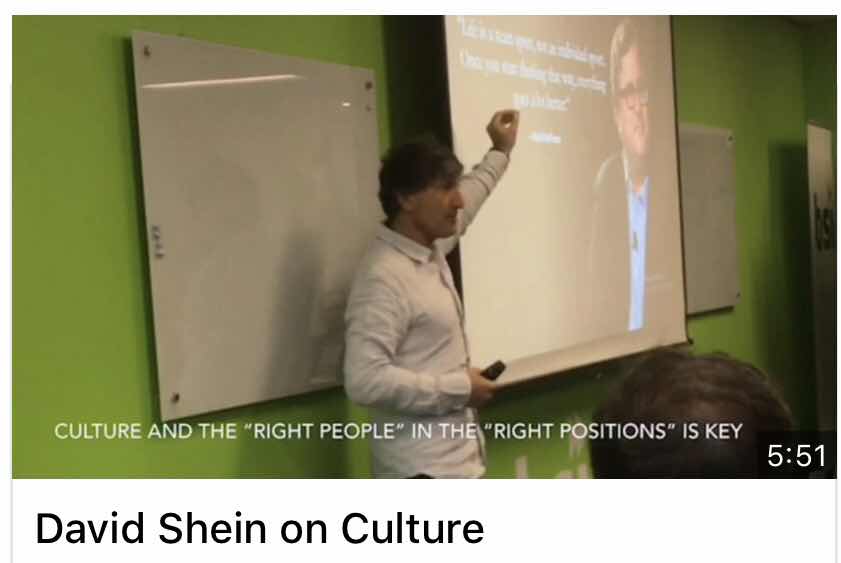
We were grateful to have David Shein share his story, some of his learnings and strategies  with us at the BBG BSI Innovation Forum last week.

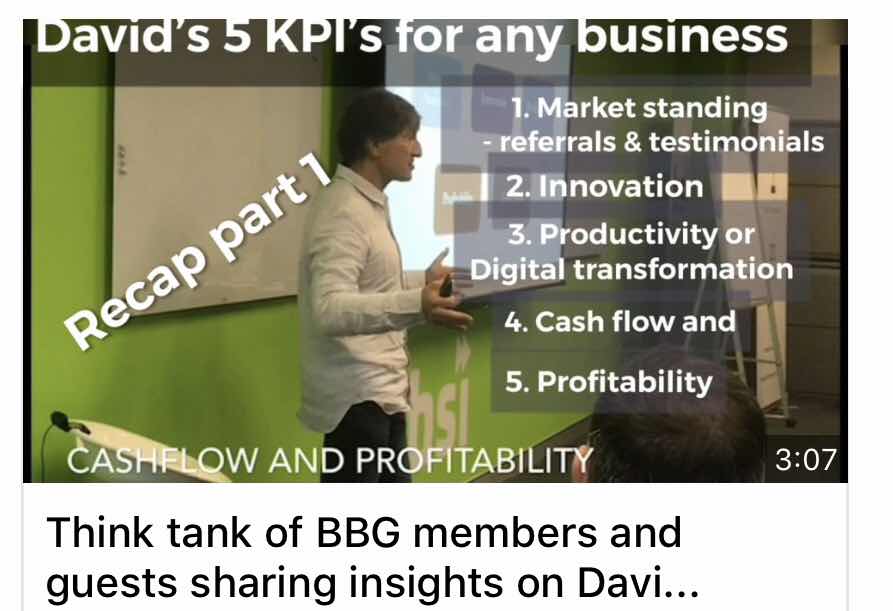
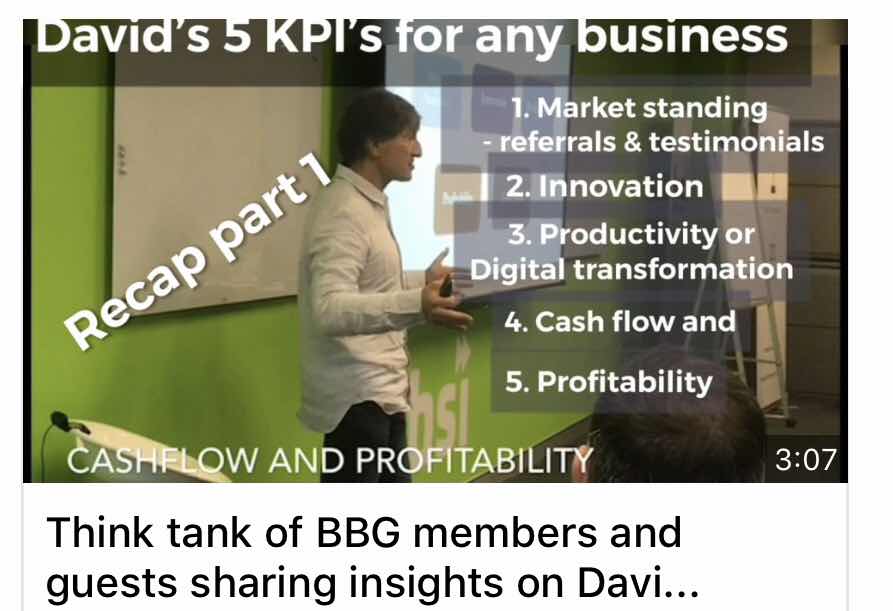
David shared his vision, KPIs and thoughts and strategies  on customer service, culture, building relationships and scaling globally.

This was followed by a robust Thinktank of  “3 Pods of 6” and a sharing of insights and learnings on how these learnings and strategies can be implemented into our own businesses and organisations! 

1987 - 1991 - Comtech  founded - grew from startup to 85 employees - winning NABs ethnic awards. (His speech then would be the same as his speech now)

1991  to 2001 - grew from  85 to 1400  employees - and $1b in revenue - making a tradesale to Di Data - for +$500m (in height of boom - a year before crash!!

2001 to 2002 - wallowing

2002 - now - investing in startups and innovators with passion, purpose and peraerverence (in no particular order)

Here  is a taste of the start of a sensational BBG Forum

Enjoy!!

(Let me know if you want to see the rest!) 


Part 1 


Think Tank part 2 and 3 


ICANsee cannabis Ocular Therapy -


The medical cannabis market will reach at least $19B in the next 26 months making it an attractive and important sector.  

Combating inflammation and pain are among the most impactful applications of medical cannabis.

A medical market primarily driven by inflammation and pain is the ocular therapeutics  market of eye drops. iCAN believes that the medicinal use of cannabinoids in eyes drops is inevitable and the time to stake a claim in that market is now. 

iCAN is pleased to announce that iCANsee is offering an investment opportunity in their seed round right now.

iCANsee are first movers in the cannabis ocular therapy market, with clinical applications and for both over-the-counter and prescription markets utilizing nanotechnology-based delivery system, developed here in Israel, and iCANsee was awarded a Government  grant from the Israel Innovation Authority for the R&D.

If you’d like to find out more about iCANsee, please download the brief here:

 you’d like to find out more about iCANsee, please download the brief here:

Want to know more?

Send us an email, along with a signed copy of our standard NDA, and we will get back to you as soon as possible.

CLICK HERE TO DOWNLOAD! For more info 

Want to know more?

Send Saul Kaye an email  incubate@israel-cannabis.com (no relation :) , and no vested interests 

along with a signed copy of their standard NDA, and he will get back to you as soon as possible.


Thursday, June 20, 2019

Enboarder raises $12m


Enboarder has to date raised $12m from VCs who love the founder and team.

What Enboarder Does 

Enboarders onboarding software relieves HR of operational processes, delivers personalized experiences and drives human connection well before new hires begin their roles.

It delivers intelligent nudges and personalized communications for managers and employees alike.

Enboarders customers

Global companies — including McDonald’s, Hugo Boss, EA Games, Eventbrite, Gap, Verizon, Wyndham and, most recently, Compass, the 10,000-employee real estate brokerage firm - have used its service to deliver onboarding experiences aimed at boosting employee happiness, productivity, and retention.

Who has invested 

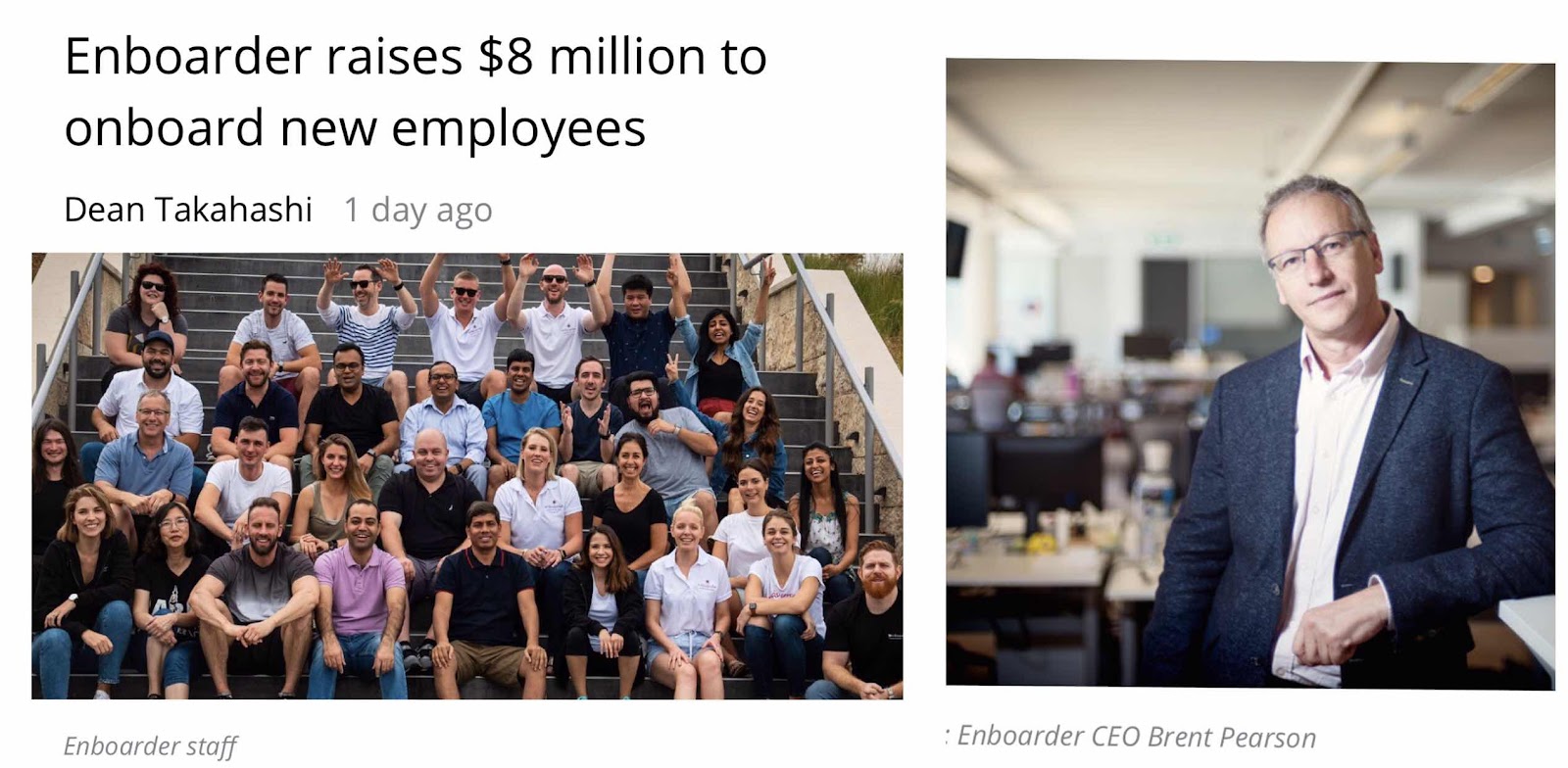
Enboarder today announced it has raised $8 million to give employers better ways to bring new employees onboard.

Greycroft, which participated in Enboarder’s previous funding round of $4 million, is the lead investor in the new round, which brings the company’s total funding to $12 million. New investors Next Coast Ventures and Stage 2 Capital also participated in the round.

Laurence Schwartz at “our Innovation fund LP” supported by Jerry Stesel , Geoff Levy and Dave Shein was a 2016 investor 

So what is  Enboarder’s Unique Selling Proposition?

Enboarder CEO and founder Brent Pearson in a statement. “We’re living in an experience era, and yet we welcome new hires with a process. Employees have all the power today and place a premium on experience.  We provide that experience for the Organisation.” 

“Companies that do not adopt solutions to power an exceptional employee experience will lose the war for talent,” said Greycroft principal Will Szczerbiak. 

“Customers absolutely love it, the team is terrific and has executed flawlessly since we joined the seed in 2018, and we feel strongly that Enboarder will become the category leader of this emerging part of the HR tech stack.”

“We work hard each and every day to partner with exceptional founders and to add material value to help them realise their dreams and take on the world, and we are super proud to  announce our 2016 Investee Enboarder’s US Series A round, raising approx $12 million from US VCs Greycroft, Next Coast Ventures and Stage 2 Capital.” Laurence Schwartz at “our Innovation fund LP” supported by Jerry Stesel , Geoff Levy and Dave Shein

The Next Stage 

Austin-based Enboarder is planning to double its 40-person team in the next 12 months, with the new investment also helping build out the company’s sales, marketing, customer success, and product functions.

Wednesday, June 19, 2019

How Do the Gurus Build Great Networks?


This article has really resonated! Thanks to Noirin Mosley from Race Party for pointing this out 


A: You go out of your way to provide exceptional value for other people.

It really is that simple.

The only thing I would add, is to continue to work hard at both; delivering value and protecting that relationship.

So let me unpack that a little.

Delivering Value

How do you deliver exceptional value for someone? It starts with your first encounter. Do you try and jam a business card in someones hand? Maybe pitch them your product or service straight away? or do you act like a normal human being and just ask how they are going and what brings them here? Basically, listen.

At a networking event, It may seem counter-intuitive to what we think about business networking, but I assure you this is how you build meaningful relationships over time, and that may mean leaving out 'what you do' altogether. I have personally found that 9/10 if you don't mention it straight away the intrigue will get the best of them anyway and the ask will be natural! Perfectly set up for you to shine!:)

Your job is to see how you can help, or to quickly understand how you could add value. Could you help this person? Do you know someone that could help this person? That is it - no pre-tense. If the opportunity does arise, you develop a relationship based on giving value first, and ideally it will lead to all the other steps if you think it could lead to business (a meeting, proposal, etc etc). But it may just lead to you making an introduction for them, great - this is also super powerful. I assure you, they will remember that and remember you, and in time do their best to repay the favour. They will introduce people to you and your network will grow.

If they turn into a customer, always deliver the value you promised, and if you cannot, which from time to time also happens (despite best efforts), it is your responsibility to make up the difference. It should not stop with we tried our best. It should continue with we managed to increase sales by x% and I know we promised y%. What we plan to do is A, B, C, to make up the difference at our own expense. This signals two things, you care and that you will bend over backwards to deliver the results you promised regardless of circumstance.

Protecting the Relationship


Relationships are fragile, particularly those in business, so protect the relationships you create by thinking about the other person, it is not hard to ask yourself whether what you are offering or the intro you are suggesting is aligned with their brand or objectives. If it is not, you have your answer.

I love the VC style 'double opt-in'. As you start to deal with high-powered people or whenever you are in doubt as to whether the connection is truly beneficial to the other person. Email them first with the proposed introduction. Ie. I met this person, they have a great product or proposition would you mind if I connected you both? Your connection will appreciate you putting their interests first.

So that is it for today. Deliver value, keep delivering value, and protect the relationship.

Feel free to follow Chris Joannou if you like the post, and say hello to him if you need any help with your  product or growth.

Tuesday, June 11, 2019

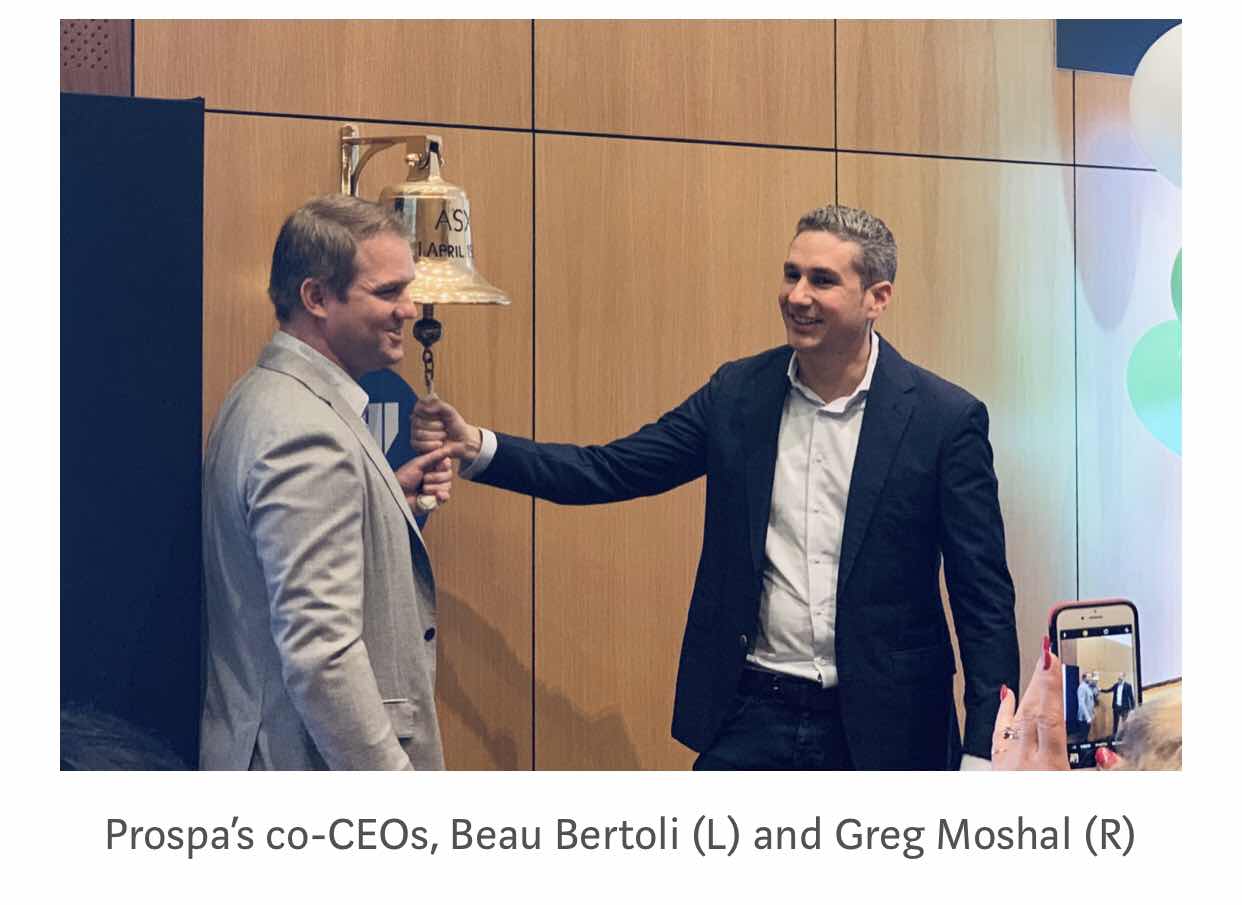
Prospa ends it’s first day listed at a $750m valuation


Greg and Beau’s Prospa listed on the ASX closing the day ending up at a valuation of $750m.

It was just the other day that I was on the bus with Greg, who was on the way to work at his start up, where he was developing algorithms to work out the risk of lending money to SMEs .

Prospa  was being backed by their investors  when they had a  team of 30 writing around $26m of loans per year. 

Their mission - to help small business grow by making it easy for them to access money.

7 years later Prospa is now largest online lender to small businesses, lending circa $1b pa (circa. 5pc of the SMe market - employing over 200 people.

The business has a great culture with awesome people who seem to love what they do, and they do it well, and are proud to do it as a team with their core values being teamwork, speed, customer obsession, simplicity and boldness. 

Prospa raised $110 million from investors ahead of the IPO, valuing the company at $610 million. It listed at $3.78 and closed at $4.46, valuing the company at $720m

Airtree Ventures invested circa $30m in the various rounds and today , together with the other shareholders including AustralianSuper and Entree Capital , is their payday! 

This is a big day for Venture Capital in Australia !


Sunday, June 02, 2019

Venture Capital in Australia - finding its straps

Since 2013 , 796 deals in Australian Venture Capital - equating to $4.5b of investment.

Justin Liberman and Paul Bassat’s Square Peg we’re involved in some of the biggest deals in 2018 - 
Deputy’s $111m raise and Airwallex $108m raise 

Some standout success stories in Oz -
Canva
Atlassian 
Afterpay
Zipmoney


Some of my favourites 
  • Referron and BBG 
  • my Recruitment Plus 
  • Solvexia
  • Credi 
  • Redbubble 
  • Retriever

Who are yours? 

AFR - Friday 31 May


8 billionaires have come from the cloud

Inspired by “Meet the billionaires of the new cloud boom - Jordan Novet” | @jordannovet -  - CNBC.com


Robyns’ walking towards the cloud 

The Ozzie Tech  Princes - The co-CEOs of Atlassian are each worth about $8 billion, more than Salesforce's Marc Benioff. These dudes have been joine by Dropbox's Drew Houston, Zoom CEO Eric Yuanto, Toby Lutke from Spotify and Chad Richison from Paycom in Oklahoma,  

The growth in cloud software has created  a number of billionaires writes Jordan Novet of CNBC and this trend is rising.

20 years ago, it was Salesforce leading the charge with its CRM and the cloud software market and Marc Benioff its standout billionaire evangelist. 

Since then, scores of tech companies that make their money selling subscription services have grown quickly, gone public and made at least 8 of their founders billionaires, and these numbers are trending up! 

SAAS is now the way we work - it’s become ubiquitous.

Recurring revenue from collaboration and communication tools (such as REFERRON - watch this space!!) , to accounting software (XERO and MYOB ) to Recruitment  software (My Recruitment Plus ) to security and software for the medical industry, SAAS software is taking over enterprise and legacy systems. 

This is how they do it.... small teams get hooked on their products and then watch them spread more broadly throughout the organization, leading to bigger monthly payments.

Microsoft’s Azure is competing with Amazon’s AWS offering, providing cloud infrastructure so other companies can offload their critical infrastructure.

So, here are the big 8 from the cloud

Scott Farquhar and Mike Cannon-Brookes, Atlassian
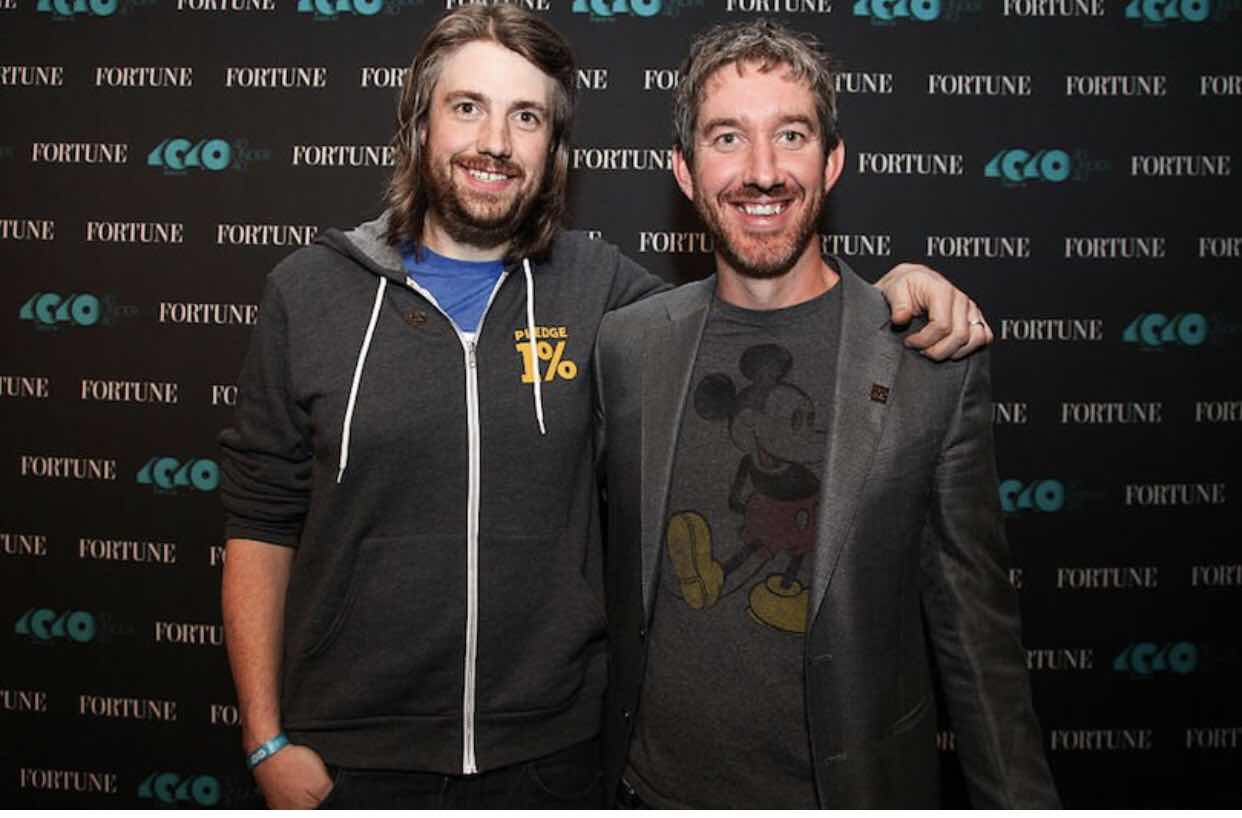

They each own about 63 million shares of Atlassian, which sells software for collaboration, project tracking and code storage. Their holdings were worth almost $8 billion each at market close on Friday, topping Benioff's net worth of about $6.6 billion. Farquhar and Cannon-Brookes were recently crowned by the New York Times as Australia's first tech billionaires.

The pair first met at the University of New South Wales in 1998, started Atlassian in 2002 with $10,000 and took it public in the U.S. in 2015. Along the way, they opened a large office in San Francisco, home to several top executives. 

Atlassian's revenue rose 38% from the prior year, and the share is up 41% in 2019, giving the company a market value of over $30 billion.

Farquhar has said that he and Cannon-Brookes want to provide education for 10 million children over the next decade, focusing on the developing world.

Eric Yuan, Zoom


Eric Yuan, founder and chief executive officer of Zoom Video Communications IPO, on the Nasdaq on April 18, 2019. The stock has more than doubled from its IPO price, valuing the company — which is profitable — at over $20 billion.

Eric Yuan - A Chinese programmer who emigrated to Silicon Valley during the dot-com boom, holds close to 47 million shares in Zoom for a stake worth over $3.7 billion.

Before starting Zoom in 2011, Yuan helped build the WebEx video conferencing technology and then joined Cisco through an acquisition. Now Zoom competes with WebEx, and Yuan is more likely to meet with customers over Zoom than in person.

Zoom has a great freemium product, that makes business feel comfortable to upgrade into a paid SAAS


Tobi Lütke, Shopify
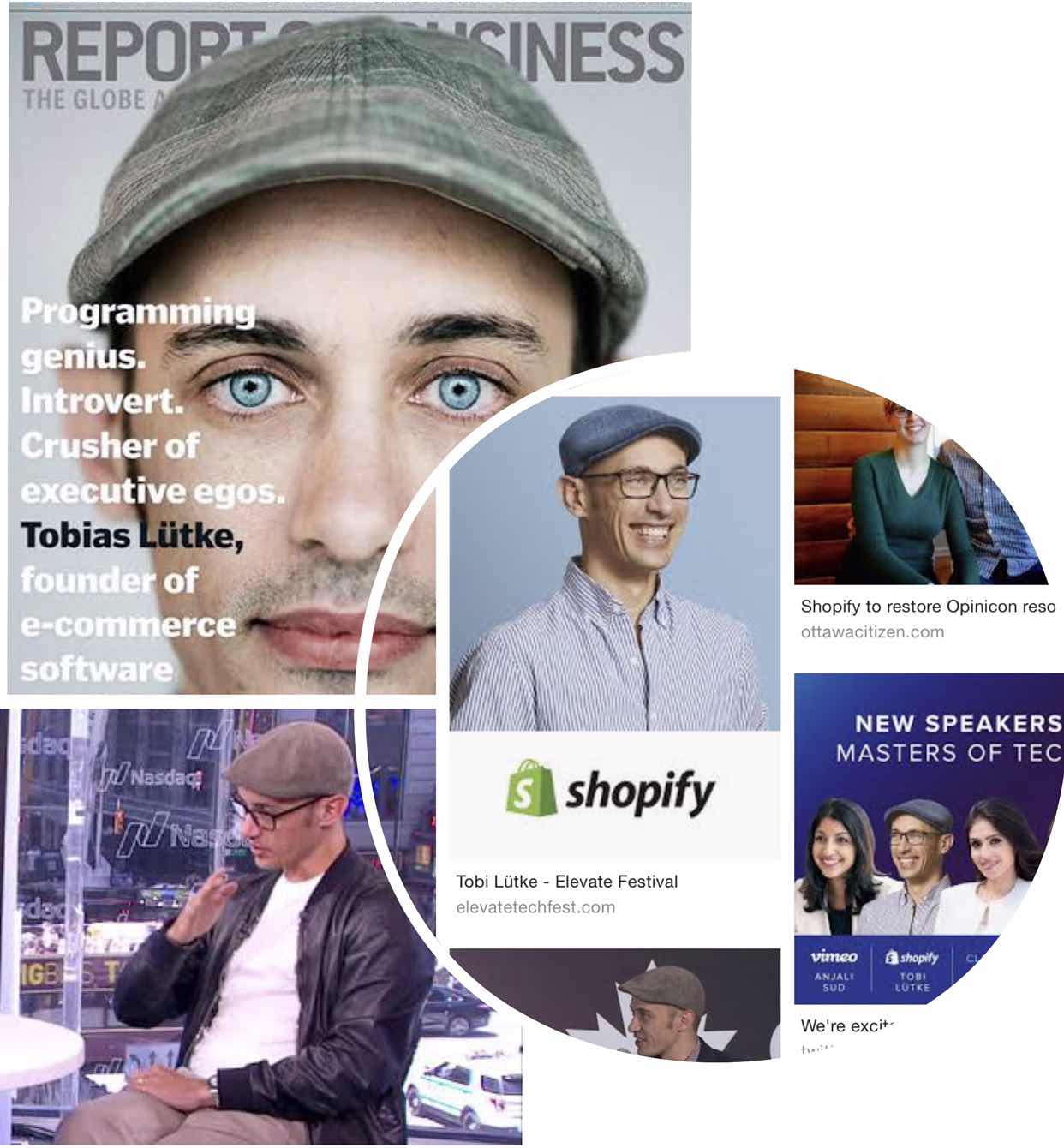

Shopify is based  in the Canadian capital city of Ottawa. 

In 2004, Lütke's task was to write code to sell snowboards online. The store, Snowdevil, opened for business, but Lütke and the team figured it would be a better idea to use what they learned to help the rest of the retail world sell their stuff online.

Shopify went public in 2015. Shares have since climbed more than 1,500%. In the most recent quarter Shopify's revenue nearly doubled, and the company says its software is now used by 800,000 businesses in about 175 countries.

Lütke controls almost 8 million shares worth close to $2.2 billion.

In November, someone on Twitter predicted that Amazon would acquire Shopify in 2019. In response Lütke wrote that he would prefer to buy Amazon in 2029.


Drew Houston, Dropbox


Drew Houston, chief executive officer and co-founder of Dropbox Inc, was  inspired to develop a service for storing files online after realizing he left a USB stick with critical information on it at home. 

Dropbox has racked up half a billion registered users of its cloud syncing and sharing service, and it's become popular with both consumers and business users.

Founded in 2007, Dropbox experienced such a rapid growth spurt in its early years that by 2011 venture investors were already valuing the company at $4 billion. That number hit $10 billion three years later. But the company has had to grow into that valuation and is still struggling to get there.

Dropbox went public in March 2018, with a market cap of $9.3 billion at Friday's close. 

Houston's 94 million shares are worth $2.1 billion.

"We're a little biased, but we think we have one of the most talented teams ever assembled, and we grow stronger every year," he and co-founder Arash Ferdowsi wrote in a letter published just before shares started trading. Ferdowsi didn't quite make the list yet!  — his stake is currently worth less than $850 million.

Peter Gassner, Veeva
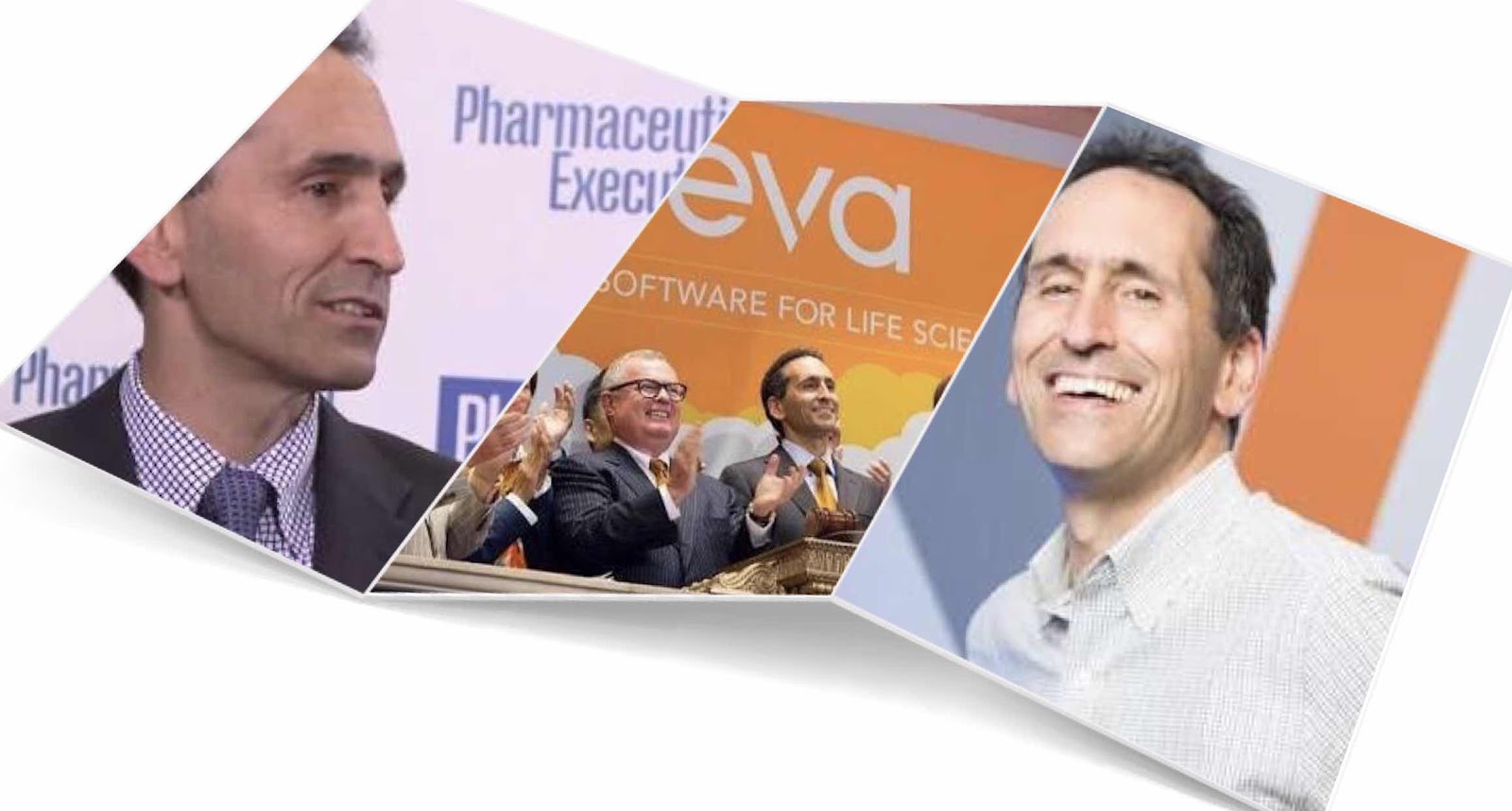

Gassner, co-founded Veeva Systems in 2007, is a veteran of IBM and Salesforce. Veeva focussed on a specific vertical - life sciences and pharma, but has since expanded its offering to a comprehensive suite of tools to the health-care industry.

Veeva was profitable at the time of its IPO in 2013, and its SharePrice  has gone  from $20 to $154.29.

Gassner, who also sits on Zoom's board, holds 13 million Veeva shares, worth just over $2 billion.


Jay Chaudhry, Zscaler



Jay Chaudhry, CEO of Zscaler grew up in a Himalayan village. Today, people in 185 countries use technology from Zscaler, whose cloud-based software helps companies provide secure access to cloud applications.

It's the fifth company he's started and funded.

"My success so far has mainly been because I have very little attachment for money," he told Bloomberg in an interview earlier this year.

Nevertheless, Zscaler has jumped 356% since its IPO in March 2018, giving it a market cap of over $9 billion. 

The 26.8 million shares Chaudhry owns are worth more than $1.8 billion.

Chad Richison, Paycom


Richison founded Paycom in 1998, and runs the cloud-based human capital management software company from Oklahoma City, near where he was born. With more than 2,000 people on staff in Oklahoma, Paycom is one of the largest employers in the state. The company competes with ADP, where Richison previously worked.

Paycom went public in 2014 at $15 a share.

 It closed Thursday at $212.10. Richison's 8 million Paycom shares have a value of about $1.7 billion.

Friday, May 31, 2019

Insight from Paul Bassat - founder of seek

Friday Gem

If you consistently do 3 things you are 90% on the way to having a fantastic career:

1 Do what you say you are going to do

2 Put yourself in the shoes of your customer/boss/partner/colleague & understand what success looks like for them

3 Act with integrity 

The rest is detail


TIE
Trustworthy 
Integrity
Empathy 

Atlassian founders Mike Cannon-Brookes and Scott Farquhar lead tech storming of Rich List

COLIN KRUGER, SMH

https://www.businessinsider.com.au/atlassian-founders-mike-cannon-brookes-and-scott-farquhar-lead-tech-storming-of-rich-list-2019-2019-5/amp


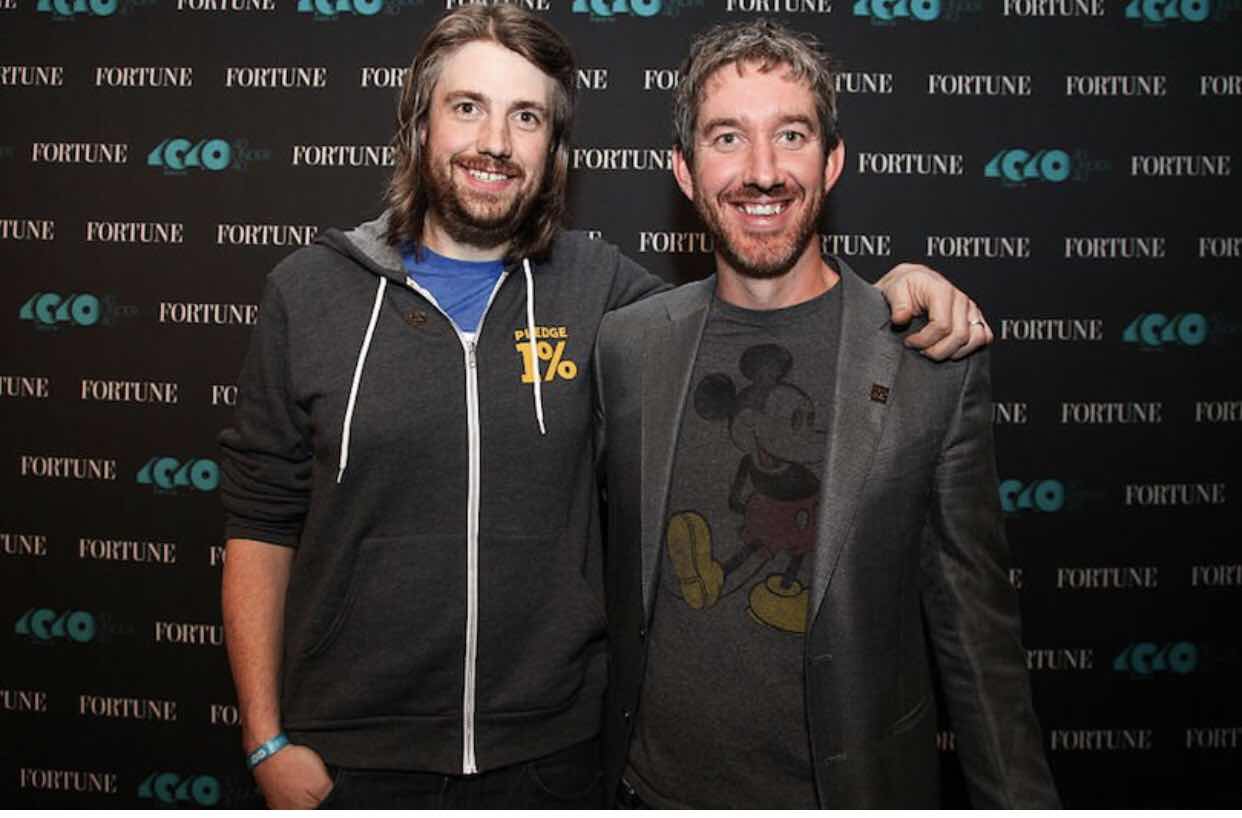
Atlassian co-founders and co-CEOs Mike Cannon-Brookes (L) and Scott Farquhar (R). Photo: Kelly Sullivan/ Getty Images for Fortune.

“Whenever the rich lists come out it’s the worst time of the year,” Atlassian co-founder Mike Cannon-Brookes told Good Weekend magazine last year.

“There’s no upside, only downside. Unless you want to kind of show off in a weird way. But then buy a freakin’ billboard, right?”

So the Atlassian co-founder probably won’t mind that the latest edition of the Australian Financial Review Rich List for 2019 significantly underestimates both his wealth and ranking.

While property is still the path to riches for most of those who made the cut again this year, our tech entrepreneurs have made their presence felt in record numbers. A record 14 tech entrepreneurs made the Rich List this year – and are scaling the heights of the rich list with unseemly haste.

The spiralling stock prices of companies like Atlassian, Afterpay and Wisetech have made it hard for the official tabulators of affluence to keep up.

The biggest leap on the Rich List came from Cannon-Brookes and his Atlassian Scott Farquhar. They nearly doubled their wealth from last year with Farquhar, fifth, pipping Cannon-Brookes, sixth, with a personal wealth of $9.75 billion and $9.63 billion respectively.

Most of their wealth derives from a combined 56 per cent stake in Atlassian, but the Rich List was measured from a 3 month average of the Atlassian share price taken from the first week of April. The stock has soared more than 48 per cent this year and the founder’s stakes in the company alone would currently be worth around $12 billion each.

It means that their actual rank may be as high as two and three on the list, respectively, which was still topped by Anthony Pratt, the head of the Pratt family’s packaging empire Visy, with a $15.6 billion fortune.

If Atlassian’s share price continues to rise at this rate even our cardboard king won’t be safe from the princes of Australia’s tech sector when the next list is unveiled.


And they are not the only ones making such spectacular gains.

Wistetech founder Richard White literally doubled his wealth to $3.31 billion and rose into the top 20 on the list. Afterpay’s astounding success also saw its co-founders make the Rich List this year and at a lower ranking than what the current share price would suggest.

Privately owned Canva flew entirely under the radar for this year’s Rich List as the company’s net valuation soared from $1.3 billion in January last year to $3.6 billion this month after a fresh round of funding from investors.

Based on the way the private rounds of funding usually work, the three founders Melanie Perkins, Cliff Obrecht and Cameron Adams should have a collective net worth comfortably approaching rich list territory, observers believe.

But wealth itself does not seem to be the a big talking point for these new tech stars.

Mr Cannon-Brookes, who declined to comment on Friday, has described his fortune as a merely scoreboard and not something he and Farquhar focus on.

“People never talk about jobs created, or products created, or the impact those products have had on the rest of the world, or any of that sort of thing,” he said last year.

Ms Perkins, the visionary behind Canva and her co-founder Mr Obrecht try and keep things simple. There is no harbour front mansion or glamorous holidays for the couple.

“Cliff and I still travel backpacking. The last couple of years we went horse trekking in Mongolia, staying in yurts in a tree house in Laos,” she said in a recent interview with this newspaper. “It has been really important to get out and see the world. We still love staying in pretty basic accommodation”.

This article was first published by The Sydney Morning Herald. Read the original here.

Thursday, May 23, 2019

Morals of the Zoom Video Communications entrepreneurial fable:

From the famous Susan Guo of Silicon Vslley’s Greylock Partners sharing  8 insights from Zoom 


1/ no market is “done” — even when the alternatives are many, free, have hardware sunk cost, and/or deeply embedded into an enterprise suite ELA


2/ “much, much better” is a sufficient displacement product strategy (VS novel features)


3/ software products can make people more productive — this is inspiring. I can do work more efficiently and happily, because of Zoom


4/ Customer centric culture has to come from somewhere. Here it clearly comes from Eric S. Yuan. Literally every time I see him/hear a story of him, the conversation inevitably ends with “customer happiness” as the guiding principle


5/ Free to users doesn’t preclude a company selling software at enterprise deal sizes


6/ Zoom’s “unit of user value” is 2 —> Infinity (internal & external, huge addressable user base), making it uniquely well suited to bottoms up, viral, WOM adoption


7/ People want good people to win. There are a lot of cynics in Silicon Valley today, but you will be hard pressed to find people who have met Eric and don’t support team Zoom


8/ Congrats to entire Zoom team on this milestone and what I expect will be just the first leg of an extraordinary, enduring company journey — and to my better half Pat Grady for being part of it

Friday, April 19, 2019

Sunday, April 14, 2019

3 things needed to scale a business

Great Insite by Michael Derin 
1. A leadership team
2. An ability to pivot
3. Ability to outsource


It is estimated that 70% of startups struggle with scaling. Getting a product to market and then gaining some initial interest and excitement is hard work, but it really is just the beginning. Once you have a working business and the wheels are churning then you need to be able to scale that business in order to maintain the future of the business.

Here are our top three areas we feel that many CEO’s miss and need to be doing in order to scale successfully.

1. Redefine your CEO role - your company can't rely only on you

While your company may need a CEO, and you may need something to do, you want to design the company to ensure that you aren’t integral. You want to build a leadership team that can function and make decisions without you. This can also help the business be more agile as it removes multiple layers of approval and red tape. If you are controlling everything and need to sign off and approve everything it can significantly delay your progress and speed.

You will find that by empowering your team to make decisions and be agile they will take more responsibility and you will build a strong culture of performance and accountability.

2. Pivot quickly

You might have launched with a great product that is selling well and have a clear direction that you feel you are heading in. However, changes in technology, environment and the market can mean that you need to change direction quickly.

You may see a new opportunity that wasn’t originally in your plan, but could be even more successful that your current direction. In this case you need to be able to pivot and change direction quickly. Agility in business can prevent you from stubbornly continuing down a path just because that is what you planned. You need to be open to change, and being able to do it quickly.

3. Outsource

There are some functions in your business that aren’t critical to the product and customer experience but are important for long term success of your business. We often find that as businesses grow they have a growing need for HR, legal and financial support. These are often lumped into a pile of stuff that you will ‘get to’, but often they aren’t dealt with as quickly as they could and should be.

Outsourcing these areas can ensure that you are getting expert support for the business whilst you personally focus on more critical areas.

Wednesday, March 27, 2019

Naspers scores a luck with tencent


Naspers is looking to list in Europe for $140b. It’s stake in Chinas tencent is $134b, which it acquired in 2001 for $32million
 It generated $16b in sales - with most of the income coming from tencent. 

Sunday, March 10, 2019

The early bird gets the worm - but the second mouse gets the cheese


It’s about timing.....


In 1999, Pets.com sought to capitalize on widespread internet access and a $23B pet supplies market by selling products directly to consumers.


They raised $50M funding - to be spent on marketing  - By the time Pets.com went public with an $82.5M IPO in February 2000, it had lost $61.8M on $5.8M in sales. 


Pets.com had 570,000 customers, with its costly marketing operation spending about $158 for every new customer .


And then the tech boom bible burst and boom - that saw them as well as Value America, Garden.com, and Mortgage.com die and liquidate! 


History would prove that its value proposition — selling pet supplies to consumers online — was ahead of its time.


The next decade saw the cost of ecommerce and digital marketing reduce dramatically, and people with access to broadband jump from 48m to 232m. 


With lower costs and a bigger market to sell to, new online pet supplies retailers emerged - and Chewy.com, for example, was acquired by PetSmart for $3.35B in 2017. It was the biggest e-commerce acquisition in history.


The lesson ....

“The early bird gets the worm - but the second mouse gets the cheese! “ 

Wednesday, March 06, 2019

14 stats you need to know about the Forbes 2018 Billionaire List

  1.  2,153 billionaires, 
  2. 55 fewer than a year ago. 
  3. 994, or 46%, are poorer (relatively speaking) than they were last year. 
  4. Total wealth  $8.7 trillion, down $400 billion from 2018. 
  5. 11% of last year’s list members, or 247 people, dropped out of the ranks, the most since 2009 at the height of the global financial crisis.
  6. 195 new billionaires joine the ranks 
  7. Asia-Pacific was hardest hit, with 60 fewer 10-figure fortunes. That dip was led by China, which has 49 fewer billionaires than a year ago. 
  8. Europe, the Middle East and Africa also lost ground. The Americas, driven by a resurgent Brazil, and the U.S. are the only two regions that have more billionaires than they did a year ago. 
  9. There are  607 billionaires in the U.S. That includes 14 of the world’s 20 richest.
  10. Jeff Bezos is again number 1 in the world, followed by Bill Gates at number 2.
  11. The richest newcomer is Colin Huang, the founder of Chinese discount web retailer Pinduoduo, which went public in the U.S. in July. 
  12. Other notable new entrants include Spotify’s Daniel Ek and Martin Lorentzon; Juul Labs' James Monsees and Adam Bowen, Kind Bar’s Daniel Lubetzky and cosmetics wunderkind Kylie Jenner, who is the world’s youngest billionaire at age 21.
  13. 7 of the top 20 billionaires have come from technology  - Microsoft, Google, Oracle, Snapchat, Stripe, Tencent 
  14. in 2004 there were 497  billionaires and in 2019 there were 2153 billionaires  


Thursday, February 28, 2019

Early-Stage VC Firm Sorenson Ventures Closes Inaugural Fund at $110M


Early-Stage VC Firm Sorenson Ventures Closes Inaugural Fund at $110M

Sorenson Ventures, an offshoot of Utah private equity firm Sorenson Capital, announced today it has closed its first fund with more than $110 million to invest in early-stage security and enterprise software companies.

The young venture capital firm was formed in 2017 by Sorenson Capital, which recruited former Intel Capital executive Ken Elefant as managing director. Elefant shares leadership of the VC spinout with Sorenson Capital’s managing director Rob Rueckert. The pairing was a reunion for Elefant and Rueckert, both former Kauffman Fellows who were also colleagues at Intel Capital.

Menlo Park, CA-based Sorenson Ventures draws on the expertise of Sorenson Capital while strengthening the larger firm’s ties to early-stage entrepreneurs in Silicon Valley. The Salt Lake City-based private equity firm, founded in 2002, focuses on the other end of the investment spectrum—growth equity and buyouts. It has more than $1 billion under management.

Sorenson Ventures raised its inaugural fund from investors that included an insurance company, foundations, endowments, corporate investors, family offices, and individuals, including managing directors at Sorenson Capital. Since 2017, when the VC firm raised its first funding, it has backed eight early-stage companies, ranging from cybersecurity startup CyCognito to machine-learning business Paperspace.

The firm now plans to expand its stable of startups to include as many as 20 companies. It has led most of the investments in its portfolio companies, and has also joined in syndicated fundraising rounds with established VC firms including Lightspeed Venture Partners, Battery Ventures, and Accel.

“We are product-first investors and are attracted to entrepreneurs who use their engineering vision to change markets, which you will see evidence of in our first eight investments,” Elefant (pictured) said in the announcement of the fund’s closing.

Palo Alto, CA-based CyCognito is the best illustration of those traits, Rueckert wrote in an e-mail to Xconomy.

“CyCognito uses a combination of deep domain expertise and engineering talent to enable cyber teams to understand and prioritize their blind spots,” Rueckert says. “This is a very complex problem that is being solved by technologies that haven’t been available in prior generations of solutions.”

Photo of Ken Elefant courtesy of Sorenson Ventures

Tuesday, February 26, 2019

Rapyd raises $40m from Stripe, a fellow portfolio company of Entree Capital


Rapyd, a fintech founded by CEO Arik Shtilman 4 years ago has raised $40 million in series B funding from Stripe and General Catalyst and others , to further expand its operations worldwide.

What Rapyd does

Rapyd helps companies and merchants of all sizes integrate a range of payment services into their platforms, and operates on a fintech-as-a-service model. It offers a technology stack that provides support for financial, payment, mobile wallet, and money movement services through a single API.


The Rapyd solution provides  a single point of reconciliation and settlement of all funds across 65 currencies and the ability to pay out in over 170 countries. 


Using Rapyd’s technology, a company can enable support for payments in over 100 countries, via more than 500 locally supported payment methods — such as direct deposits to banks, local cards, and mobile wallets —


What the money will be used for 

The Capital is going to be used to expand to more markets across the Americas and Europe, Middle East, Africa (EMEA) and Asia-Pacific (APAC) regions and to further develop its infrastructure.

The money  

Stripe CEO Patrick Collison sees a big demand for Rapyd’s services. “The challenge of enabling local payments on a global scale is critical for the continued growth in worldwide commerce. We are excited by Rapyd’s vision and believe they are solving a significant challenge that will help to increase the GDP of the internet,” 


Both Stripe and Rapyd are portfolio companies of Entrée Capital 


Founded in 2009, Entrée manages more than $300 million across a number of funds and its portfolio includes  the likes of SnapChat, Stripe, Deliveroo, Prospa, monday.com, Riskified, HouseParty, Stash, PillPack, SeatGeek, Coupang and over 50 other investments. 


Managing partner of the fund Avi Eyal picked fintech as a growth industry in 2015! Was definitely the right call! 


Thursday, February 21, 2019

The 5 Factors that Will Determine the Success of Australian Businesses in the USA

Trena shares with us 5 gems you need when taking their product to the USA

Many Australian businesses have global ambitions from day one. That’s because foreign markets like the US provide almost unlimited opportunities to get your product or service in front of a massive base of potential customers and partners.

While it’s true there are incredible opportunities up for grabs in the US, Australian businesses must understand the factors that can make or break your success in this unique market. 

When people think about the differences between Australia and the US, they often about it from the perspective of a tourist. They know there are differences in culture, language, politics, sport – even tipping practices. But few truly understand how that translates into day-to-day business. 

Despite the large pool of customers, it can actually be much harder to sell your products in the States. The market is competitive and crowded and can easily swallow up unprepared founders. 

Here are 5 important factors that will determine whether you sink or swim in the US:  

1. You have access to local market knowledge: You think you know the US market, but unless you have insight and support from experts with an intimate understanding of how things work, you’re going to run into trouble. If you want to succeed in the US, make sure you seek advice from people who know the market well. Even well-intentioned advisors and mentors can accidentally steer founders into rough waters if they don’t have the necessary on-the-ground experience. 

2. You set a realistic budget: Founders looking to enter a foreign market know the importance of planning ahead but it’s also important to set and work within a realistic expansion budget. Assume your plans will always be more expensive than expected to execute. Be conservative and think about the details. You’d be surprised to find out how many founders forget to consider the impact of foreign currency exchanges. 

3.    You understand your potential customers and investors: In a crowded market, you need to make sure your message is well-targeted, whether you’re selling to customers and partners or pitching an investor. Profile your targets and make sure you know them inside and out. For customers, that means understanding their motivations, needs and the right messages and channels to use. For VCs, you need to understand the industries they invest in, what kind of investment they offer and what they need to hear from you. 

4.    You’re willing to hustle: There’s a revolving door in large US organisations – they’re constantly approached and sought after by potential new providers and partners. You and your business need to stand out from the crowd. Be memorable by following up and hustling for their business. In fact, follow-up shamelessly. It’s not always comfortable for Australian founders but it’s expected in the US. It could mean the difference between getting their signature or walking away empty-handed.

5.    You have a long-term plan: US organisations want to work with foreign businesses who are committed to the market. Make sure you’re prepared to discuss how you plan to continue growing there and expect to be questioned about it. If you don’t have a plan beyond ‘fly in, fly out’, you will likely lose their interest and potentially miss out on valuable opportunities. 

US businesses are often eager to work with Australian companies and professionals. We’re seen as innovative and they admire our work ethic, sense of humour, and yes, our accent. But it’s more important than ever that local businesses and founders understand what global organisations need from them – and then do what they can to meet those needs. Only then can you fast-track and de-risk your international expansion.

For more information about how to improve your success in the US, check out her latest programs.

Trena Blair is Founder/CEO of FD Global Connections who works with Australian companies to prepare for, and launch in the USA market. Enquiries can be made at enquiry@fdglobal.com.au

(Ivan’s note :- be sure to have a plan to maximise any grants and incentives that you may be eligible for - such as the export market development grant as administered by AUSTRADE - up to 150k per year - speak to the team at BSI Innovation - happy to refer you) 

Saturday, February 16, 2019

From Bankruptcy to $400m in sales


Mike Dillard interviews 38 year old entrepreneur Suzie Batiz who  went from bankruptcy twice To $400 Million in sales from another  little company she founded called PooPourri.


PooPourri is exactly what it sounds like… A new way to handle unwanted odors in your bathroom.


She shares her story of how her cars were repossessed, how she lost her business, and how she was broken in every way you could imagine.


At that point, she went on a journey to examine her life in an attempt to find out why she was constantly struggling with business, with money, and with her relationships…


So what did Suzy learn that allowed her to turn a life of struggle, into a life of abundance and success?


Listen to the podcast .


Some of my key takeouts:-

  1. Do something that you love and believe in
  2. Make something great - not just good
  3. Ask people for help - people want to help -  don’t need to know everything “ I need your help” - I don’t know but I know someone who will. If you want help from someone - get a meeting - face to face and ask
  4. Suzi’s big success came from a viral video 
  5. Go with the flow - trust your gut. 

It’s all about energy and seeking more energy 

Resonance- 2 similar energy  waves working together - creating more energy - flow 

Disanonce - 2 polar enaervy waves - less energy - struggle 


4 signs of resonance

  1. Increased energy - can stay up all night 
  2. Chills up arm
  3. Keeps coming around 
  4. Synchronicity - suzys world - it’s a vibration - when you meet someone that you zing with 


Are you in struggle? 

Are you in easy flow?

Are you in resonance?