Sunday, September 12, 2021

So what is innovation and what are the 9 ingredients to create a culture of innovation


Solving a problem in a different way

  • Small step - incremental innovation 
  • Hop - gfi (great fucking idea )
  • Jump - radical innovation 


So where does innovation come from?


Innovation doesn’t come from the boardroom. 

It is not isolated geniuses. 

It doesn’t come from a lab at a university 


It happens  

  • When people collaborate with a view to solve a problem 
  • When they allow constraints to focus their creativity. 
  • When they crave feedback. 
  • When it’s ok to fail 
  • When they are prepared to throw everything away and start again if they’re not solving the right problem. 


Its a mindset that become a part of company culture. 


It is a state of being when you’re uncertain of how something will turn out, but you are immersed in experimentation and fueled by an overwhelming desire to impact people.   


2 examples that happenned from a different goal that created an amazing outcome 


Post-it Notes were originally invented by 3M scientists to stop bookmarks from falling out of church hymnals.


Ruth Graves Wakefield allegedly discovered the chocolate chip cookie when she was attempting to make Butter Drop Do cookies for guests at the Toll House Inn and ran out of baker’s chocolate. 


Gary Nakanelua, Managing Director of Innovation at Blueprint Technologies and Phil Mckinney 

https://philmckinney.com/innovation-culture-mean-matter/

shares with us a few  things  that you need to do, be or have to foster innovation in your workplace , and  I have added a few more .


1. Be able to Communicate and Collaborate 


Without communication, there is no vehicle for innovation.


  • Rewarding risk-taking,
  • Execution is critical - talk - but take action 
  • Create opportunities for teamwork within different groups. Make sharing innovative concepts easy and meet them where they are, email, Whatsapp, verbal communication, or a folder outside the door.
  • Create an environment in which creativity is encouraged and every individual knows that their input is valued


2. Know your problem - and really want to solve it 


In a Forbes article, Spanx founder Sara Blakely shares the pain from uncomfortable pantyhose that led to her invention, “It’s Florida, it’s hot, I was carrying fax machines.” 


If it’s a problem you don’t experience directly, immerse yourself with those who do. Their pain should become your pain.


Ideally you want a painkiller for your problem and not a vitamin 


3. Be excited by constraint. 


  • Know your constraint 
  • Own it 
  • Be motivated by it 
  • Does it have a deadline? 


During the development of the initial iPhone, the software engineering team was “struggling for months to lay out the software vision.” Steve Jobs gave the engineering team two weeks to figure it out, or he would assign the project to another team.


4. Be hungry for feedback. 


Feedback refines the problem, constraint t and solution and keeps you on the right track 


Make sure it doesn’t paralyse you though


In 2017, a Tesla customer tweeted at Elon Musk with feedback about what to do with the steering wheel and driver seat once the vehicle was in park. Elon responded that the feedback would be integrated into a future software release. 


5. Be ready to blow everything up and start again 


If you are truly maniacal about solving the problem, you need to blow it up when an idea doesn’t meet the mark.


The founders of Twitter originally set out to form a podcasting platform called Odeo. When Apple announced in 2015 that iTunes would include a podcasting platform, the Odeo team realized they weren’t even using their own platform. “We built [Odeo], we tested it a lot, but we never used it,” an Odeo engineer said. A year later, Odeo’s podcasting platform was scrapped, and Twitter began to emerge. 


6. Be sure to create a safe space - that it’s ok to fail 

Create a safe collaborative space


Innovation comes in many forms and kinds. From brainstorming sessions like innovation jams to crowdfunding, these forms of growth all mobilize a diverse group of people with a variety of skills. 


7.  Have diversity in your team 


Surround yourself with people unlike you: Find the people who can fill in your blind spots and help you with things you don’t know. This means embracing individuals you may have nothing in common with: thinkers who see the world differently than you do. 


Choose your team carefully

8. Find experts in that field 

Gather the talents of those who can teach you and give you expertise 


9. Resource ideas 

Funding to support an idea is key . 

Vc - Tim Draper says that  his biggest failures have been when he did not back the innovation when they came to him.

Case in point - Facebook 


Give the idea the best chance to work .

Trust your team 


Monday, September 06, 2021

It’s been a hellava year - and yet we are resilient and optimistic


It’s Rosh Hashannah and our Jewish New Year.


Looking back at the last year….. we’ve gone through the ringer!!!


What, with the bushfires, the pandemic, melting ice caps, climate change, travel bans and lockdowns - it feels like we’ve been thrown every type of curveball under the sun - and yet we have still emerged as a country with hope and a positive outlook of the future !!!


So why are entrepreneurs so bullish about the future? 


It’s about finding a problem in the world, and dreaming up ways to fix it…… and by golly - are there problems!!


Hunkered  down in bedrooms, and sprawled over kitchen tables all over Australia – itching to get back into their co-working spaces - our innovators and entrepreneurs are busy finding solutions to our biggest problems.


And with the right connections, with supportive VCs who’ve been there and done that - getting the support - there’s money to invest….. people are certainly not getting the returns from interest rates! 


So here are some exciting innovations , companies and ventures that are out there ….


  • Spinergy  an energy solutions coming out of a South Australian accelerator .


  • A1 G foods - fake burgers with a difference - just raised $16m


  • my recruitment plus is beavering away - Anwar Khalil creating virtual recruitment firms within organisations -  finding the right people for the right job


  • Refundit - finding a way to find retailers by sitting immediate payments to clients wanting refunds - could it be the next Afterpay or Zip 


  • The Yarning circle’s #bbgforum - getting people to connect, learn,  collaborate and grow around a theme of diversity equity and inclusion.


  • The  Great Wrap: the world’s first biodegradable stretch wrap that leaves no trace of plastics - potentially stopping Australia using 150,000 tonnes of cling wrap every year.”


  • Homie and Mendel solving the homeless problem - On any given night in Australia, some 116,000 people are estimated to be sleeping rough - HoMie uses the profits it makes selling clothes to fund a program that gives employment opportunities, education and life skills to at-risk young people. Mendel has created a homeless app - enabling the public to help identify the homeless and alert the relevant Charity


  • Seabin Project – a business dedicated to cleaning up our oceans (which are currently home to an estimated 5 trillion pieces of wayward plastic) – Pete Ceglinski, CEO and co-founder hopes  that one day his business doesn’t even need to exist. “That’s our mission statement,”


  • Nexttech Learning - Education is what’s going to solve our problems, and Cass Parton is creating the Amazon of Nexttech  - getting the mindset of the worker to that of a lifelong learner - getting them ready for the NextTech Revolution! 


Looking forward to starting the New Year with a mindset of looking to solve some of the wicked problems out there!


The bigger the problem - the bigger the opportunity 


שנה טובה במתוקה Shana Tova Bemetukah 
Have a Sweet New Year 
Chazak Chazak V’nitzchazek; 
Be Strong, Be Strong, Let Us Be Strengthened


Feel free to add more potential innovations and opportunities in the comments below 

👇🏽👇🏻👇👇🏻👇🏽


$16m raised for alt food startup - All G Foods - Climate Action at its finest


Serial Entrepreneur - startup magician, Jan Pacas,  has secured $16m for his third startup - one of Australia’s largest seed funding rounds, for a new plant-based food company.

All G Foods has banked $16 million from investors, as well as securing a deal to stock burger patties in IGA supermarkets from September.

Pacas has previously co-founded pet care services marketplace Mad Paws and HR software company Flare.

So why is all G foods different from other Fake Foods?

All G Foods is investing in a fermentation technique to produce complex organic molecules with the hopes of making a new kind of dairy alternative.

Currently the market share of ‘alternative proteins’ in Australia is 1%. A long way to go to get market saturation !!


Sunday, September 05, 2021

Refundid raises $3m - 6 months from being founded - could it be a Unicorn?


It’s all about customer experience says Paul Greenberg - E-retail Veteran  - who has recently backed Refundid through AP Ventures.

Brad, Judd, Joel and Ilan have formed Refundid - whose leading product is  a fintech tool designed to cut, or essentially eliminate, waiting times for refunds for products bought online.

Refundid takes responsibility of the refund and repays the client immediately. Refundid gets paid by the retailer once approved.
It effectively provides a short term loan to the retailer!

The founders get that  trust and positive relationships, encouraging repeat custom is a key ingredient of a succesful retailer.

The plan is to have 100 top-tier retailers on board within the next 12 months, says Brad Karney…..

And then go global!!

Tuesday, August 31, 2021

Four things you must do to ensure your business survives

Alan Manly shares 4 tips for a business to survive 

You don’t  grow - you die! 
Not growing and setting yourself up for growth is actually more risky than investing for growth!

  • Have a USP - unique sales proposition

What is the magic formula why a client will come to you and stay with you? 
What is your purpose ? 
Be chrystal clear about why someone will do business with you rather than anyone else 
If you don’t have this Your business will be taken away by someone who has this nailed 

  • Make it scalable

You haven’t got a business if it revolves around you 16 hours a day - what you have done - is built yourself a job!
the relationships needs to be woth the business - not the owner - 
So that the value does not end when they founder leaves the business.

  • Have an exit plan

Even if you don’t plan to Exit!

This means that you will plan to grow your business into a sellable asset that will have a significantly higher value - than if you don’t plan for an exit! 

Friday, August 27, 2021

Wednesday, August 25, 2021

RDTI Research and Development Tax Incentives - can support your R&D efforts


If you are looking to innovate and explore ways of doing new things - through Research and Development -  the Government is there to support you through the RDTI (research and Development Tax Inventive)


There are however hoops to go through and paperwork and records to keep.


Mick Lynch - R&D Tax Specialist at BSI Innovation has said that the Research and Development Tax Incentive issues and audits - specifically as it relates to the aggressive  and adversarial approach that it had to technology and software - seem to be stabilising


The turbulence that was 


The Coalition was planning to make a $1.8 billion cut to the programme (which they have subsequently scrapped.)


In early 2017, software claims started to be reviewed following concerns advisory firms were encouraging companies to make claims that weren’t actually eligible. This led to a number of high-profile audits and clawbacks, with startup giant Airtasker ordered to pay back millions of dollars relating to RDTI claims in 2015 and 2016.


The programme is stabilising 

While this dispute is ongoing, Airtasker is now accessing the RDTI again, with its last years financials showing $1m  benefit over last few years!


Audits of companies are happenning - but  seem to be fair and reasonable


Compliance with the programme is key - said Lynch , with organisations claiming needing to hold contemporaneous records of R&D projects  and activity.


The view with Ausindustry is more of an educational approach than a crackdown approach.


Be sure to explore whether there is an advantage for a grant in your business! 


Mick Lynch suggests to innovative companies that are doing or keen to do R&D projects to come forward and explore the opportunity.


https://bsigrants.com.au

Tuesday, August 24, 2021

Vloggi seeking its next funding round


Justin Wastnage founder of Vloggi  is solving the problem of how to generate quality video content at scale and for minimal cost.


Video is poised to explode as the dominant vehicle for creating content to support brand messaging, and Vloggi is the best-placed platform in this space to capitalise on this save of video creation. 


He raised $700k at a preseed valuation of $3.3m and is now looking at raising the next round! 

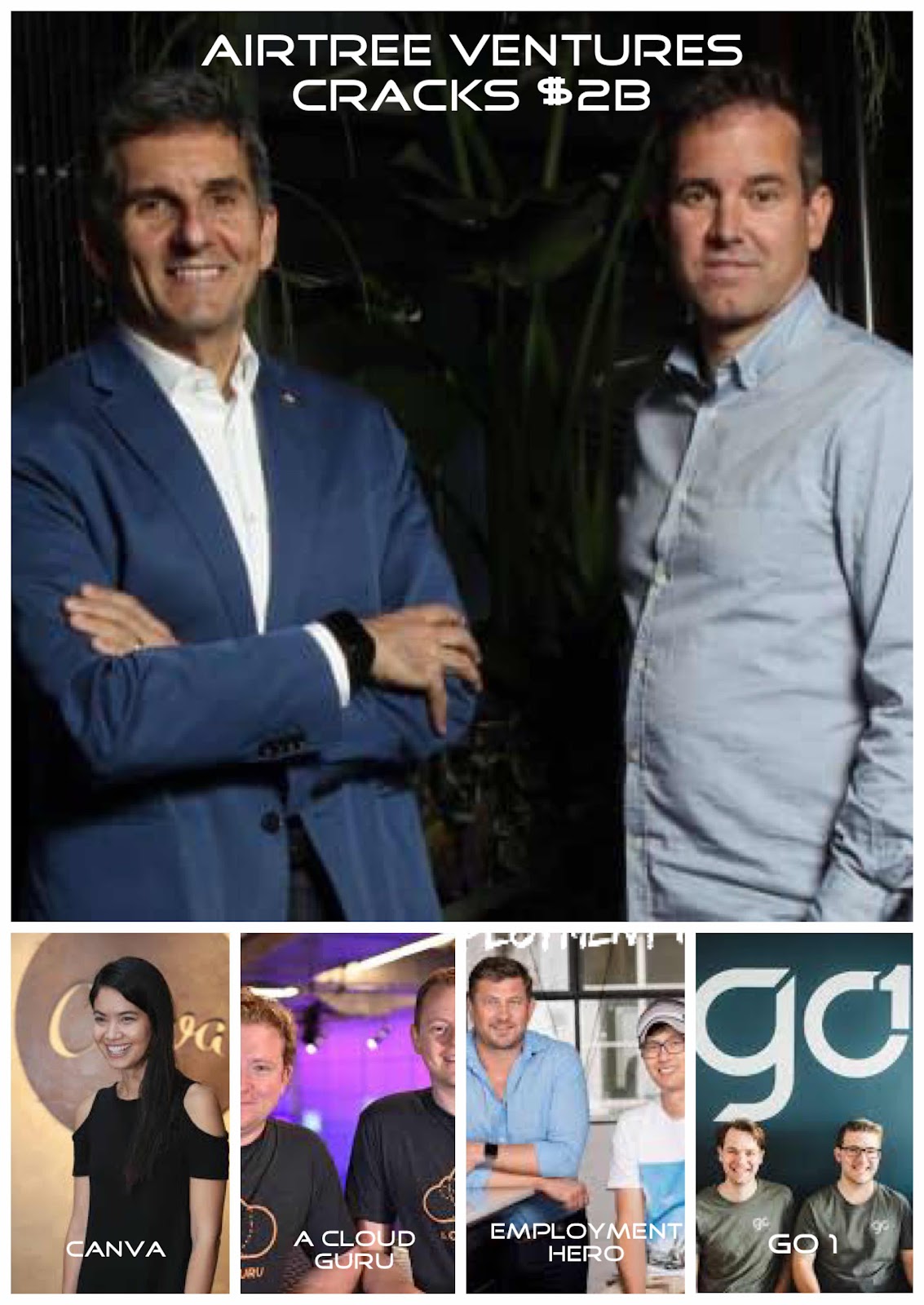
AirTree cracks the $2B valuation mark


Craig Blair and Daniel Petre’s AirTree’s portfolio has grown from $60m to a whopping $2 billion! 


AirTree has invested in a host of companies, including CanvaGO1A Cloud Guru and Employment Hero, which have grown to the extent its holdings are now valued above $2 billion.


Classic comment from Craig Blair! 


“Breakout successes including the sales of Afterpay for $39 billion and A Cloud Guru for $2 billion has enabled the VC sector to go from a small outback village, to now being like a large country town,” Mr Blair said.

Sunday, August 22, 2021

Australian Not for Profit sells for $400m


Burnet Institute achieved this week dpun off its trial support company, 360biolabs, to US-buyer BioAgilytix. 

Chief executive, Brendan Crabb, says this win means the organisation can channel more funds into its important public health missions.

“Our philosophy is that answers to complex problems can be found in science, both in a technical sense but also social science,” 

Some of the things that they do

  • getting rid of hepatitis C in Australia, 
  •  preventing childhood stunting in countries such as Papua New Guinea and Myanmar, a risk factor for children’s cognitive development, and 
  • managing COVID-19 locally and abroad.

How did we get a covid vaccine so quick? Crabb gave the answer in 1 word - money!


Thursday, August 19, 2021

3 Australian Cloud Companies in Forbes top 100


Australia celebrates its Entrepreneurs as tjis emerging Asset Class starts to come into its own! 

Canva has been listed as #3 in the best private cloud companies annual Forbes 2021 Cloud 100.

Airwallex  came in at 58 and Culture Amp  at 99.

Stripe, returned to the top of the list, having previously been no. 1 in 2019. It is the highest-valued startup in the US at US$95 billion.

Number two, Databricks, is valued at YS$28 billion.


Sunday, August 15, 2021

Green Hydrogen opportunity


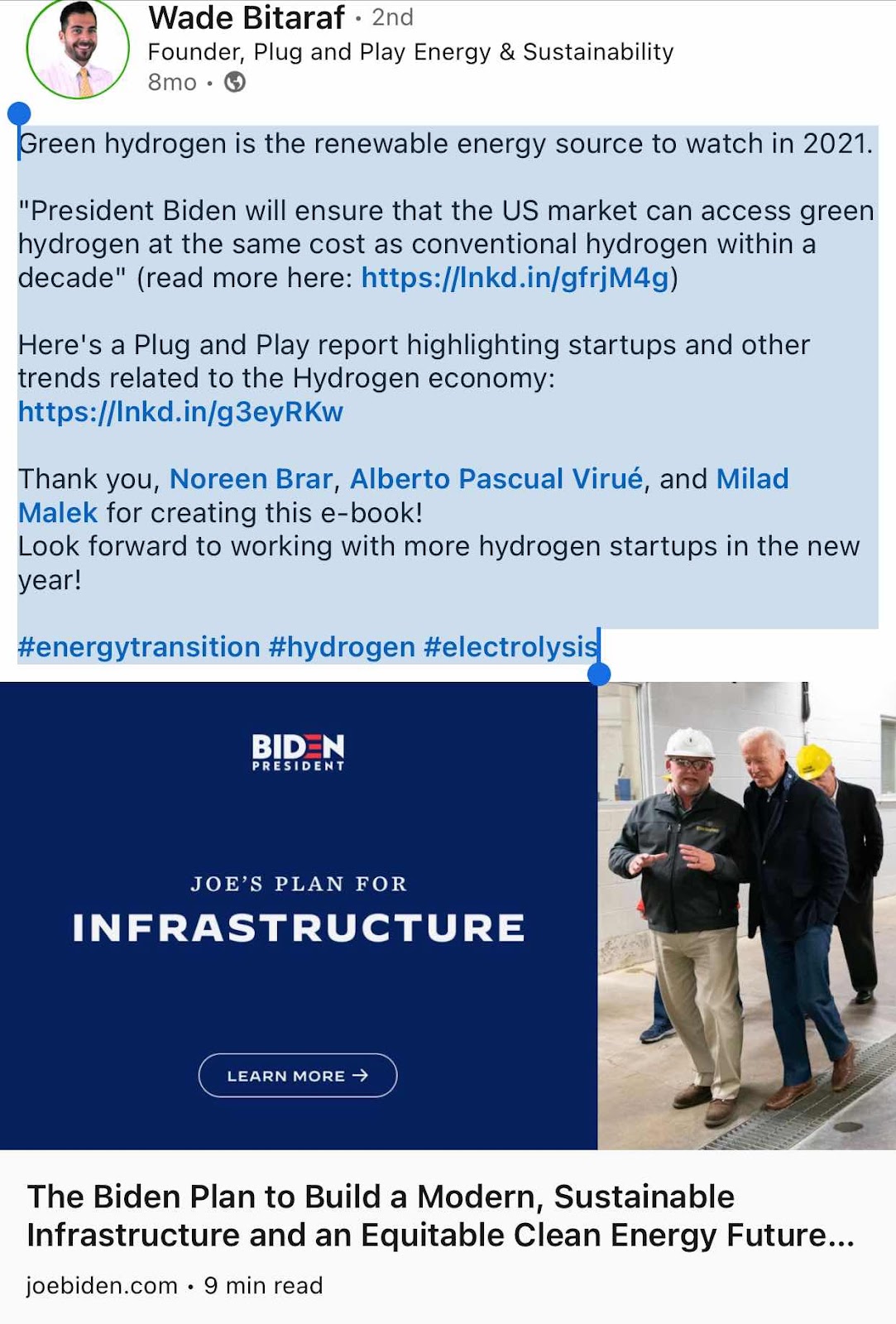
Green hydrogen is the renewable energy source to watch in 2021.

"President Biden will ensure that the US market can access green hydrogen at the same cost as conventional hydrogen within a decade" (read more here: https://lnkd.in/gfrjM4g)

Here's a Plug and Play report highlighting startups and other trends related to the Hydrogen economy:
https://lnkd.in/g3eyRKw

Thank you, Noreen Brar, Alberto Pascual Virué, and Milad Malek for creating this e-book!
Look forward to working with more hydrogen startups in the new year!

#energytransition #hydrogen #electrolysis

Saturday, August 14, 2021

$800m fund for Climate Tech Startups


(Bloomberg) -- Venture capitalist Chris Sacca is launching four climate tech funds worth about $800 million in total through his new firm Lowercarbon Capital LLC

Sacca says “Let’s fund the unfundable, What’s the stuff where the business case isn’t there yet, but with relatively small dollars there might be a super high leverage opportunity?”


 VC money flowing into climate tech startups has grown 40-fold between 2013 and 2019, from $400 million to $16 billion, according to a 2020 PwC report.


So who is Chris Sacca


Sacca made his name and lots of money with early bets on companies such as Twitter, Instagram, Uber, Stripe and Kickstarter. But in a surprise move in 2017, at the age of 42, Sacca walked away from traditional venture investing.


Sacca thinks climate tech is at a tipping point, especially because of the pace at which talented people are entering the space. 


“Covid created this reflective moment and so did being drowned in fire smoke,” he says. “A lot of these folks are hearing from their kids: ‘Hey, what are you doing to save our future ?’”


The Saccas funds will be joined by more than 250 other limited partners. The smallest capital commitment is $15,000 and the largest they declined was for $150 million. The Limited Partners ( LPs ) include not just rich individuals, but also foundations, non-profits, universities and pension funds.


The Climate VC Model


“When you’re building a new social network, you spend a couple of years coding it all towards launch day. Then you put it out and no one cares,” he says. With climate tech companies, “we seed the science and we get to prototype. Then we find that first customer willing to pay for it, because what we’ve made is cheaper, better, faster, easier to use, more delicious or requires less maintenance. And we see that first incremental revenue faster.”


The Goal


Like other climate-tech VCs, Sacca wants his startups to reduce or remove emissions ideally at the scale of billions of tons each year. Many of Lowercarbon’s 50 investments to date—not all of which are public yet—have been for startups that remove carbon dioxide from the air using a variety of technologies.

Wednesday, August 11, 2021

Australia’s Tech Council funded by a Stable of Unicorns

Afterpay co-founder Anthony Eisen wants Australia to become the “head office for global tech companies” and compete with Silicon Valley and Tel Aviv, joining Atlassian boss Scott Farquhar and Tesla chair Robyn Denholm in a push to drive the fast-growing sector above one million jobs by 2025.

The nation’s leading tech companies – including Afterpay, ­Atlassian, Canva, Google Australia, Airtasker and Microsoft Australia – will launch Tech Council of Australia on Wednesday, bringing together tech ­moguls and start-up pioneers to position the country as a ­global hub.

With the industry already pumping $167bn into the economy and employing 861,000 Aus­tralians, fuelled by a 65,000 jobs boom during the pandemic, the Tech Council has set a target of ­increasing economic output to $250bn within a decade.

Monday, August 09, 2021

Tony Jacobson - A Legendary BBG Foundation Member

 Tony, thanks for all that you do!!


You have an ability to soak in information , and share it in such a beautiful way!!


Wednesday, August 04, 2021

Australia is coming into its own as a Global Tech Hub


Great post by Lisa Wood of Austrade 

Exciting news with Square acquiring Afterpay in what will be the largest M&A deal in Australian history!

Afterpay CEO Anthony Eisen says Australia is rapidly becoming a major global technology and financial services hub.

“We have the talent, infrastructure, location and lifestyle necessary to be among the best in the world. As an Australian company, Afterpay is proud to play a role in making that happen.

Find out more at: www.globalaustralia.gov.au

Global Business & Talent Attraction Taskforce Australian Trade and Investment Commission (Austrade) 
Australian Department of Foreign Affairs and Trade
Peter Verwer AO David Tony Michael Susan Stan Brendan Jodette Sandaldeep Brooke Bel Rob Tom Zenia Sarah Pip Stephanie


Tuesday, August 03, 2021

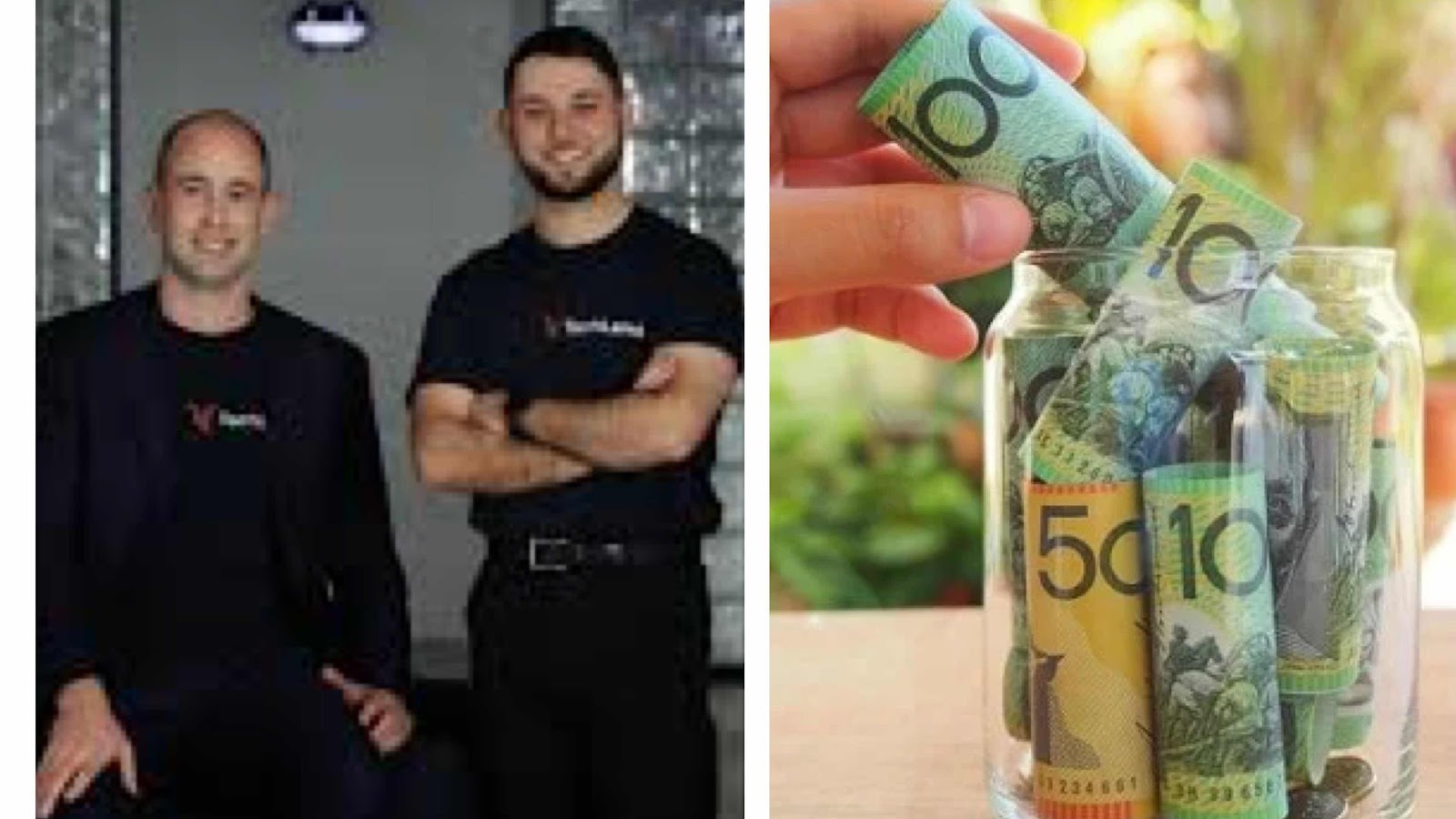
TechLend nabs $50m from Partners For Growth


Exciting times ahead for Aaron Bassin’s TechLend as they secure an additional $50M in funding, from Partners For Growth! 


What TechLend does

 Theymake bridging loans much simpler in the housing market - disrupting the traditional property finance market


Some of the people 


Nick Jacobs Amber Johnston Aleisha Smith Adam Borowsky Maximilien Penel Jason Georgatos Richard Osborne Karthi Sepulohniam (Subramaniam)) Matt Leibowitz 


So who is Partners for Growth

Partners for Growth (PFG) is a Silicon Valley based VC firm that invests in emerging growth companies across the innovation economy, and has invested more than $450 million in over 60 Australian startups and scale ups to date.  PFG has partnered with leading ecommerce furniture and mattress company Koala; small business loan specialist Prospa and rewards platform Cashrewards.


Jason Georgiatos, Managing Director of Partners for Growth, said: .. Techlend’s vision is in line with PFG’s strategy to support global fintech disruptors. “

Monday, August 02, 2021

Square intends to acquire Afterpay


Nick Mnar and Anthony Eisen  cofounders of Afterpay

Afterpay announced Square intends to acquire Afterpay for $39 billion - the largest corporate transaction in Australian history. 

Congrats Nick Molnar and team 👏 #startupaus #auspol #entrepreneurship

Square and Afterpay are two of the fastest growing fintech companies with a shared mission of economic empowerment and financial inclusion, and together, plan to deliver an even more attractive platform for consumers and merchants across geographies, categories and segments.

This partnership marks a huge milestone for the Australian technology sector and our growing profile on the world stage.

Congratulations on this wonderful moment to the entire team

You can read all about it here: https://lnkd.in/gZMGiCXy

Sunday, August 01, 2021

A new animal has come to Australia - the Unicorn


Nick Crocker, general partner of Blackbird, says now “is the best time to be a founder in Australian history”.

Here are some of Australia’s “unicorns” valued at $1bn or more, after a spate of raisings as venture capitalists and wealth investors have piled in and spent billions in

  • Culture Amp hits a $2 billion,
  • Canva - a $19 billion 
  • Airwallex - $3 billion - founders created their own find
  • Safetyculture- $2.2 billion 
  • Judo - $1b
  • Zip - $5b
  • Afterpay - 80b
  • GO1
  • Rokt
  • Redbubble
  • Atlassian
  • Aconnex
  • Redbubble
  • Envato
  • Nearmap 

Who else ?

Who in the next 10 years?

Circle In raises $2.275M for global expansion


Jodi Geddes and Kate Pollard  startup “Circle In”a “fam tech” has secured.seed funding of $2.275m funding from the VC Community including Our Innovation Fund , Leigh Jasper and Carol Schwartz and has a host of big name clients including Medibank Private, Atlassian and Culture Amp, EY, GAP and Estee Lauder.


The money used is to expand into USA and UK.


https://www.smh.com.au/business/small-business/parental-support-startup-circle-in-raises-1-5-million-20190813-p52gr4.html


https://www.afr.com/street-talk/carol-schwartz-leigh-jasper-back-circle-in-20210729-p58e00

Wednesday, July 28, 2021

Nakd brands powered by Reddit army of investors


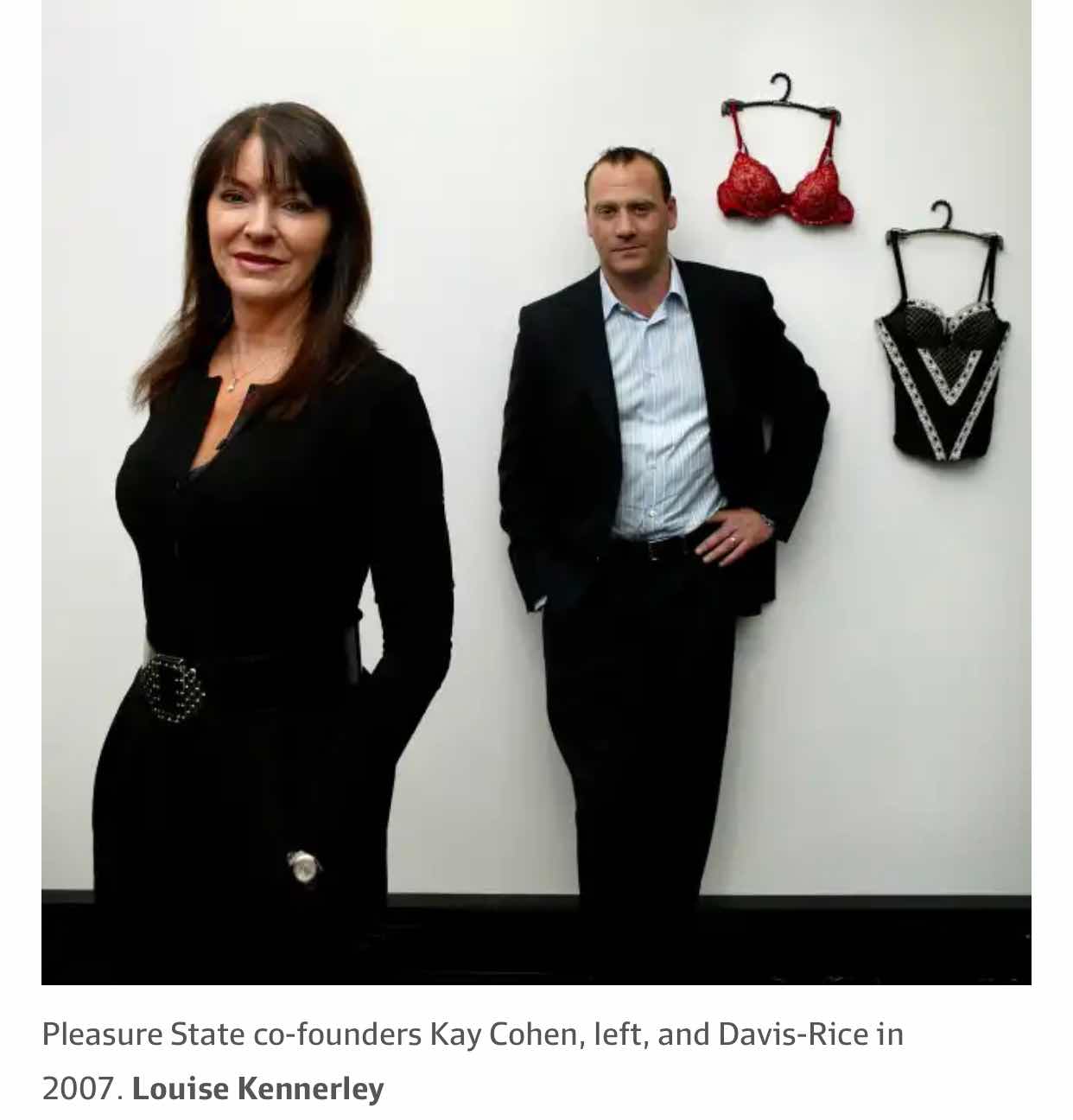
Nakd Brand’s CEO Australian Justin Davis-Rice 

almost fell out of bed - when he saw his struggling lingerie company’s NASDAQ share price going through the roof - “We were trading at a market cap of $US550 million and we had been about $US80 million the day before - on the verge of collapse 

— Justin Davis-Rice, Bendon CEO”


A band of Reddit Investors came to the party to support the stock giving the Australian export a chance to shine 


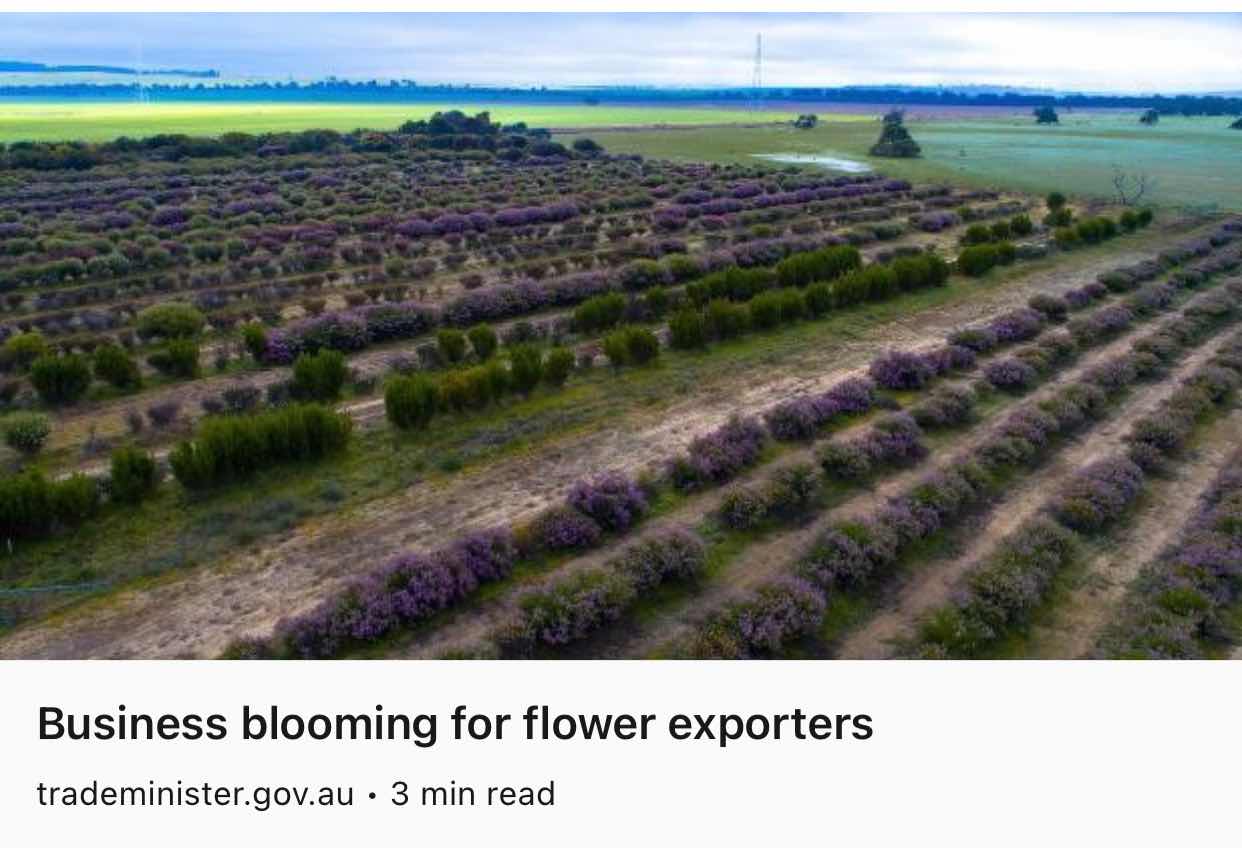
Innovation for Export of Australian flowers around the world


Wafex provides about half of Australia's national flower #exports. It employs 150 staff, owns 4 large grow farms and buys from 50 domestic commercial growers across south-west Western Australia, South Australia, Victoria, the NSW North and South Coast regions and south-east Queensland.

When airfreight availability plummeted at the start of the pandemic, Australia’s largest wildflower exporter was looking at a $5 million dollar hit and the heartbreak of laying off staff.   

Enter the International Freight Assistance Mechanism (IFAM). Accessing IFAM-supported flights was a lifeline for Wafex as it enabled their prized blooms to continue moving into markets including the United States, Taiwan, China, Singapore, Hong Kong, Holland, Vietnam and Japan which in turn helped them bounce back from the brink of financial ruin.

Read more:  https://lnkd.in/d6JJu48
https://lnkd.in/d6JJu48

#exporters #emdg #exports 

Friday, July 16, 2021

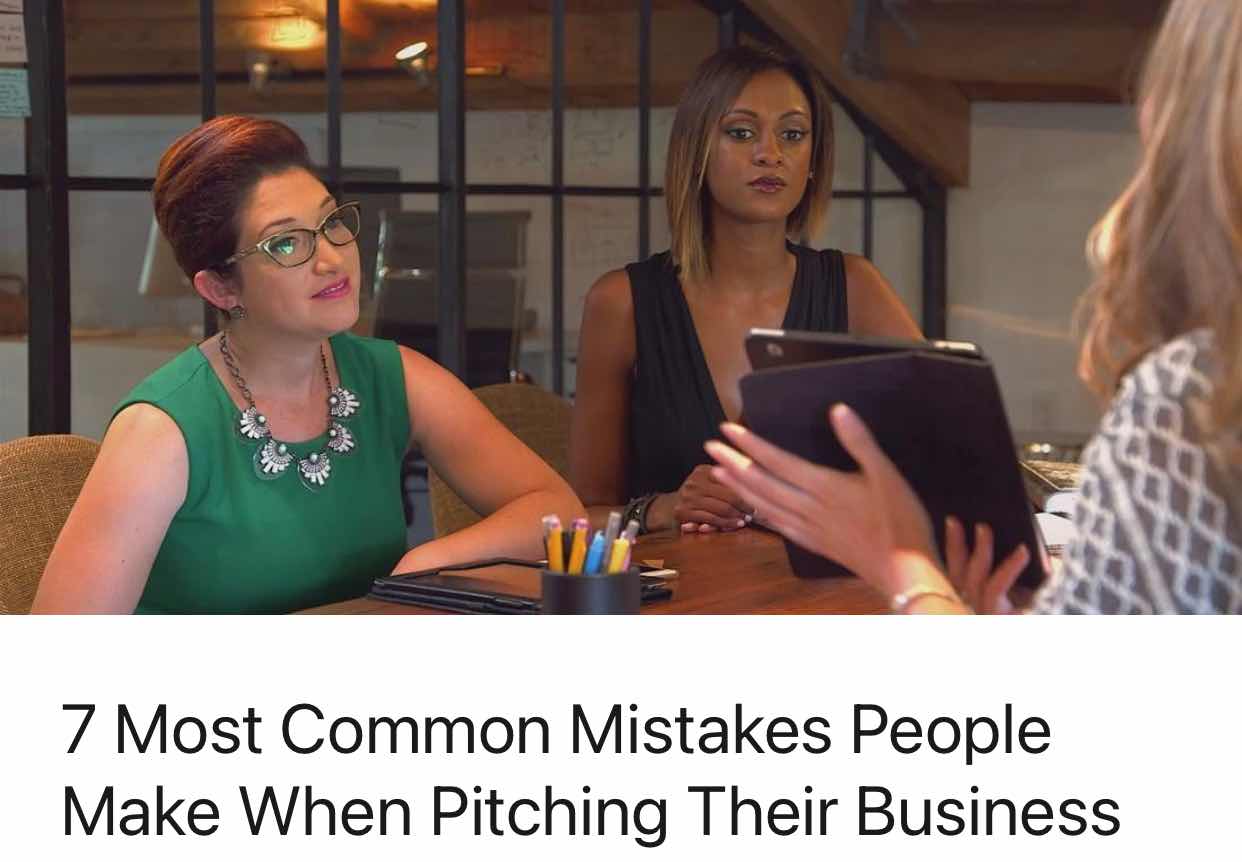
7 common mistakes when pitching for money


 As one of Business Insider's"30 Women in Venture Capital to Watch,” Fran Hauser knows what gets her to open up her own wallet to help fund a startup.

Here are Fran Hauser’s 7 most common mistakes people make pitching their business:

1. Forgetting the investor is a human being. Yes, fundraising is about products and money and financial returns and all of that. But there is also the human factor, too. You're asking this person to join you in a potentially risky (and hopefully successful) long-term relationship. Since this is a human relationship—and not one solely with the investor’s bank account—trust needs to be established first. To do this, spend time learning about the investor ahead of your meeting so you can make a personal connection. I know I greatly appreciate it when a founder starts the meeting by referencing something about me personally. Remember, the investor is a human being, not a human ATM.

2. Not qualifying investors. The same way you qualify prospects for a sales position, you have to qualify investors too. Look for investors that, not only like your industry, but also have either previously invested in that space or have a personal affiliation with it. It’s important to know if they are actively investing at the stage you’re seeking funding for, because otherwise you’re wasting their time—and yours. Find out when the last investment they made was, plus how many investments they make annually. And it’s crucial to know their reputation as an investor and how they treat partners. Regardless of how much money they can offer, do you really want to work with a known jerk?

3. Lack of honest Q &A prep. A great salesperson always tries to anticipate what the objections, comments and questions are going to be. Develop answers to the five questions you hope investors won't ask. Where are the company’s vulnerabilities? What holes are still yet to be filled in? Why won’t the company turn profit for a year? Make sure you air all your personal concerns that keep you up at night and have data-backed reasons why those issues won’t be a problem in the future.

4. Too much jargon. You want the investor leaving the meeting thinking yours is an opportunity too big to pass up. That now is the right time and YOU are the founder who can make it happen. But you don’t want the investor thinking you’re full of BS because you load on inspirational quips and a giant vocabulary. Be authentic by providing actual numbers and real-life stories. These are things that investors are going to remember and will be able to easily repeat to their colleagues. Simpler is better.

5. Dismissing feedback. The companies in my portfolio that failed have one common thread and it went back to my initial meetings with the founders: They were quick to dismiss any feedback. You can still be confident, have conviction in your company, and run things they way you want, and also show that you’re coachable too. Being responsive shows the investor you’re open to ideas, just like any good boss worth their salt should be. Relationships are not one sided.

6. Lack of mindset. Mindset is everything. If you go into your fundraising with a growth mindset, it will make the whole process so much more enjoyable. Go in with your eyes wide open. There are going to be a lot of NOs, but if you turn each one of those rejections into a learning moment, you’ll enjoy the process a lot more.

7. Why does the world need another X? Another common mistake I often see is that the founder starts with a product description before they communicate the pain point or opportunity. Convince the investor that there is a need first and then follow up with how you are addressing that need with your next billion-dollar idea.

five strategies to make your investor deck compelling


From seeing dozens of pitches from entrepreneurs every week, I've learned what makes a great pitch deck TRULY STAND OUT! 

Here are five strategies to make your deck compelling and increase your chances so that investors can't say "NO" to you when you go out to raise money for your business.

✔️ Make it crystal clear what problem you're solving and how your business is doing that. The person on the other side of the table or the other side of the email you're sending the pitch deck to probably knows nothing — so you should make sure you're explaining things so clearly as if you were telling something to a toddler. 

 ✔️ Clearly outline how much of the market opportunity you think you could capture. Whether that's a billion-dollar or two-thousand-dollar opportunity, be realistic and let investors understand your business's full potential. The right investor is going to be a little different depending on what the market opportunity is. 

✔️ There are many teams out there that investors can back; why should they back you? What is the unique expertise that you bring to the table? Why are you the person to solve this problem? 

✔️ Don't be afraid to be clear about what you don't know. Be open about the gaps in your skill sets or your team's and share how your advisors and other people can fill them in when you don't meet specific criteria. Investors like to see that you're not pretending to know everything in the game. 

✔️ Establish a clear ASK in your deck. I've seen so many great pitch decks that got me excited about a company, but then they never specifically said how much money they were raising, in what increments, or how much the valuation was. Make sure you have a specific ask at the end of your deck so people know exactly how they can get involved. 

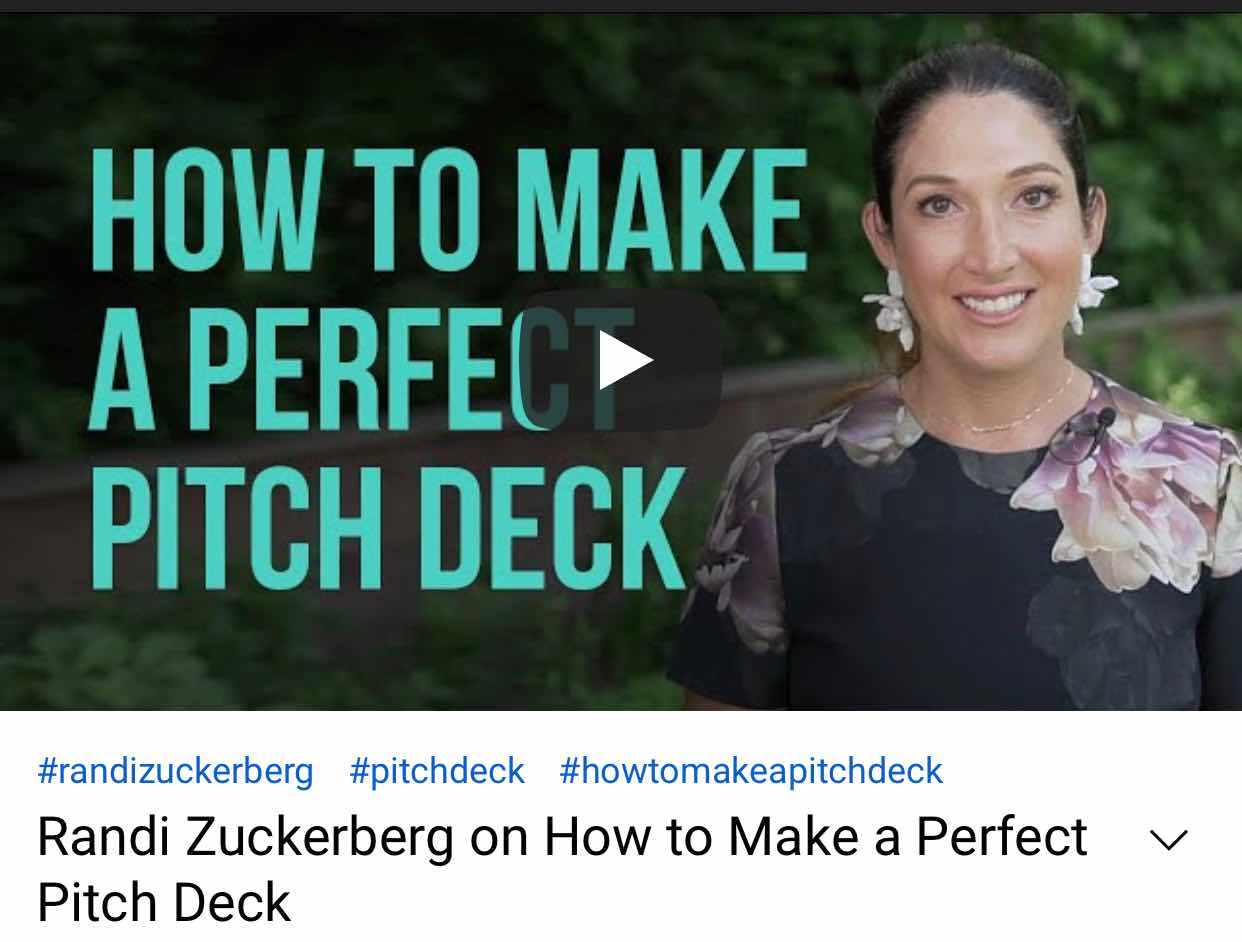
Check out her latest YouTube video on this topic here. #pitchdeck #pitching #investors


Wednesday, July 14, 2021

Female Founders Fund closes $57M fund

New York-based Female Founders Fund has raised $57 million for its third flagship vehicle. The firm makes seed-stage investments in companies created by women, targeting deals in sectors including ecommerce, media and advertising. Its portfolio includes wedding planning startup Zola and Rent The Runway, a designer clothing and accessory rental service. Institutional investors including Goldman SachsCambridge Associates and Pivotal Venturescontributed to the fund.

Rhipe sells for over $400m to Crayon

One of our investees who started in our office was a company called NewLease - that leased software to corporates.


It backdoored into a listed shell called Rhipe - and last week accepted an offer by 

Global IT consultancy Crayon to acquire it for  $2.50 per share or $402.7 million.


What an amazing story 

Friday, July 02, 2021

Smes and finance - an opportunity?


SMEs are the backbone of our economy 

and yet they seem to  “be stiffed” by the banks! 


To say that they are  under-serviced by the finance sector Is an understatement 


The Problem  for SMEs

  • Even with Covid gaurantees - it was nigh impossible for an sme to het a bank loan from a traditional bank without security or a guarantee from someone other than the founder
  • Many small businesses have been knocked back for finance
  • The Australian Bureau of Statistics show that the lack of access to finance is the most common barrier to innovation
  • Fintechs have begun meeting the demand, but have their quirks 
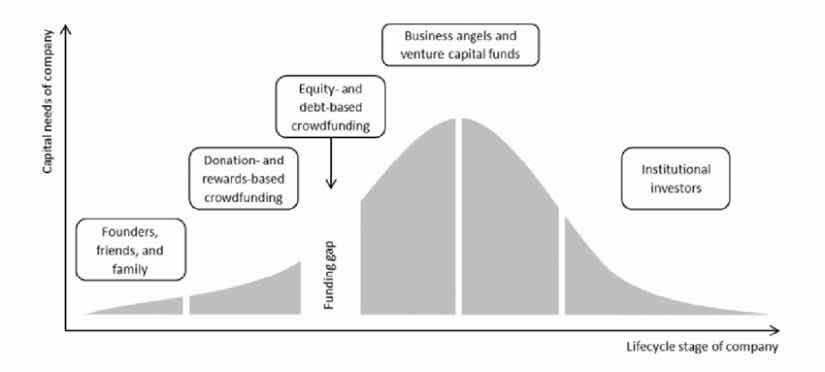
The funding gap 


The Problem  for Investors

Investors - who invest in equity and hybrids (a mix of equity and loan are a great source.


Money that is not getting good returns need to find a home


The Connection 

There is money out there - but how do you 


  1. Find it ?
  2. Negotiate the best repayment terms for you?
  3. Find the right lender / investor  for your business
  4. Understand the different forms of finance ? Nomad, peer to peer lending, loan backed by security, equity Or a mix?


This is where the finance broker comes in and why there role is critical 


The $2m to $10m turnover range SME have the opportunity for exponential growth - and this is where The opportunity is!


Challenges

The Banks

Most SME loans are currently secured by housing - lack of collateral is the most common reason for a business’s inability to access finance; 37% of all rejections can be attributed to this issue.


The Fintechs 


For the last five years, so-called peer-to-peer lenders have connected investors and borrowers to provide more than $20bn in finance, faster than the banks ever could.


The Investors


Where to find them?

 many are unsophisticated 

The VCs invest - but not in many 


Connecting SMEs with lenders  and investors is a challenge  – and beefing up risk assessment in the process is a requirement by the SME 


The Opportunity 

SMEs, investors and indeed brokers are looking for viable alternatives to the banks, but not at the cost of security.


A broker’s job is not just to secure finance for a client, but to find the right finance.


  • banks 
  • fintechs 
  • Vcs
  • Bomad
  • Investors - fool family and friends 
  • Professional Investors
  • Stock exchange
  • Trade sale
  • Mergers and acquisitions 

Good advice and great financial management from brokers is crucial for the success of small businesses over the next 10 years 


Who can relate?

Who needs money? 

Whose keen to invest and play in this space 


Let’s explore the opportunity 


Inspired by https://www.marketlend.com.au/blog/editorial-the-true-role-of-the-sme-broker/